
Last updated October 15, 2026
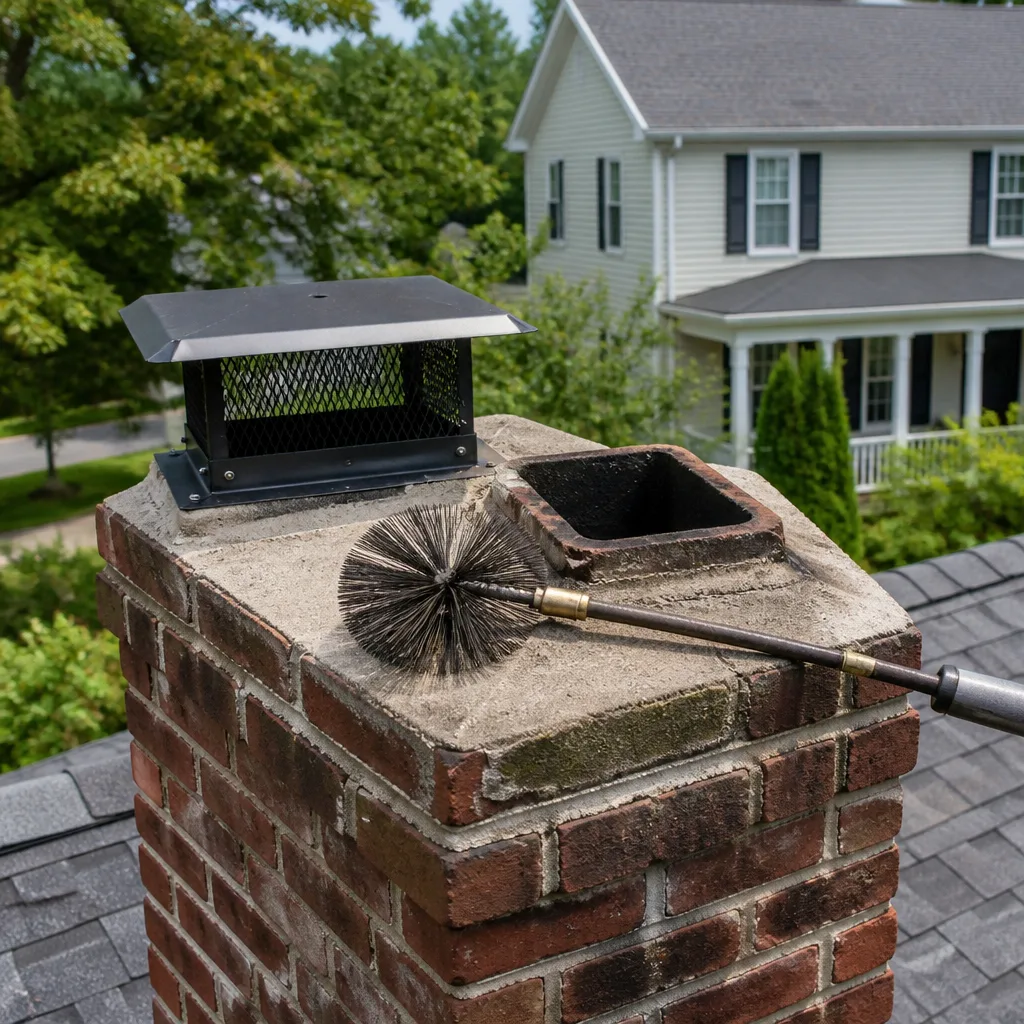 Sweep & inspection
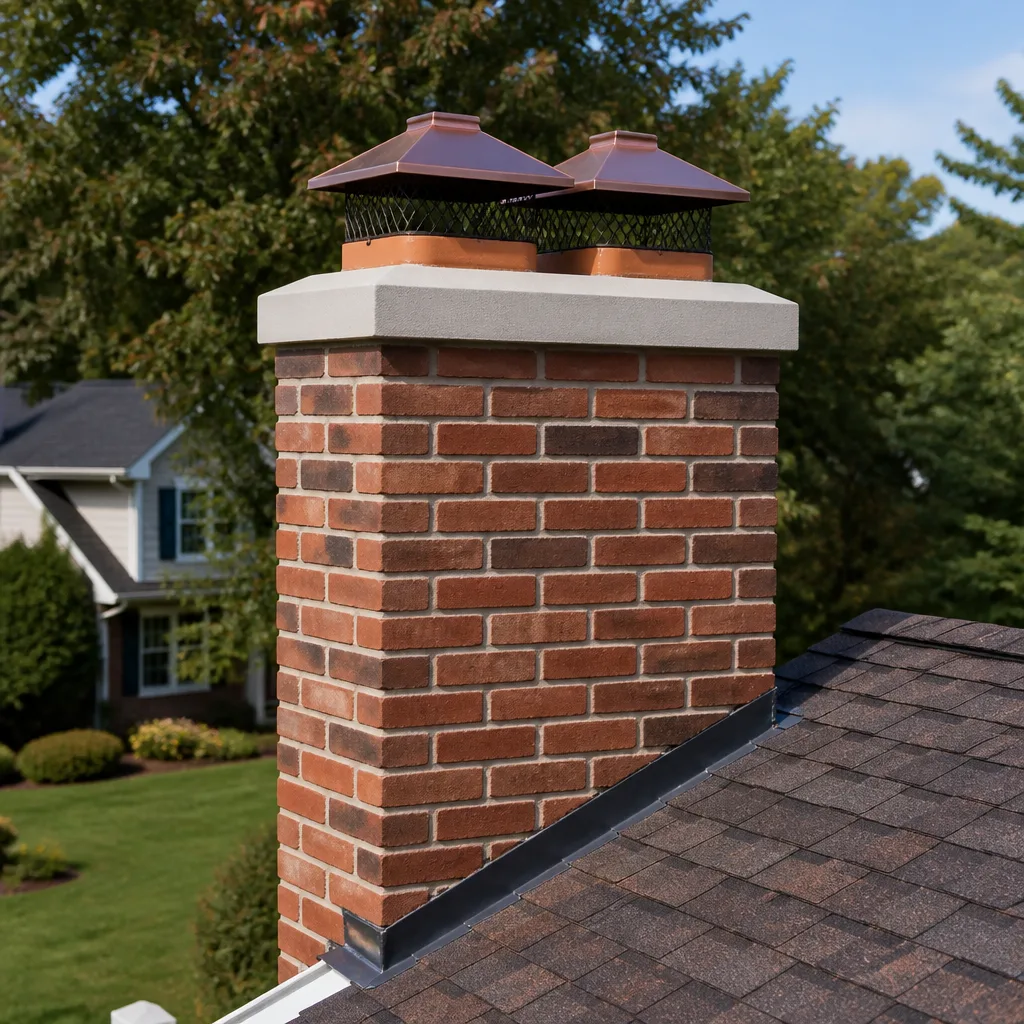 Caps & crowns
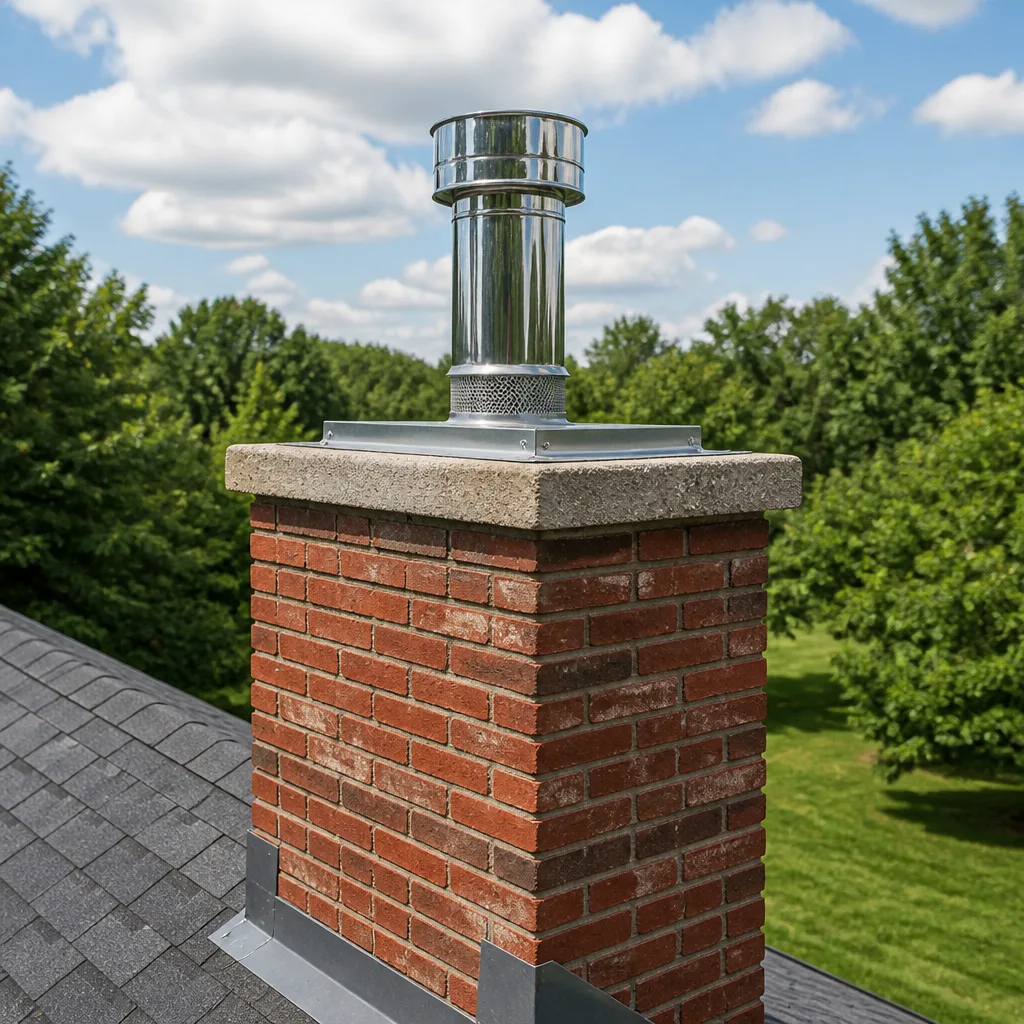 Flue relining
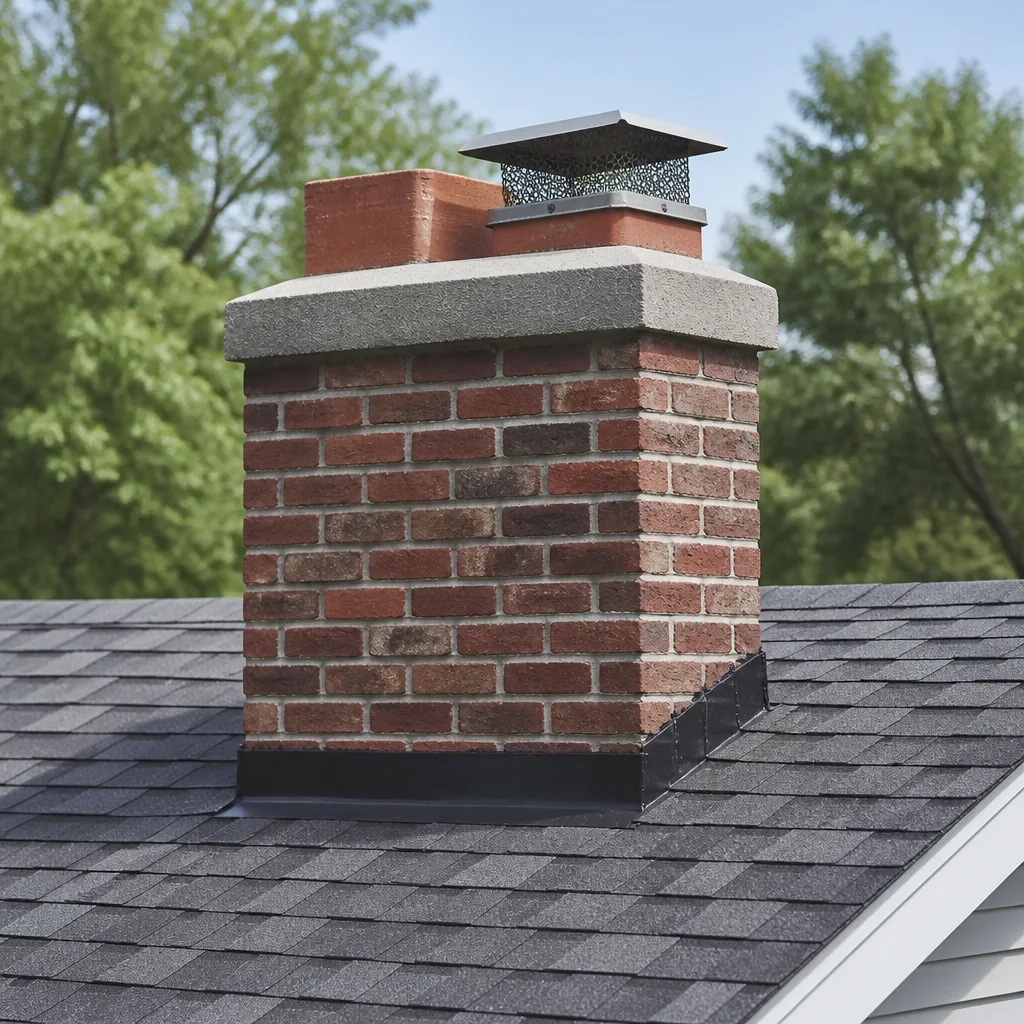 Masonry repair
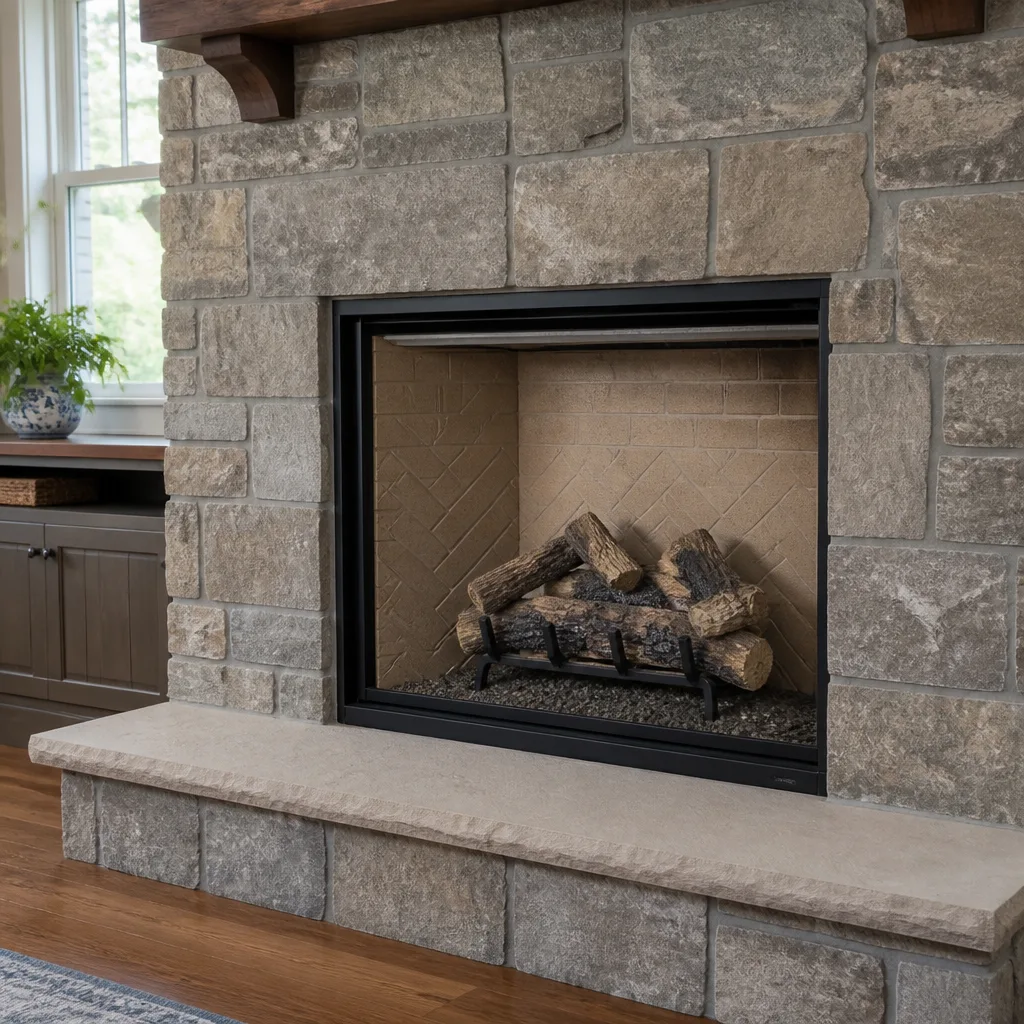 Gas fireplace service
Level 1 sweep and inspection to the NFPA 211 annual standard - flue, crown, cap, and flashing checked and photographed
Chimney sweep logs do not sweep chimneys. They loosen some creosote - which then falls where a brush and vacuum still have to collect it.
DIY vs Professional Chimney Cleaning: The Alpharetta Homeowner’s Decision Guide
Here’s something most DIY chimney guides won’t tell you: the loose, dusty soot that brushes off easily is not the material that causes chimney fires. The danger comes from glazed creosote, a hard, tar-like layer that a wire brush from a big-box store often smears deeper into the flue lining instead of removing. In Alpharetta, where winter evenings regularly dip into the 30s and fireplaces run from November through February, that distinction matters more than homeowners realize. This guide walks through what you can genuinely accomplish with a brush kit on a Saturday, what you physically cannot, and how to make the right call for your house, your family, and the way you actually use your fireplace. For more on how to hire the right professional, see our step-by-step guide.
Styles & brands we work with
Quick Answer
DIY chimney cleaning in Alpharetta can remove loose stage-one soot, but it cannot reliably remove glazed creosote, cannot assess the structural condition of your flue liner, and cannot serve as documentation for insurance purposes after a chimney fire. For a home with regular fireplace use, a professional sweep paired with a real inspection is the safer financial decision, even if an occasional light-use year goes by with DIY maintenance between professional visits.
Table of Contents
- What DIY Chimney Cleaning Can Actually Do
- What DIY Cleaning Physically Cannot Remove or Detect
- The True Cost of a Competent DIY Attempt
- Why Cleaning and Inspection Are Two Different Skills
- Liability and Insurance: The Unspoken Risk of No Inspection Record
- Three Alpharetta Homeowner Profiles: Which Approach Fits You
- How Often Should an Alpharetta Chimney Be Cleaned?
- Common Mistakes to Avoid
- When to Call a Professional
- Frequently Asked Questions
- The Bottom Line
What DIY Chimney Cleaning Can Actually Do
A chimney cleaning kit with a wire brush, fiberglass rods, and a plastic tarp runs between $55 and $95 at hardware stores across Alpharetta and the surrounding north Fulton area. If your flue only has stage-one creosote, a fine brown soot that wipes away with light friction, a DIY brush from the top down can genuinely remove a meaningful amount of it. That is the honest truth. We are not here to tell you that every DIY sweep is wasted effort or that brushing your own chimney is some kind of reckless gamble. For a homeowner with a straight flue, a gently sloped roof they can safely work from, and the right safety equipment, a light DIY cleaning can buy you time between professional sweeps.
But here is the boundary line, and it is sharper than most people expect. Stage-one soot removal is not the full job. The National Fire Protection Association recognizes three stages of creosote accumulation. Stage one is the soft brown soot. Stage two is a flaky but hardened black deposit. Stage three is glazed creosote, a dense, shiny, tar-like coating that forms when fire temperatures fluctuate and condensation cycles bake the deposits onto the flue wall. A hardware-store wire brush will not remove stage-three glazed creosote. It will polish its surface and scrape a thin line through it, but it will not break its bond with the flue liner. And in some cases, aggressive brushing of a compromised liner does more harm than good by loosening brick spalling or widening hairline cracks.
What DIY Cleaning Physically Cannot Remove or Detect
Cleaning and diagnosis are not the same task, but DIY guides often treat them as if they are. When you run a brush through your flue from the rooftop, you can see soot on the bristles and feel resistance where deposits are thick. What you cannot see is the condition of the flue liner behind that soot. Hairline cracks in clay tile liners, gaps in mortar joints, water damage from Alpharetta’s summer humidity and winter freeze-thaw cycles, and hidden nests from birds or squirrels are all invisible to a brush, but they are exactly what a proper inspection is designed to catch. And a chimney inspection in Alpharetta is not a quick visual glance up the flue, it is a systematic examination of the crown, cap, flashing, firebox, damper, smoke chamber, and liner using tools that can see around corners.
Here is a specific, local example. Alpharetta sits at roughly 1,100 feet of elevation, and the region gets around 53 inches of rain a year. That is not a dramatic climate, but it is enough to slowly degrade a chimney crown that was sealed ten or fifteen years ago. Water seeps into hairline openings, freezes during the handful of nights we hit the low 20s, and expands. Over a few seasons, small cracks become channels for water to reach the flue liner. By the time a homeowner sees spalling brick or water staining on the ceiling near the fireplace, the damage is usually well past the point where a simple repair would have been enough. A brush kit cannot find this. An experienced sweep with an inspection camera can find it in its early stages, before a liner replacement becomes the only option.
The same logic applies to animal obstruction. Chimneys in Alpharetta neighborhoods with mature trees, think Crabapple, Milton, and the older sections of downtown Alpharetta, attract squirrels, raccoons, and chimney swifts. A DIY brush may knock a nest loose or it may not. It will not tell you how the animals got in, whether the cap is the right size, or whether the nesting material has created a restricted flue diameter that changes your draft profile. Those findings require someone who has looked at hundreds of chimneys and knows the difference between normal wear and a problem that needs action.
The True Cost of a Competent DIY Attempt
If you decide to do this yourself, do it properly. The honest total cost is not just the $55 to $95 brush kit. Here is what a competent DIY attempt in Alpharetta actually requires:
- A sturdy extension ladder that reaches safely above your roofline (rental or purchase, usually $40 to $120 for a weekend), plus a roofing harness and lifeline if your roof slope is steep enough to be a fall risk. Many Alpharetta homes built in the 1990s and 2000s have 6/12 or 8/12 roof pitches, which are not ladders-friendly.
- A chimney brush sized exactly to your flue diameter. A 6-inch brush in an 8-inch flue or an 8-inch brush forced down a 6-inch flue both create problems. Big-box stores stock a limited range; if your flue is an unusual size, you may need to order online.
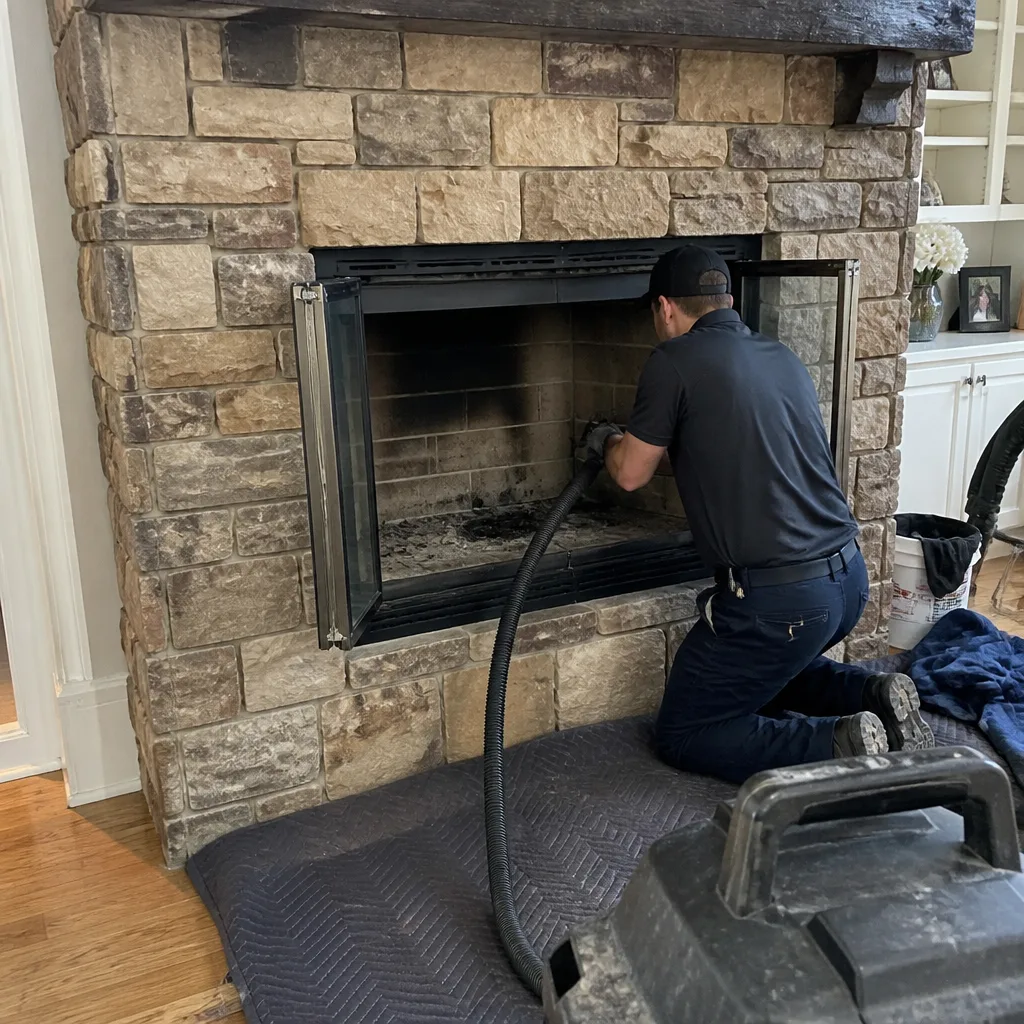
- Drop cloths, a shop vacuum with a HEPA filter, and sealing plastic for the fireplace opening. The moment you start brushing from the top, you will create a dust event inside your home if the fireplace opening is not sealed from below. Expect soot on the hearth, the carpet, and whatever is within ten feet if you skip this step.
- Eye protection and a proper respirator. Not a paper dust mask. Creosote is an irritant and a known carcinogen in concentrated, repeated exposure. If you have children or pets in the house, the dust control is just as important for their lungs as yours.
- A helper on the ground. Working on a roof in Alpharetta’s fall and winter, with dry leaves or morning frost on shingles, is not a one-person task if you want to be honest about the fall risk.
- A full afternoon. First-time DIY sweeps typically take four to six hours, not counting the run back to the hardware store for a rod connector or a smaller brush head.
When you add it all up, a genuinely safe DIY attempt costs between $200 and $350 in equipment and rental costs and most of a weekend day. A professional chimney sweep in Alpharetta typically runs between $180 and $340 for a standard single-flue cleaning. The math is closer than most people assume, and the professional sweep includes the inspection that your DIY effort does not.
Why Cleaning and Inspection Are Two Different Skills
This is the point where the DIY-versus-professional debate usually goes wrong. People compare the physical act of brushing to the physical act of brushing, and conclude that a brush is a brush and a sweep is just a faster brush. But the actual job is not “brush the flue.” The job is “determine whether this fireplace is safe to operate and leave it cleaner than you found it.” Those are two separate evaluations, and they require two different skill sets.
When Kindling Chimney Alpharetta performs a chimney sweep in Alpharetta, the brushing is the second step, not the first. The first step is a visual and mechanical inspection of the entire system: the crown, cap, flashing, damper, firebox, and the full length of the flue. The sweep itself then feeds into a chimney inspection in Alpharetta that documents what was found before the soot came off. This matters because the soot itself is sometimes what is holding a deteriorated liner together, and removing it without documenting the underlying condition is how homeowners get surprised.
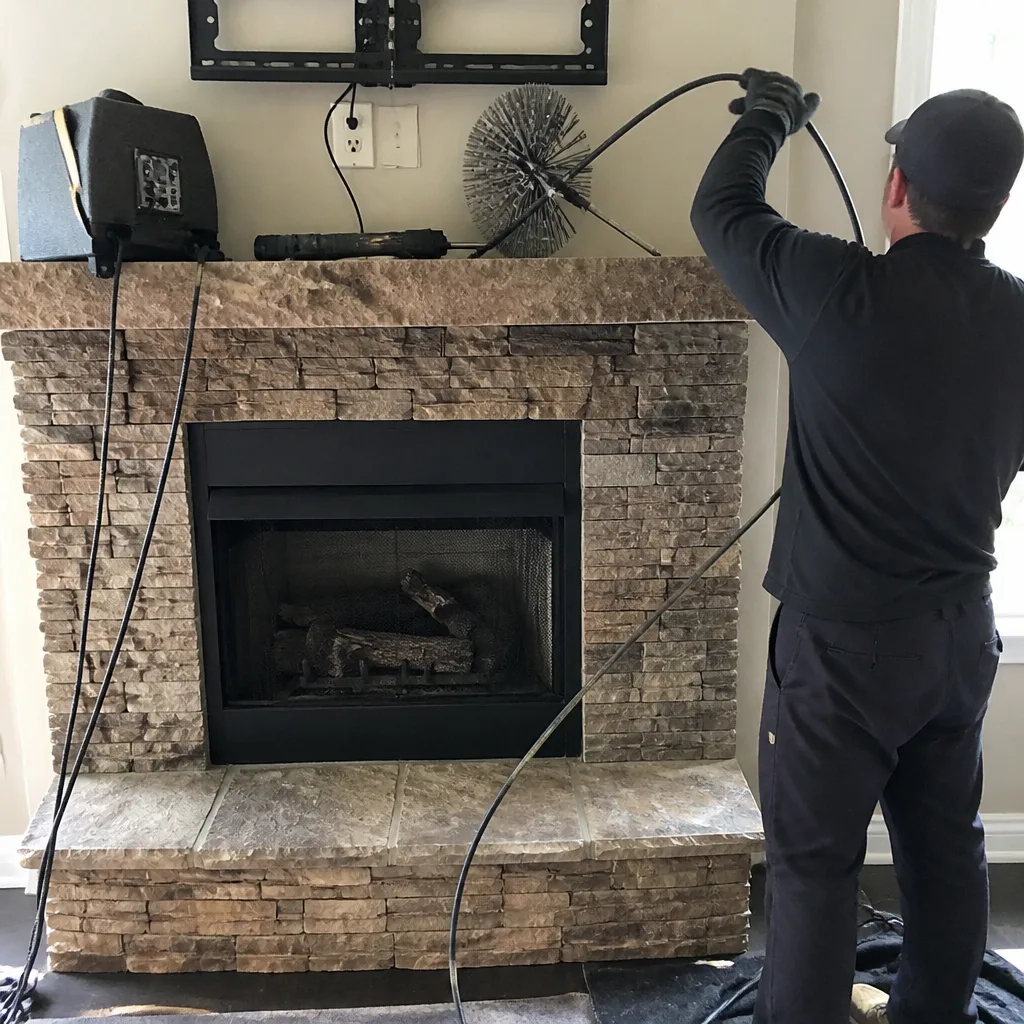
Think of it this way: a chimney scan with a video camera can reveal a cracked flue liner that no amount of brushing would ever bring to light. If you do the brushing yourself and never run a camera, you have cleaner air but zero new information about whether your fireplace is safe. In our experience, which includes hundreds of chimneys across Cherokee County, Forsyth County, and north Fulton, the homes that benefit most from a professional sweep are not the ones with the most soot. They are the ones where the homeowner has been using the fireplace regularly for years without any inspection record and has no baseline for what “normal” looks like in their flue.
A related point: the brands of repair materials matter when something is found. If an inspection turns up a minor flue liner crack or a damaged crown, the repair should use materials designed for chimney systems, not general-purpose masonry products. We use HeatShield, Gelco, and Olympia Chimney products for repairs because they are engineered for flue conditions, and that is not a distinction a DIY supply run will make on your behalf. A homeowner at a big-box store might buy a generic refractory cement that cannot withstand the thermal cycling a chimney liner experiences every time the fireplace cycles from cold to 700 degrees and back.
Liability and Insurance: The Unspoken Risk of No Inspection Record
Here is a question almost no DIY chimney cleaning guide asks: what happens if you have a chimney fire in a home with no professional inspection record? The answer depends on your policy, but homeowners in Alpharetta should not assume the answer is comfortable.
Most homeowner insurance policies cover chimney fires as sudden and accidental events. However, if the insurer investigates and finds evidence of long-term creosote accumulation without any record of professional maintenance, an adjuster may classify the fire as a maintenance failure rather than a covered peril. In practical terms, that can mean a reduced payout, a denied claim, or a policy non-renewal. A receipt from a licensed chimney sweep showing an inspection and cleaning dated within the last year is the strongest evidence you can offer that you did your part. A self-cleaned chimney has no such record.
This is not a scare tactic. The actual probability of a chimney fire in a well-maintained fireplace is low. In Alpharetta and the broader metro Atlanta area, chimney fires are rare enough that most homeowners will never experience one. But the asymmetry of the risk is the point: you are not deciding between a zero-cost DIY task and a professional service you do not need. You are deciding between a maintenance approach that creates a paper trail and one that does not. If the worst happens, the paper trail is what you will be asked to produce.
There is also a secondary liability issue with rooftop access. If a neighbor, a friend, or a handyman is injured on your roof during a DIY chimney cleaning, your homeowner liability may not provide the same protection as hiring an insured company. We carry state-required insurance and workers’ compensation, and a professional crew doing the same job on the same roof is operating under a commercial policy designed for exactly that scenario. That is not something most homeowners think about until a ladder slips.
Three Alpharetta Homeowner Profiles: Which Approach Fits You
We are not going to tell every Alpharetta homeowner to hire a professional for every cleaning. That would be dishonest and unnecessary. The right answer depends on how you use your fireplace, the age of your chimney, and what you are trying to protect. Here is a decision framework based on what we see in homes across Alpharetta:
Profile 1: The Light User in a Newer Home
You have a gas fireplace or you burn six to ten fires a year, mostly in December and January. Your home was built after 2005, the chimney has a stainless steel liner, and you have never noticed a draft problem or a smoke smell in the house. For this homeowner, an annual professional inspection every two or three years is a reasonable interval, and a light DIY brushing in between is acceptable if you are comfortable on the roof and you seal the fireplace opening properly. The key is not to skip the professional inspection entirely; a gas fireplace in a newer Alpharetta home still has a venting system that should be examined periodically.
Profile 2: The Regular Wood Burner in an Older Home
You burn 40 or more fires per season, your home was built before 2000, and your chimney is clay tile lined. This is the profile we see most often in neighborhoods like Windward, Alpharetta City Center, and the subdivisions along Highway 9. For this homeowner, DIY brushing is not the right tool, because the creosote profile of a heavy wood burner trends toward stage two and three, and a clay tile liner from the 1980s or 1990s has had decades of thermal cycling. A professional sweep once a year, paired with an inspection, is the correct interval. The camera inspection is doing more than confirming the flue is clean; it is establishing that the liner is still intact enough to protect the home’s framing from heat transfer. If the liner has degraded, a repair using HeatShield’s resurfacing system or a new DuraFlex stainless liner may be appropriate, and no DIY brush kit will ever reveal the need for that.
Profile 3: The First-Time Homebuyer
You closed on your Alpharetta house within the last year and you have no idea what the previous owner did with the chimney. You may not even know if they ever used the fireplace. In this profile, the correct approach is a professional inspection before you light your first fire. The inspection establishes a baseline: liner condition, creosote level, crown integrity, damper function. From that baseline, you can decide whether a DIY brushing routine between professional visits makes sense. But you cannot make that decision responsibly without knowing what is inside the flue. A first-time homebuyer who skips the baseline inspection is betting on the previous owner’s maintenance habits, and that is a bet that has gone wrong in more Alpharetta houses than we can count.
How Often Should an Alpharetta Chimney Be Cleaned?
The National Fire Protection Association says chimneys should be swept whenever soot and creosote accumulation exceeds 1/8 inch, and inspected at least once a year. But that is a national guideline, not a local prescription. In Alpharetta’s climate, with its mild but real winter season and high summer humidity, the practical answer depends on how many fires you burn and what kind of wood you use. Our seasonal chimney care guide breaks this down in detail.
For an average Alpharetta homeowner burning 30 to 40 fires per year in a masonry fireplace, once per year is the right cleaning cadence. That comfortably keeps the flue below the 1/8 inch threshold and provides a fresh inspection record before each burning season. For a light user burning 10 or fewer fires per year, every two years is usually acceptable, though we still recommend an annual visual check from the ground, especially after storm season and before your first fall fire.
Unseasoned wood changes the math significantly. A fire built around green or partially seasoned oak, which is common in Alpharetta because so many homeowners get wood from tree services and leave it to dry in their yards for only a few months, produces far more creosote than a fire built with kiln-dried or two-year-seasoned wood. If you are burning wood that was split less than a year ago, bump your cleaning interval from two years to one, or from one year to every six months if you burn heavily. The moisture content in fresh wood is the single biggest creosote multiplier we see in this area.
Common Mistakes to Avoid
- Skipping the inspection while doing the cleaning. A clean flue with a cracked liner is a hazard wearing a clean coat. The two tasks belong together. If you DIY the cleaning, still schedule a professional inspection on a schedule you can document.
- Using unseasoned wood because it was free or convenient. Alpharetta has no shortage of tree removal companies, and a load of fresh-cut oak left in the yard until October is not seasoned wood. Wet wood ignites poorly, smolders at low temperatures, and produces thick, sticky creosote that bonds to the flue wall as it cools.
- Brushing a clay tile liner with aggressive downward force. Older clay liners in Alpharetta homes built before the 1990s can be brittle, and a heavy-handed DIY brushing can crack a tile that was already weakened by years of thermal cycling. You will not see the damage without a camera, which is exactly the problem.
- Sealing the fireplace opening with a single tarp and calling it done. Fine soot particles find their way through a loose seal and will coat your hearth, mantle, and whatever is within a five-foot radius of the fireplace. Professional crews seal with multiple layers and run negative air pressure where available.
- Treating a chimney sweep as a once-a-decade task. Many Alpharetta homeowners we talk to believe a chimney only needs service when something is visibly wrong. By the time something is visibly wrong, like smoke backing up into the living room or water staining on the ceiling, the underlying problem is frequently a five-figure repair. A sweep every year or two is far cheaper than a liner replacement or a firebox rebuild.
- Assuming a gas fireplace never needs chimney maintenance. Gas fireplaces produce less creosote, but they still vent through a flue that can collect dust, animal nesting material, and combustion residue. A blocked gas vent in a tight Alpharetta home is a carbon monoxide risk, and it needs a periodic check just like a wood-burning system.
When to Call a Professional
Call a professional if you see water staining near the fireplace, notice a persistent smoke smell in the house after a fire, hear animals in the flue, or see flaking brick on the exterior chimney. Call a professional if you burn more than 30 fires a year and have never had an inspection. And call a professional if your fireplace is over 25 years old and you have no record of the liner being examined. Any of these scenarios means the flue has changed in a way you cannot see from the rooftop or the hearth. Kindling Chimney Alpharetta offers free estimates in Alpharetta. Call (762) 225-2593 and we will walk you through what your chimney actually needs, whether that is a sweep, an inspection, or fireplace repair in Alpharetta.
Frequently Asked Questions
A standard single-flue chimney sweep in Alpharetta typically costs between $180 and $340, depending on the flue size, creosote level, and any access complications like a steep roof or a difficult cap removal. See our full cost breakdown for 2026 to understand what drives pricing. This range includes the sweep itself and the visual inspection that most Alpharetta chimney companies perform as part of the service call. Additional work, such as a Level 2 camera inspection with a detailed written report, may add $100 to $200 to the total. Call (762) 225-2593 for an exact quote on your chimney. Estimates are free.
DIY chimney cleaning is safe if you have the right ladder, proper fall protection for your roof slope, a correctly sized brush, a sealed fireplace opening, a respirator, and a helper on the ground. Without that equipment list, a DIY sweep is a fall risk and a dust-control failure. Most injuries from chimney cleaning are not from the brush; they are from ladder falls on steep Alpharetta roofs and from soot inhalation caused by inadequate sealing.
Glazed creosote looks like a shiny, dark, almost glassy coating on the flue wall, and it is typically impossible to confirm without a video inspection or a direct visual look down the flue with a strong light. The cleaning brush will glide over it without removing much material, which is a hint that you are dealing with stage-three deposits rather than loose soot. Glazed creosote should always be addressed by a professional with training in the proper chemical and mechanical methods. Call (762) 225-2593 to schedule an inspection in Alpharetta.
Yes, because cleaning removes soot and inspection establishes safety. A DIY sweep cannot tell you whether the flue liner is cracked, the crown is leaking, or the damper is failing. An annual chimney inspection in Alpharetta documents the condition of the system and gives you a defensible maintenance record for insurance purposes. You can clean it yourself and still get an inspection once a year.
The flue accumulates creosote with each fire, and as the deposits thicken, the risk of a chimney fire increases. You may also notice reduced draft, so fireplace smoke begins leaking into the room rather than venting up the flue. In homes with gas fireplaces, skipped maintenance can allow a blocked vent to develop, which is a carbon monoxide risk. The cost of a sweep is small compared to the cost of a chimney fire, and both are smaller than the cost of ignoring a failing liner until it requires replacement. Schedule a cleaning before the burning season by calling (762) 225-2593.
The Cedarwell Care Promise is the specific commitment our technicians follow on every visit to your Alpharetta home. It includes shoe covers and drop cloths on arrival, nothing moved without asking, a written price before any work begins, and a photo of the clean-up before the crew leaves. It is a named, documented standard, not a marketing phrase, and it applies to every sweep, inspection, and repair we perform.
The Bottom Line
DIY chimney cleaning has a legitimate place for light users in newer homes who understand what a brush can and cannot do. But for most Alpharetta homeowners, especially those burning wood regularly in older masonry chimneys, the smarter sequence is a professional sweep and inspection once a year, with a DIY touch-up in between only if you have the gear, the roof access, and the honest understanding that your brush is not an inspection. What you protect with a professional visit is not just a soot-free flue. You protect the ability to detect a liner crack before it becomes a rebuild, to document your maintenance before an insurance adjuster asks, and to light a fire in December knowing the system behind it was actually examined. This is the core of our approach at Kindling Chimney Alpharetta home: a clean flue is the visible result, but a safe home is the actual point.
If you are ready to see your chimney through a camera lens and know exactly what you are working with, call (762) 225-2593. A live person answers, the quote is always in writing before work begins, and every job is backed by our 365-Day Done Right Promise. We serve Alpharetta and the surrounding north Fulton communities, and we would be glad to take a look. You can also explore more guides & resources on chimney care and home safety.
Written by Danny Cortes, Owner at Kindling Chimney Alpharetta, serving Alpharetta since 2003.
See the difference
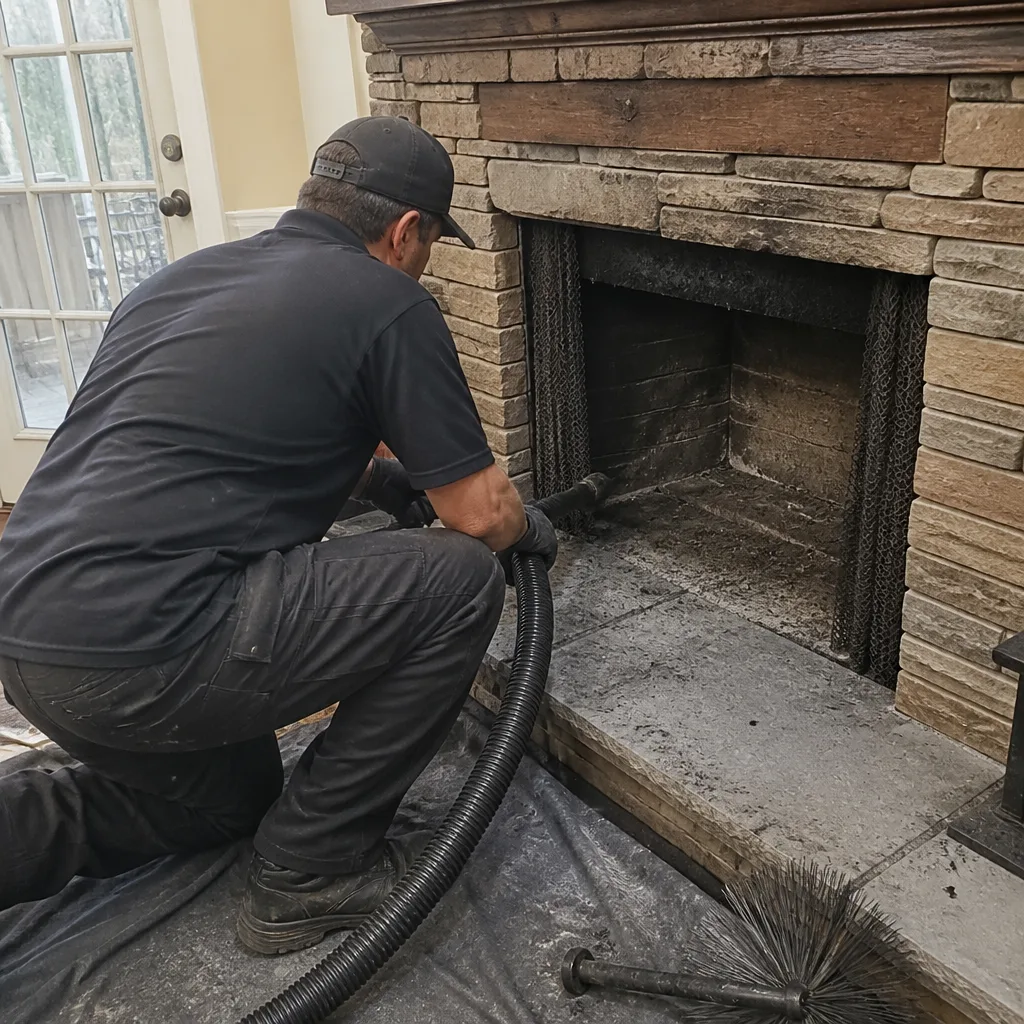 Before
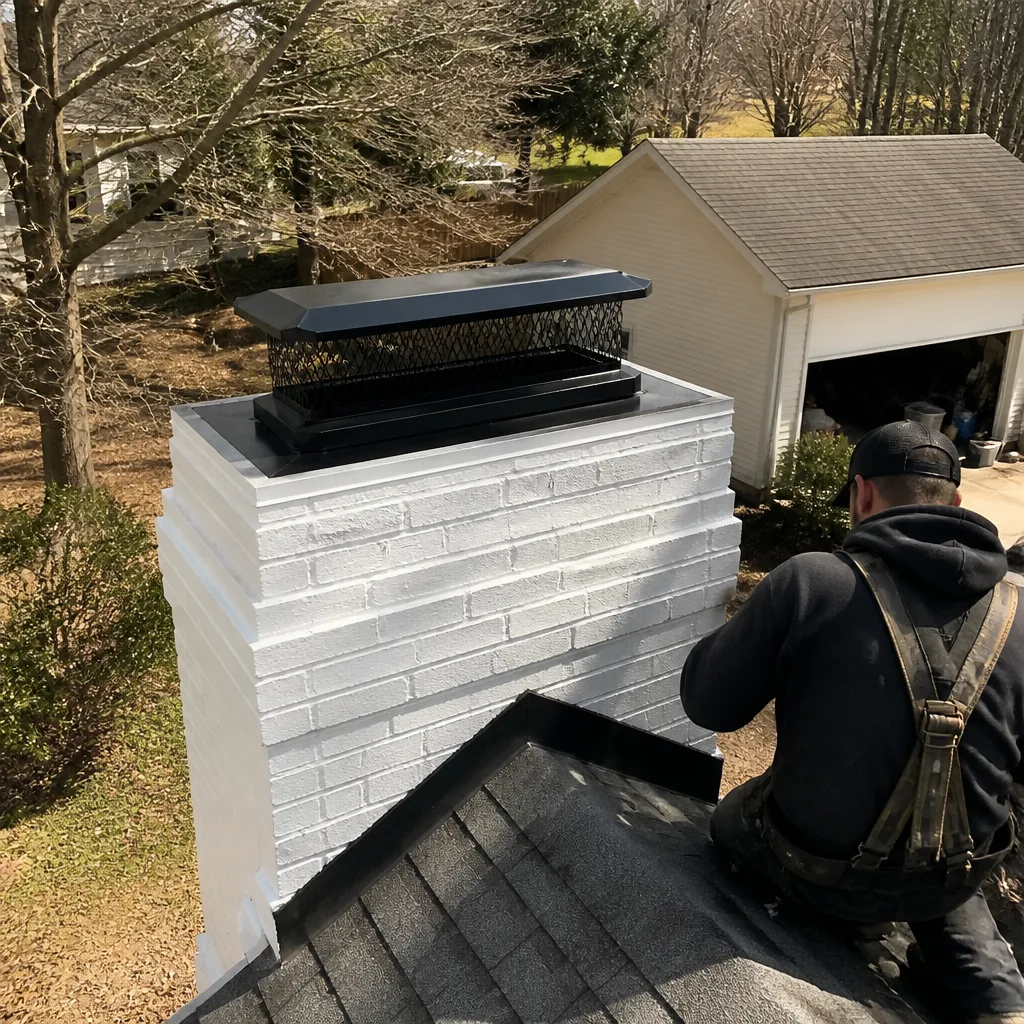 After
After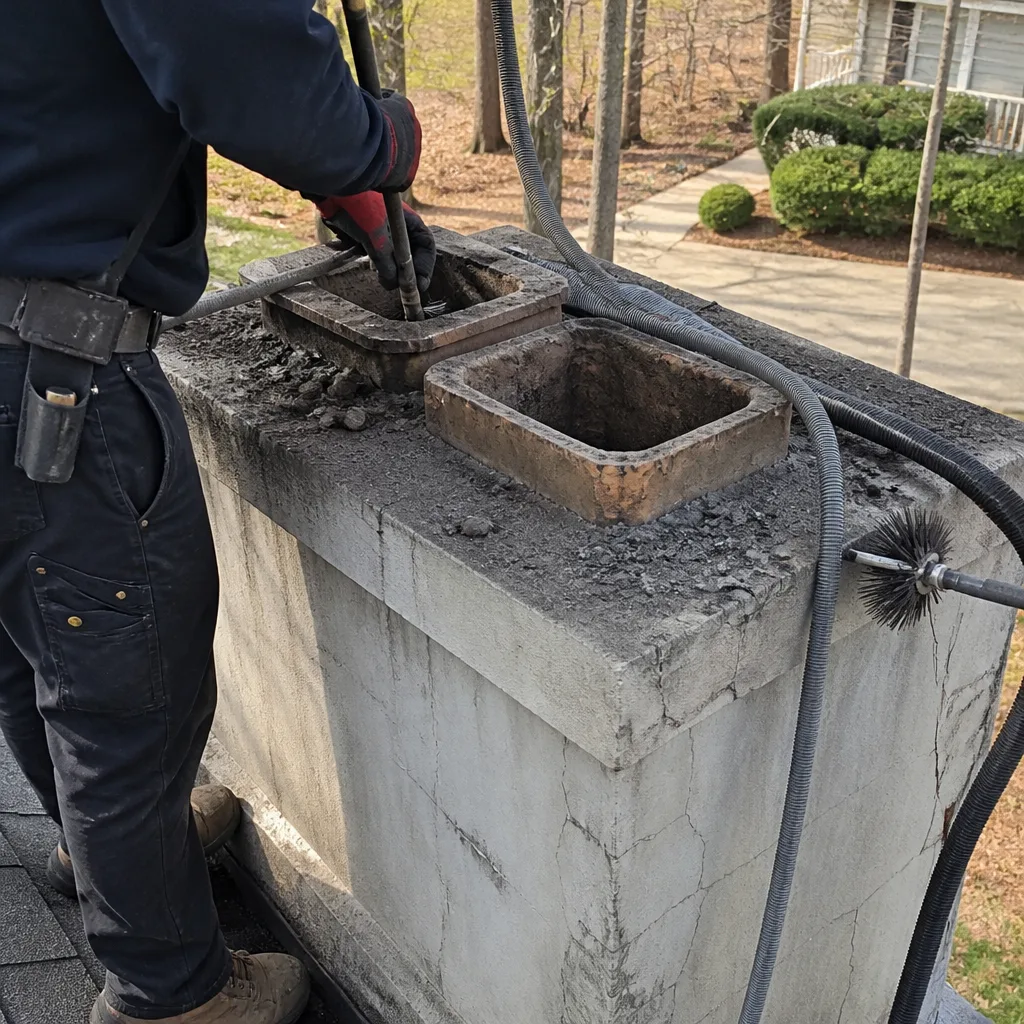 Before
 After
After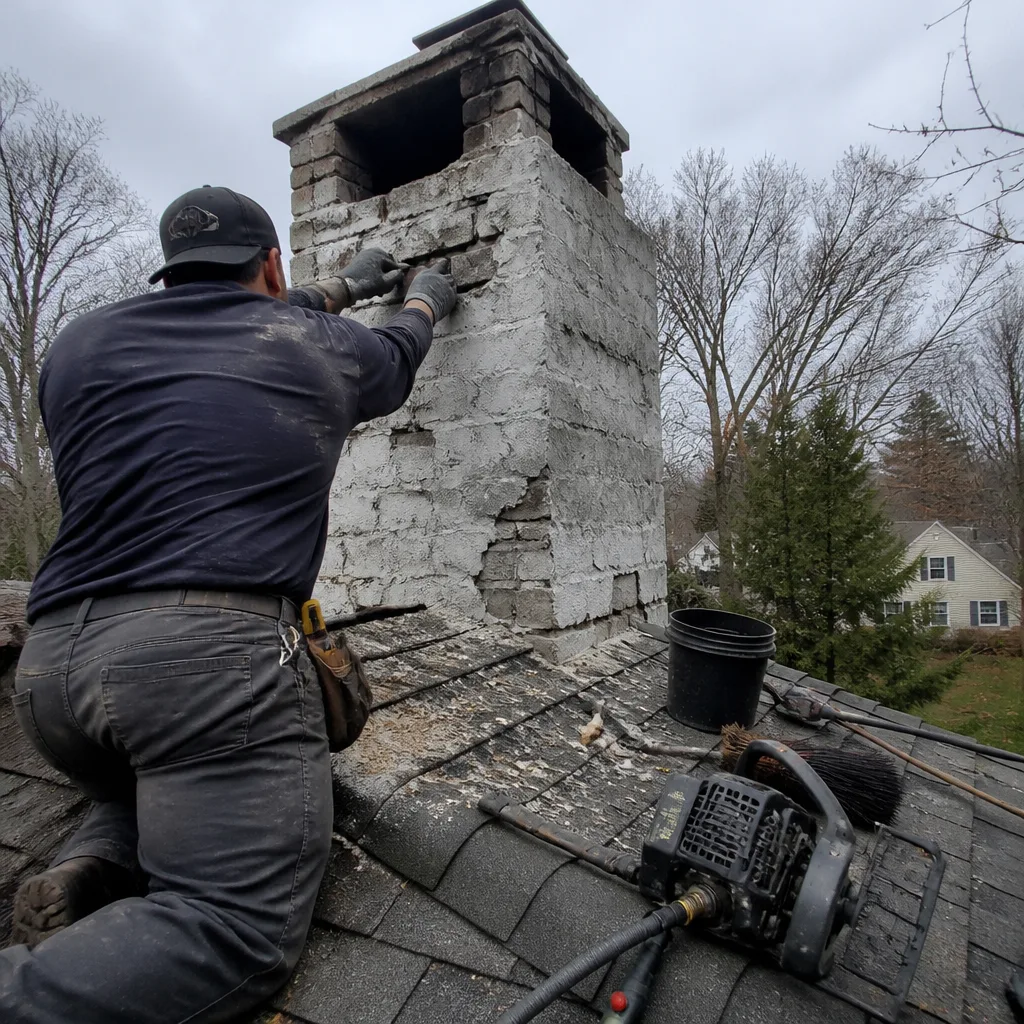 Before
 After
After