
Last updated October 15, 2026
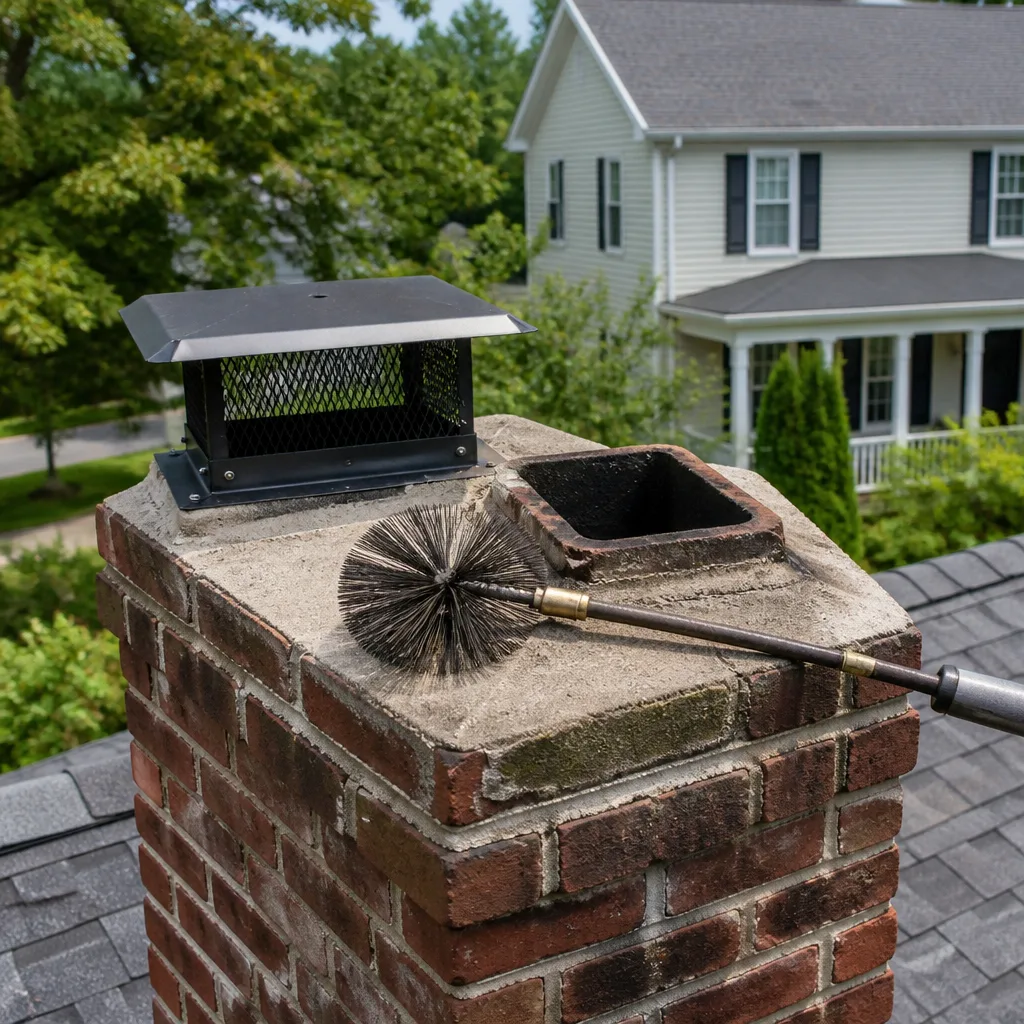 Sweep & inspection
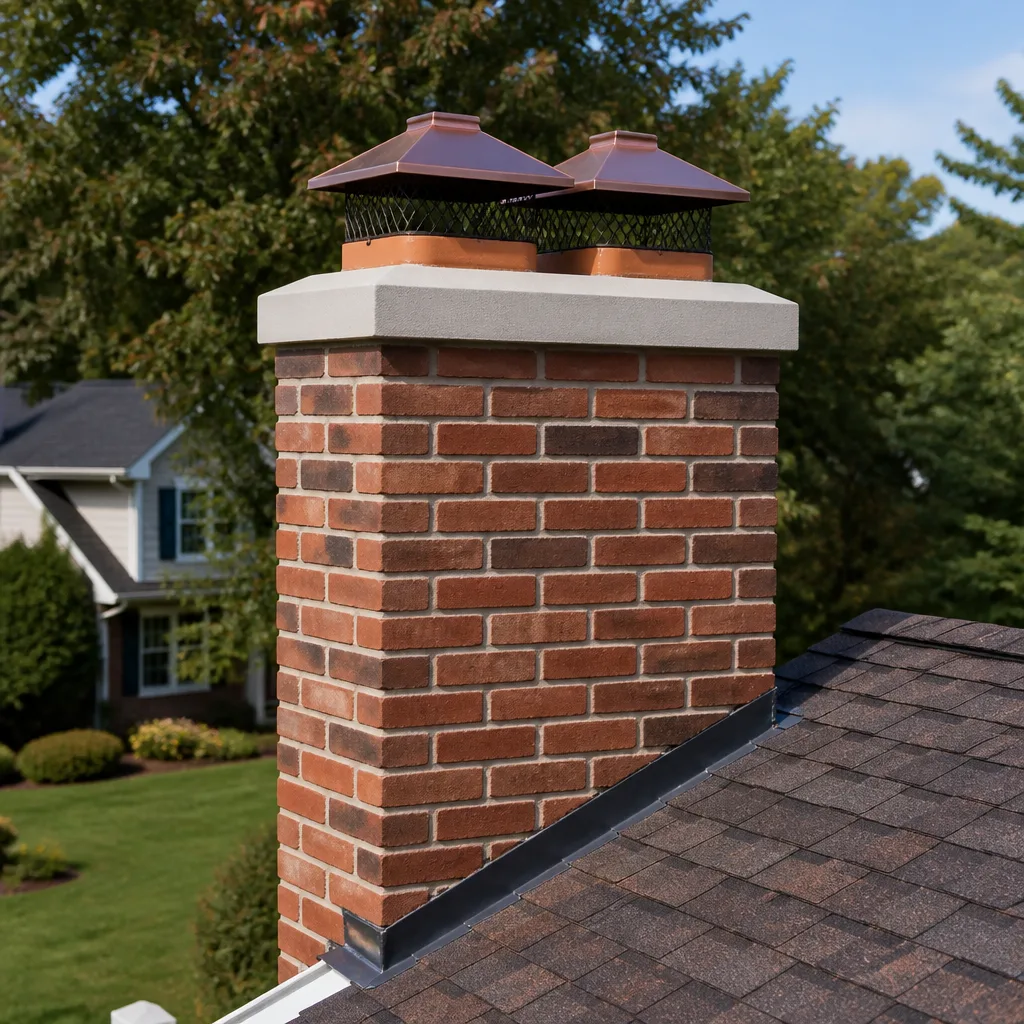 Caps & crowns
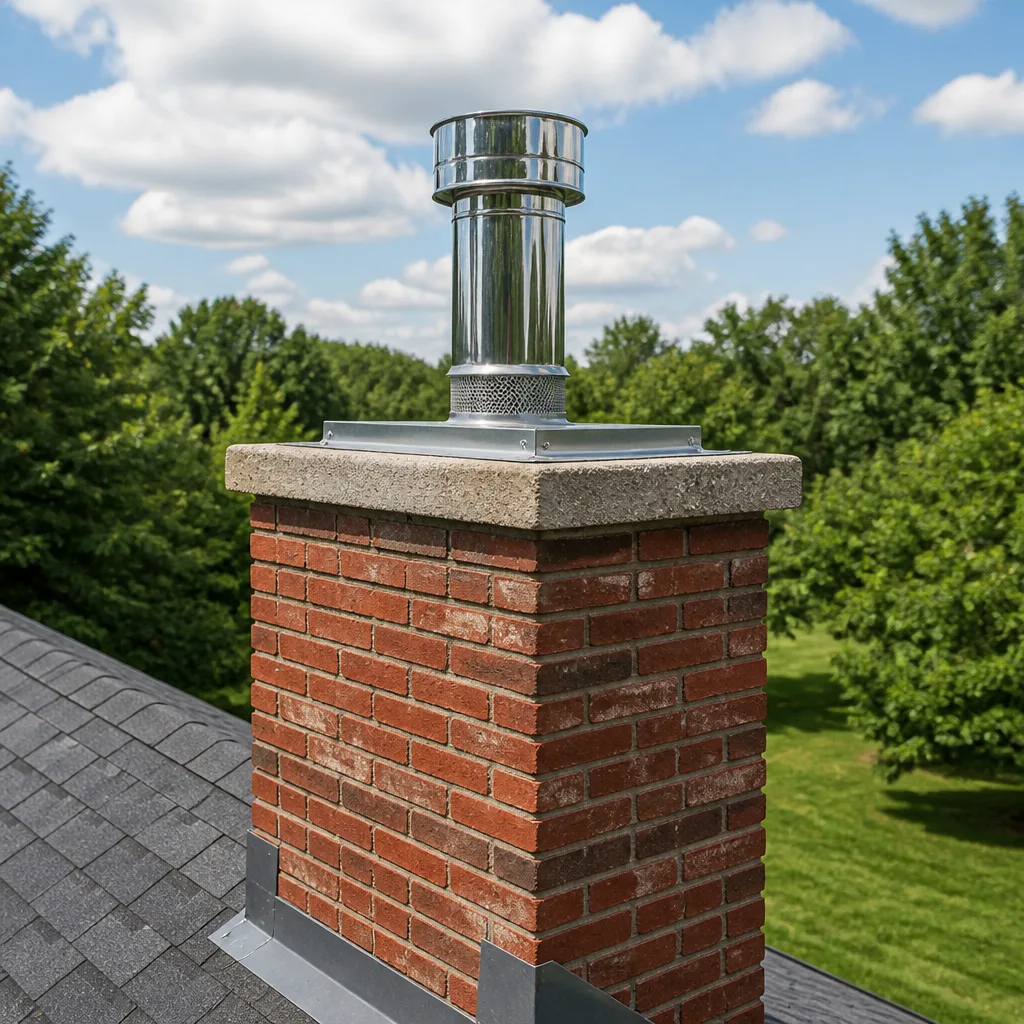 Flue relining
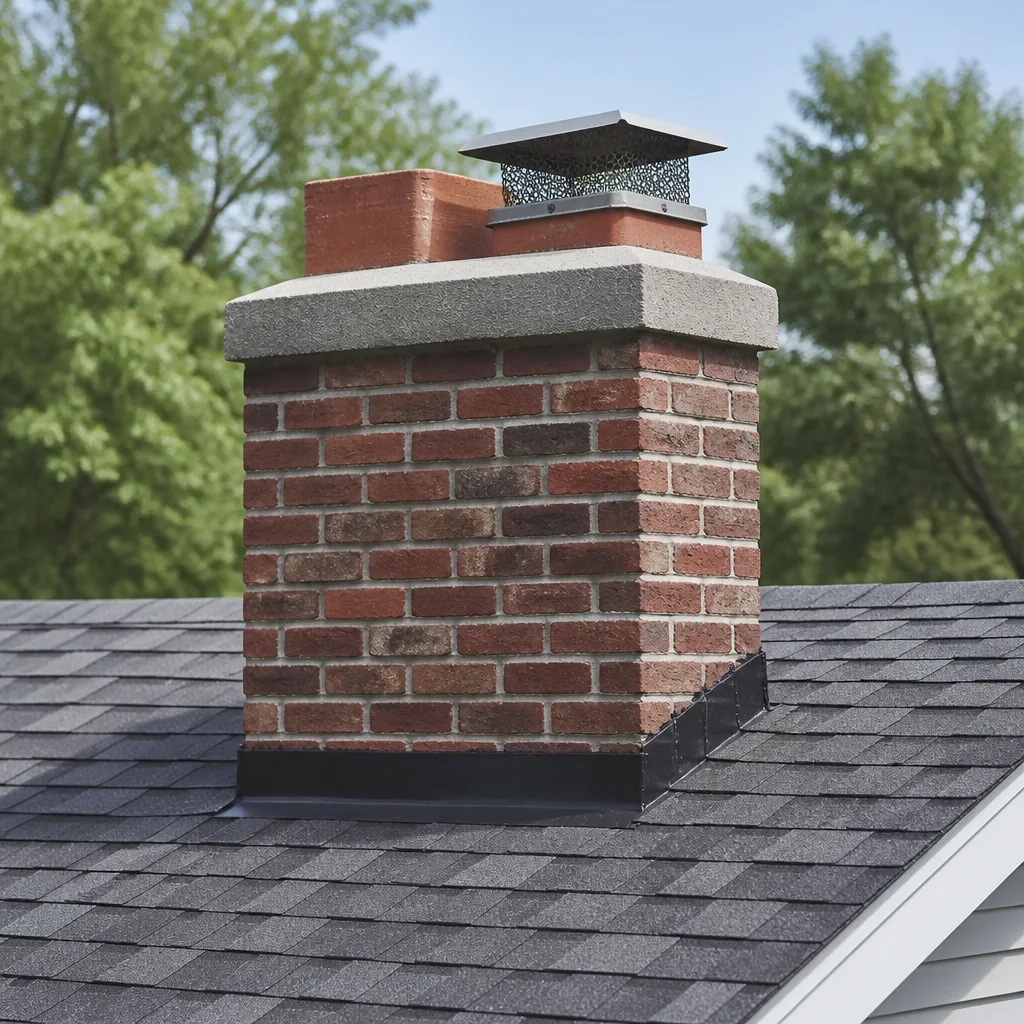 Masonry repair
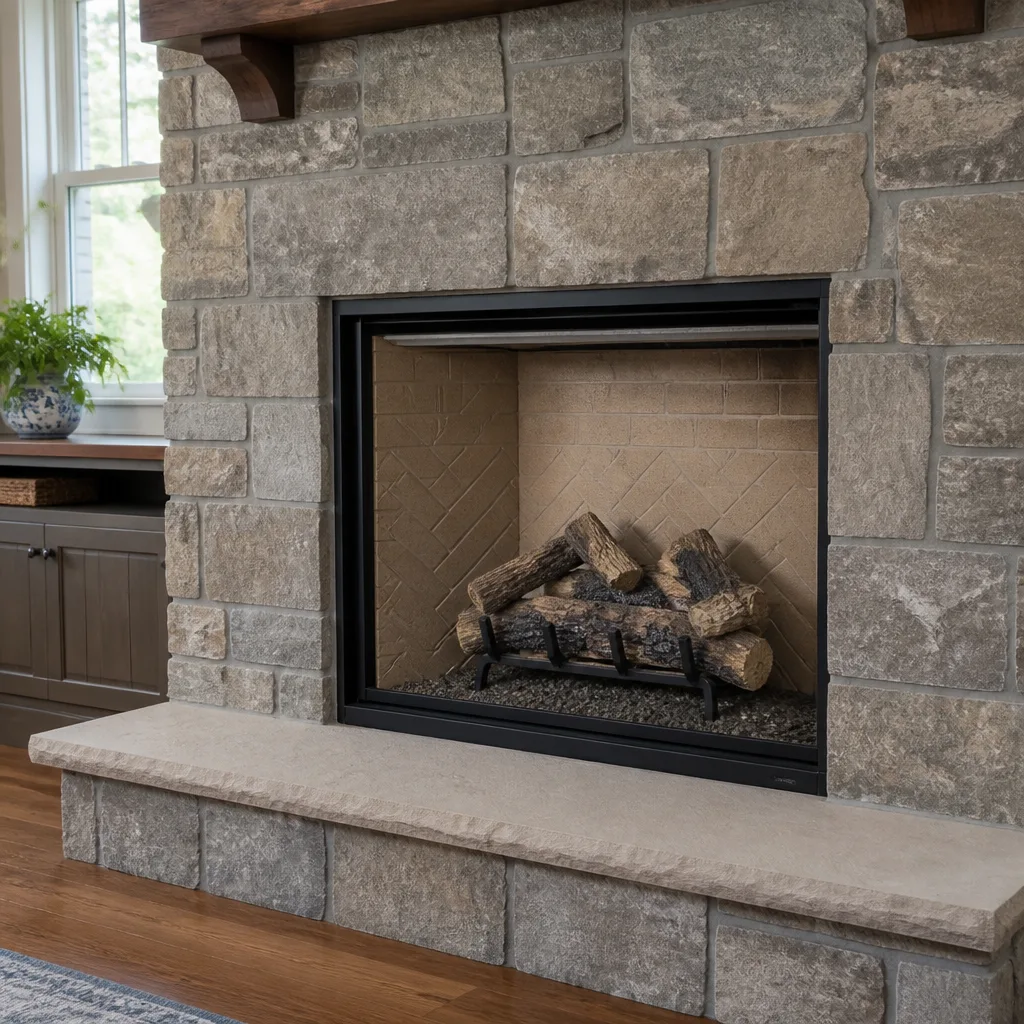 Gas fireplace service
Level 1 sweep and inspection to the NFPA 211 annual standard - flue, crown, cap, and flashing checked and photographed
Chimney sweep logs do not sweep chimneys. They loosen some creosote - which then falls where a brush and vacuum still have to collect it.
The Complete Guide to Chimney Cleaning in Alpharetta
Alpharetta averages fewer than 30 nights a year cold enough to justify a fire, and that sounds like good news for your chimney. It isn’t. Short, start-stop burn seasons do something most Alpharetta homeowners never expect: they create the stickiest, most dangerous form of creosote faster than daily winter burning does in colder climates. This guide walks you through exactly what happens inside your flue during a Georgia burn season, what each creosote stage looks and smells like, what a proper cleaning appointment should include, and how to read an inspection report without being talked into work you don’t need. For seasonal chimney cleaning care for Alpharetta, see our year-round homeowner’s guide. By the end, you’ll know precisely what to ask any chimney company before they step through the door.
Styles & brands we work with
Quick Answer
Chimney cleaning in Alpharetta typically costs between $189 and $349 for a standard Level 1 sweep of a regularly used fireplace, and most homes need it every 40 to 60 burns or at minimum once per year. The job removes creosote buildup from the flue walls, smoke chamber, and damper assembly, reducing fire risk and improving draft. A professional sweep takes 60 to 90 minutes and should always include a written price before work starts, floor protection throughout the home, and a basic visual inspection of the flue’s accessible areas.
Table of Contents
- Why Alpharetta’s Mild Climate Creates a Unique Creosote Risk Profile
- The Three Creosote Stages: What They Look Like, Smell Like, and Mean
- What a Chimney Cleaning Appointment Should Include, Step by Step
- What a Written Care Promise Should Cover Before Anyone Touches Your Flue
- How to Read a Level 1 vs Level 2 Inspection Report Without Panic
- Chimney Cleaning Costs in Alpharetta: A Straight Answer
- What You Can Safely Check Yourself vs What Needs a Technician
- Common Mistakes to Avoid
- When to Call a Professional
- Frequently Asked Questions
- The Bottom Line
Why Alpharetta’s Mild Climate Creates a Unique Creosote Risk Profile
If you moved to Alpharetta from Ohio, Michigan, or upstate New York, you probably assumed your chimney needs less attention here. That assumption is backward. Homes in cold climates burn hot, continuous fires for months, and those sustained high temperatures help burn off creosote as it forms. Alpharetta’s burn pattern, by contrast, looks like this: a fire on a chilly November evening, nothing for three weeks, a fire on Christmas morning, nothing until a February cold snap. Each burn starts with a cold flue and ends before the system reaches the sustained temperatures that keep creosote in its flaky, easy-to-remove first stage.
What results is layered creosote. Each short burn deposits a thin film onto the flue walls. The next burn reheats that film, bakes it partially, and adds another layer. Over a single season, those layers compress into a dense, tar-like glaze that resists ordinary brushing. We see this pattern constantly in chimney sweep work across Alpharetta, and it’s the primary reason annual sweeps matter more here than homeowners expect.
Humidity compounds the issue. Alpharetta sits in a humid subtropical zone, and that moisture reacts with creosote to accelerate corrosion inside metal flue liners. Homes near Big Creek, in neighborhoods like Windward and Crabapple, often show more rapid liner deterioration simply because of proximity to creek-level humidity. A chimney that sits unused for nine months still collects moisture, which seeps into creosote deposits and makes them harder to remove the following season.
The takeaway: infrequent burning does not mean a clean chimney. It means a chimney that needs professional attention every year, specifically because of how and when you burn.
The Three Creosote Stages: What They Look Like, Smell Like, and Mean
Creosote is not one substance. It’s a family of combustion byproducts that changes form depending on flue temperature, burn duration, and fuel moisture. Learning to identify the three stages gives you a head start before calling any company, and it helps you understand why some cleanings cost more than others.
Stage One: Flaky Soot
Stage one creosote looks like flat black dust or fine flakes, similar to ground coffee or charcoal powder. It has a mild smoky smell, often noticeable only when the fireplace has been used within a day or two. This stage brushes off easily with standard sweeping tools and represents the lowest risk profile. Most Alpharetta homes that burn seasoned hardwood and have the flue swept every year stay in stage one territory.
Stage Two: Crunchy Granules
Stage two creosote appears as crunchy, granulated deposits that look like dark cornflakes or coarse sand. It has a distinct odor that lingers even days after the last fire, sometimes described as an acrid, tar-like smell that intensifies on humid days. This stage forms when flue temperatures hover in the mid-range, which matches Alpharetta’s stop-start burn pattern. Professional removal involves rotary brushing or chemical treatment in addition to standard sweeping. It is not a DIY situation.
Stage Three: Glazed Tar
Stage three is the one chimney professionals watch for. It appears as a shiny, hardened glaze that looks like melted plastic or dark obsidian coating the flue walls. The smell is sharp and persistent, often noticeable from the living room even when no fire has burned for weeks. This glaze is highly concentrated fuel. It resists standard brushes and usually requires chemical treatments, rotary loop tools, or in severe cases, professional-grade removal methods from companies like Gelco, whose products we use when flues reach this condition. If you see shiny buildup inside your flue, do not burn another fire until a professional has assessed it.
What a Chimney Cleaning Appointment Should Include, Step by Step
Not all chimney cleanings are the same. Here is exactly what a complete appointment should look like when the technician arrives at your Alpharetta home. If your current provider omits any of these steps, ask why.
- Interior floor protection. The technician should lay drop cloths from the entry door to the fireplace and place shoe covers on before stepping onto any floor surface. This is not optional. In our Kindling Chimney Alpharetta home practice, shoe covers and drop cloths are part of every visit, not an add-on.
- Furniture and mantle assessment. The technician should identify what cannot be moved and what needs temporary covering. Nothing in your home gets moved without asking first. This matters in homes where young children leave toys near the hearth or where furniture placement makes the work zone tight.
- Fireplace and damper inspection. Before any sweeping begins, the technician will examine the firebox, damper plate, and visible flue area with a flashlight. This establishes baseline condition and identifies any pre-existing damage so it is not mistaken for sweep damage.
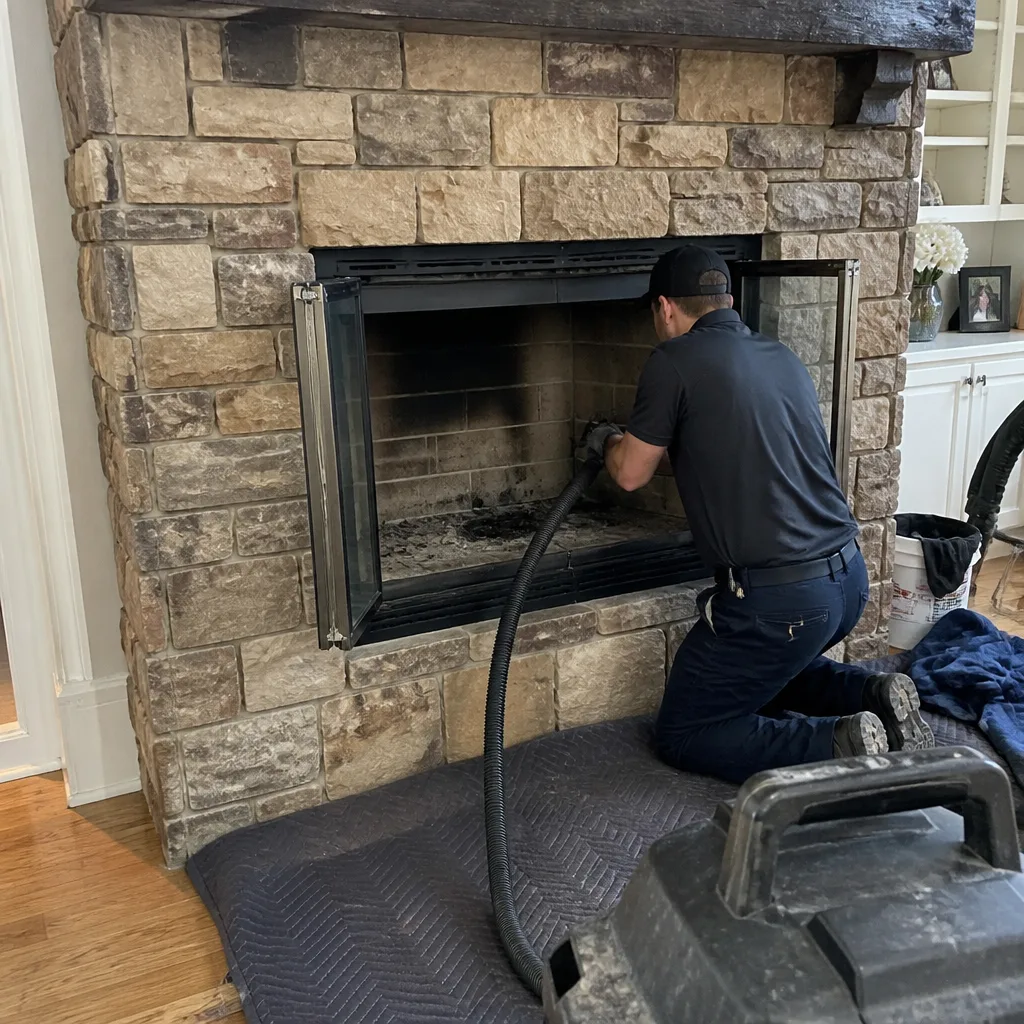
- Flue preparation. The damper gets closed and sealed with a plastic barrier or specialized cover to contain soot. A high-efficiency vacuum with a HEPA filter is set up at the fireplace opening to capture dust at the source.
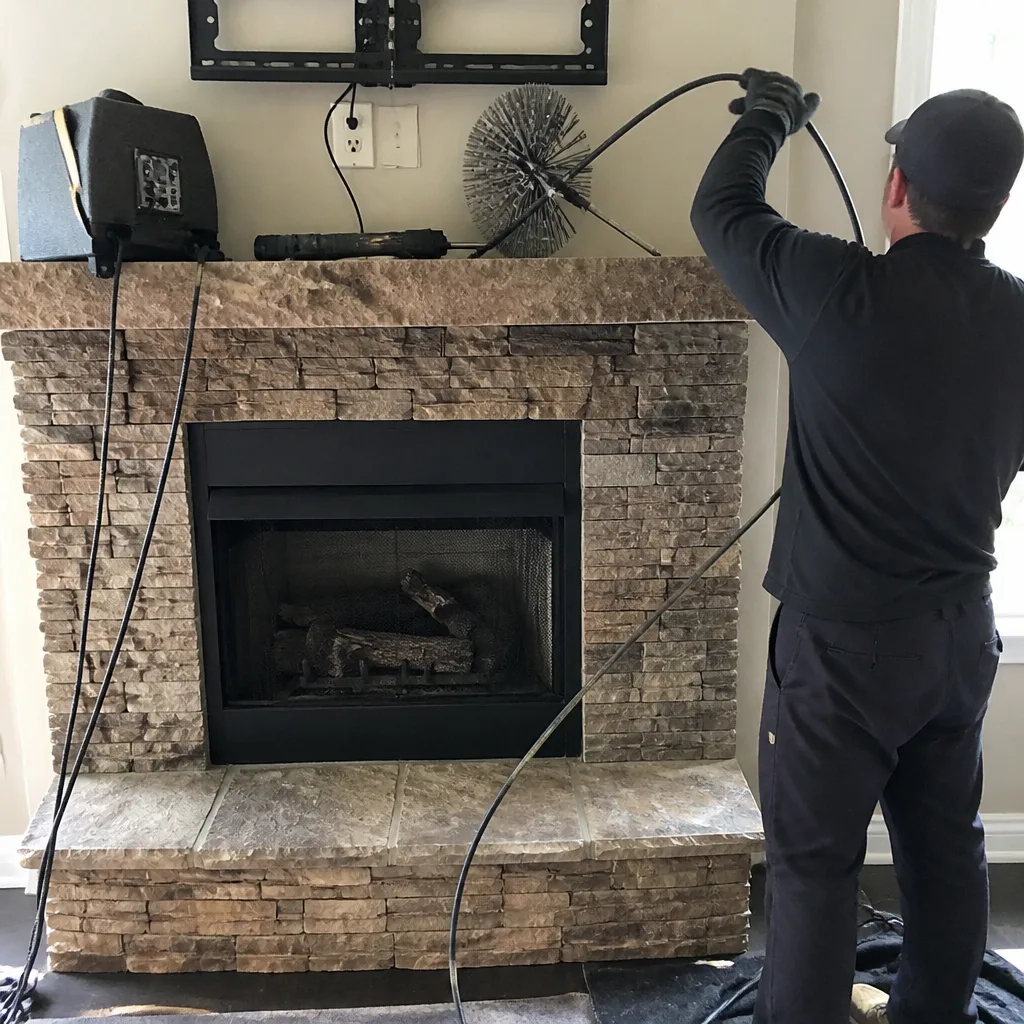
- Mechanical sweeping. Wire or poly brushes sized to the exact flue dimensions run the full length of the flue, from the firebox up through the chimney cap area. This dislodges stage one and stage two creosote.
- Smoke chamber and shelf cleaning. The area above the damper where smoke gathers before entering the flue gets hand-cleaned with specialized brushes. This area is often skipped by lower-cost providers because it is awkward to reach, but it is a primary creosote accumulation point.
- Post-sweep inspection. After cleaning, the technician will run a visual inspection of the flue with a light or camera to confirm creosote removal and note any cracks, gaps, or liner deterioration that were hidden beneath the buildup.
- Clean-up verification. The drop cloths get folded inward and removed, the work area is vacuumed, and you should receive a photo showing the clean-up completed before the crew leaves. This photo is part of what we call the Cedarwell Care Promise, and it’s your evidence that the job ended the way it started.
Optional add-ons to watch for: chimney cap replacement, damper repair, waterproofing treatments, and camera inspections that go beyond the standard visual sweep. None of these should be pressured on you. Each should be offered with a written price and a plain explanation of whether it can wait.
What a Written Care Promise Should Cover Before Anyone Touches Your Flue
A reliable chimney company in Alpharetta will put specific commitments in writing before work begins. If you’re comparing providers, our guide on how to hire a chimney cleaning contractor in Alpharetta covers what that written promise should address. If any of these items are vague or missing, treat that as a signal to keep looking.
A hard price before work starts. The written quote should be a fixed number, not a range with “could be more” language. It should itemize the sweep cost, any inspection charges, and any recommended repairs as separate line items. This is the single most important element. A company that will not commit a price in writing before beginning work is signaling flexibility that benefits them, not you.
Clean-up scope in specific terms. The promise should name the exact protections: drop cloths, shoe covers, HEPA filtration, post-job vacuuming, and photo documentation. “We respect your home” is meaningless. “Shoe covers and drop cloths on every visit, nothing moved without asking, photo of the clean-up before we leave” is a commitment you can verify.
Workmanship warranty in plain language. What happens if the sweep misses creosote in the smoke chamber? What if the damper gets stuck after the cleaning? The promise should state the remedy and the timeframe. Our 365-Day Done Right Promise answers this directly: if the work is not right, we make it right. No fine print about excluded areas or conditions.
Product disclosure where repairs are involved. If the technician recommends a new liner, resurfacing treatment, or cap replacement, the written documentation should name the products being used. We work with DuraFlex, HeatShield, and Olympia Chimney liners, and Famco caps, and we tell homeowners the brand before installation. You have a right to know what goes into your chimney, and reputable companies will volunteer that information without being asked.
When a company hands you a written promise that covers these four areas, you know the appointment will proceed on predictable terms. When they won’t, every hour the job runs and every tool the technician reaches for becomes a negotiation.
How to Read a Level 1 vs Level 2 Inspection Report Without Panic
Chimney inspections come in three levels, and most Alpharetta homeowners will only ever encounter the first two. Understanding the difference prevents two problems: paying for a more expensive inspection than you need, and misreading a Level 2 report as a demand for immediate repairs.
Level 1 Inspection
A Level 1 inspection is the standard visual check performed during every annual sweep. The technician examines the accessible portions of the fireplace, damper, flue, and chimney exterior using a flashlight and the naked eye. No special equipment, no ladder work beyond basic roof access for the cap area, and no removal of chimney components. This is what you should receive as part of your standard cleaning, and it is sufficient when your fireplace usage patterns and fuel type have not changed since the last inspection.
Level 2 Inspection
A Level 2 inspection adds camera scanning of the flue interior and roof-level examination of the crown, cap, and flashing. It is required when you are selling or buying a home, after a chimney fire of any size, after a seismic event, or when you have changed the type of fuel or appliance connected to the flue. If you’re buying a home in Alpharetta with a masonry fireplace, especially in established neighborhoods like Willow Springs or Windward, a Level 2 inspection done by a qualified professional is a reasonable condition of purchase. The camera footage shows liner cracks, missing mortar joints, and damaged flue tiles that a visual check simply cannot see.
Reading the Report
Inspection reports typically classify findings by severity: immediate hazards, recommended repairs, and observations. The key distinction is between action items and conditions. A “hairline crack in the flue tile at 9 feet” is a condition. It may warrant monitoring, not same-season replacement. A “separated flue tile joint exposing combustible materials at 6 feet” is an action item and should be addressed before you burn again. Reports written with specific measurements, locations, and photographs give you enough information to make a decision. Reports that just say “liner needs replacement” without photographs or measurements do not. In our chimney inspection work throughout Alpharetta, every report includes camera images so you can see exactly what the technician saw.
Chimney Cleaning Costs in Alpharetta: A Straight Answer
Standard chimney sweeping in Alpharetta runs between $189 and $349 for a Level 1 sweep and inspection of a regularly maintained fireplace. Homes with stage three glazed creosote, second-story chimney access, or animals in the flue will land higher, typically in the $450 to $800 range, because the work takes longer and requires specialized tools. Here’s the breakdown so you can compare estimates line by line.
- Standard sweep and Level 1 inspection: $189 to $349, depending on flue height and accessibility
- Stage three creosote removal (chemical treatment plus rotary tooling): $400 to $700, added on top of the standard sweep when glaze is present
- Level 2 camera inspection: $150 to $350, typically separate from the sweep cost
- Chimney cap replacement: $120 to $450 including the cap itself, with Famco and Olympia Chimney caps common in our work
- Damper repair or replacement: $180 to $600 depending on whether the repair is top-mount or throat-mount
- Flue liner repair using HeatShield or a DuraFlex liner: $2,800 to $6,500, which you should not be quoted without camera footage in hand showing why
These ranges reflect what we see consistently across Alpharetta, from newer construction near Avalon to older masonry fireplaces in neighborhoods like Nesbit Ferry and Kimball Bridge. The number that matters most is the written price you receive before work begins. That price should not change after the technician arrives, and if a company tells you it might, call someone else.
For homes with gas log fireplaces, the cleaning is simpler and runs on the lower end of the range, often $150 to $250, with the focus on debris removal and burner inspection rather than creosote removal. Gas fireplaces still need annual attention, but the work is different.
What You Can Safely Check Yourself vs What Needs a Technician
You can assess your chimney’s condition between professional visits without climbing onto the roof. Here’s what to look for, and here’s where the line is between homeowner awareness and professional territory.
What you can check yourself:
- Shine a flashlight up from the firebox. With the damper open, look for shiny black glaze on the flue walls. If you see it, you’re in stage three territory and shouldn’t burn.
- Smell the fireplace on a humid day. A sharp, tar-like odor that gets stronger with humidity suggests creosote accumulation in the smoke chamber.
- Check for debris in the firebox. Small piles that look like coarse pepper could be creosote flakes falling from the flue walls, a symptom that the chimney needs attention sooner than your annual schedule.
- Look for water staining around the ceiling near the chimney chase. This points to flashing issues at the roof line, not a creosote problem, but it still needs attention from a pro.
- Watch how the fire burns. Smoke spilling into the room, flames leaning toward you, or a fire that struggles to stay lit all suggest draft obstruction, which often means creosote narrowing the flue passage.
What needs a professional: anything involving roof access, flue interior inspection, creosote removal, or damper replacement. Working on a roof in Alpharetta after rain means slick shingles and a real fall risk. Working inside a flue means confined space and particulate exposure that requires proper protective equipment. The threshold is simple: if the task requires a ladder taller than a step stool or reaches beyond the firebox opening, it is professional work. Chimney sweeping also needs a high-efficiency vacuum with true HEPA filtration, and that’s simply not household equipment.
For safety-minded Alpharetta families, the balance is this: do the visual checks, call with what you find, and let a technician with proper equipment and training handle everything from the damper up.
Common Mistakes to Avoid
- Skipping the annual sweep because you only burned a few fires. Alpharetta’s stop-start burn cycles create stage two creosote even with light usage. A few fires a year is enough to warrant a professional cleaning, precisely because the flue never gets hot enough to self-clean.
- Burning unseasoned wood to save money. Green or freshly cut hardwood found cheap in Milton or Woodstock puts moisture into the flue system, forming creosote faster and generating more smoke. Seasoned firewood is an investment that pays back in fewer sweeps and safer burns.
- Hiring based on the lowest quote without asking what’s included. A $129 sweep often omits smoke chamber cleaning, uses no HEPA filtration, and arrives without drop cloths. You’ll either pay for those items as add-ons or live without them, and neither outcome is a bargain.
- Ignoring a smoky fireplace because it only happens on windy days. Wind-related smoke spillage often masks poor draft from creosote narrowing or cap obstruction. Wind just makes an existing problem more visible.
- Accepting a liner replacement recommendation without seeing camera footage. A reputable company will show you the cracks, gaps, or deterioration on screen. If the recommendation comes with no images, get a second opinion before spending thousands.
- Burning cardboard, wrapping paper, or construction scraps. These materials contain chemicals and dyes that create unusually dense creosote deposits and increase fire risk. Christmas morning wrapping paper goes in the recycling bin, not the fireplace.
- Waiting until late fall to book. Alpharetta chimney companies book out two to three weeks in advance when the first cold snap hits. Calling in August or September gets you an appointment on your schedule, not a wait list.
When to Call a Professional
Call a professional chimney company in Alpharetta if you notice shiny black glaze inside the flue, if your fireplace smells strongly on humid days, if smoke enters the room while burning, or if it has been more than a year since the last cleaning. Also call before you buy or sell a home, and call if you have never had the chimney inspected since moving in. These are not optional niceties. They are the difference between a fireplace that works safely and one that quietly accumulates the conditions for a chimney fire. Kindling Chimney Alpharetta offers free estimates throughout Alpharetta, and you can reach us at (762) 225-2593 to schedule a sweep, inspection, or fireplace repair appointment.
Frequently Asked Questions
A standard chimney sweep with a Level 1 inspection in Alpharetta costs between $189 and $349 for most fireplaces. Homes with heavy glazed creosote, difficult roof access, or animals in the flue will pay more. Call (762) 225-2593 for a written quote before work begins, with no on-the-spot pressure.
The National Fire Protection Association standard says chimneys should be swept at least once per year, and that minimum applies to Alpharetta homes regardless of how many fires you burn. Due to the stop-start burning pattern common in Georgia, annual sweeping matters even for fireplaces used less than a dozen times per season.
You need a new liner only when inspection shows cracks, gaps, separated joints, or deterioration that exposes combustible materials to heat transfer. A reputable company will show you camera footage of the damage before recommending a liner like DuraFlex or HeatShield. Without that footage, get a second opinion before authorizing the work.
Creosote continues to accumulate in layers, narrowing the flue passage and reducing draft performance. Over time, the chimney smells strongly even when unused, smoke enters the home more readily, and the fire risk rises because creosote is combustible fuel sitting inside the flue. Skipping one year with light usage is usually manageable; skipping three or four is not.
Yes, and summer is the ideal time to book. The flue is dry, scheduling is flexible, and any repairs discovered during the sweep can be completed before the first fall fire. August and September appointments fill quickly, so calling early in the summer gets you ahead of the rush.
A sweep removes creosote and debris from the flue, smoke chamber, and damper area. An inspection evaluates the structural condition of the chimney and flue using visual assessment or camera technology. The two are typically done together during an annual visit, which is why a chimney inspection in Alpharetta usually accompanies the sweep rather than standing alone.
The Bottom Line
Chimney cleaning in Alpharetta is not about how many fires you burn. It’s about how your burn pattern produces creosote, how Georgia humidity accelerates deterioration, and how a written promise protects your home during the service. Annual sweeping with a Level 1 inspection is the baseline every Alpharetta fireplace should receive, with camera inspection reserved for home sales, appliance changes, or post-fire situations. The company you choose should put a fixed price in writing before starting, protect your floors and air quality as a matter of policy, and show you every recommendation with photographic evidence. Check the visual signs yourself, book during the summer when possible, and never authorize liner work without seeing the camera footage. A clean chimney is a quiet, safe, predictable system, and in Alpharetta, that’s exactly what your fireplace should be.
Written by Danny Cortes, Owner at Kindling Chimney Alpharetta, serving Alpharetta since 2003.
See the difference
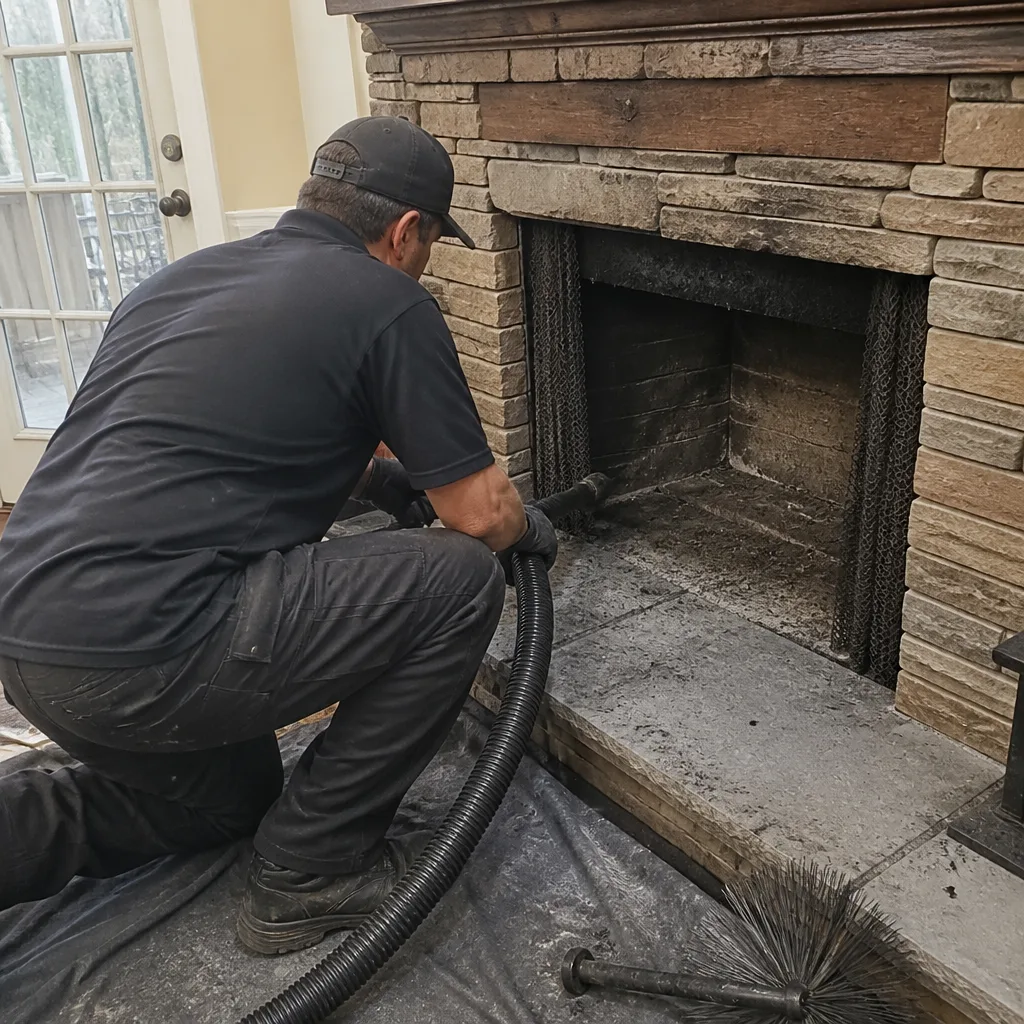 Before
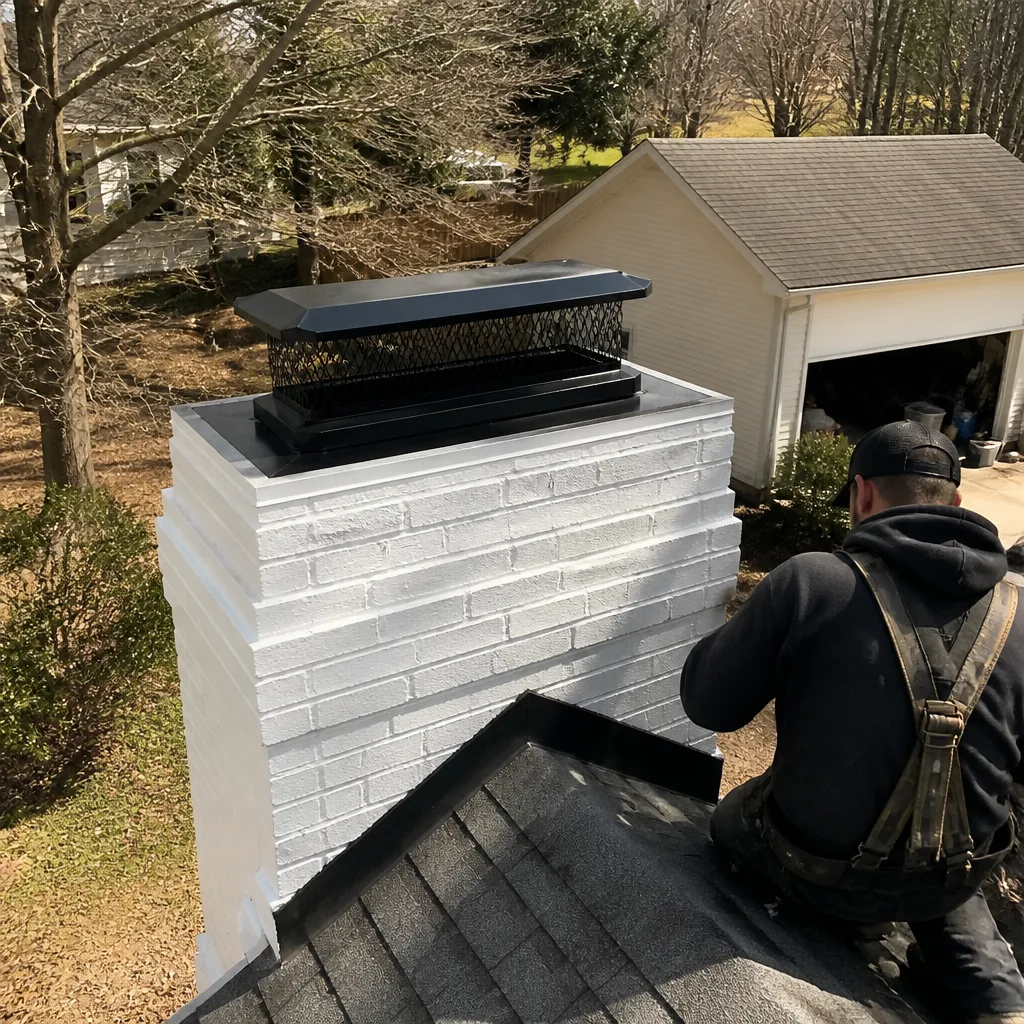 After
After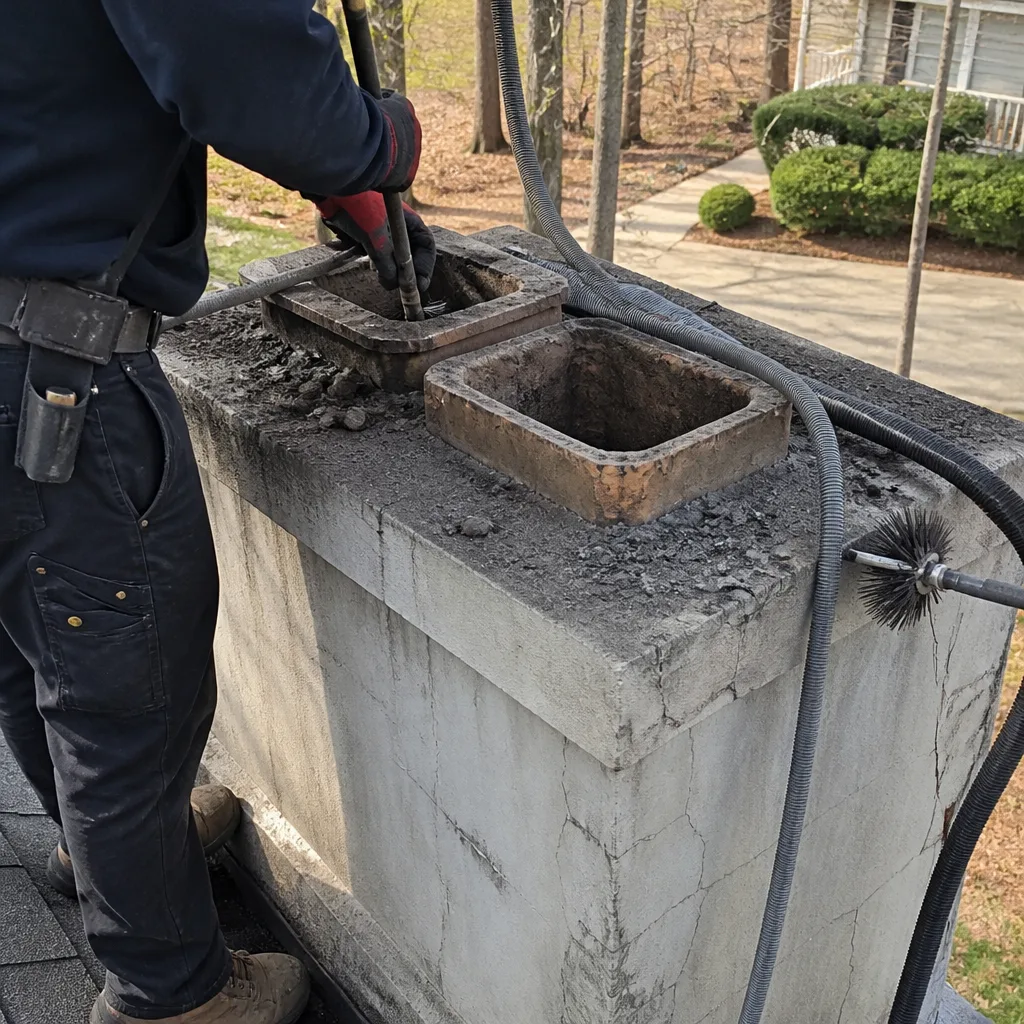 Before
 After
After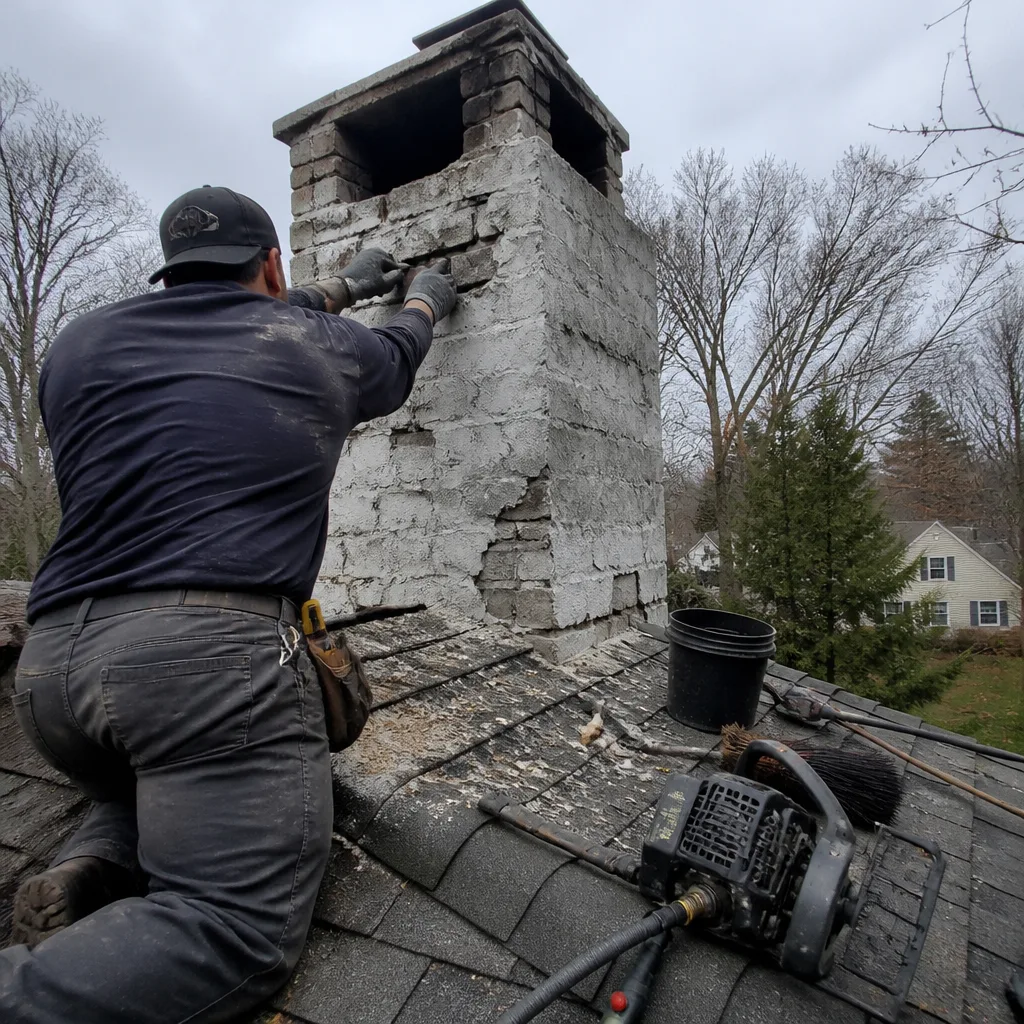 Before
 After
After