
Last updated October 15, 2026
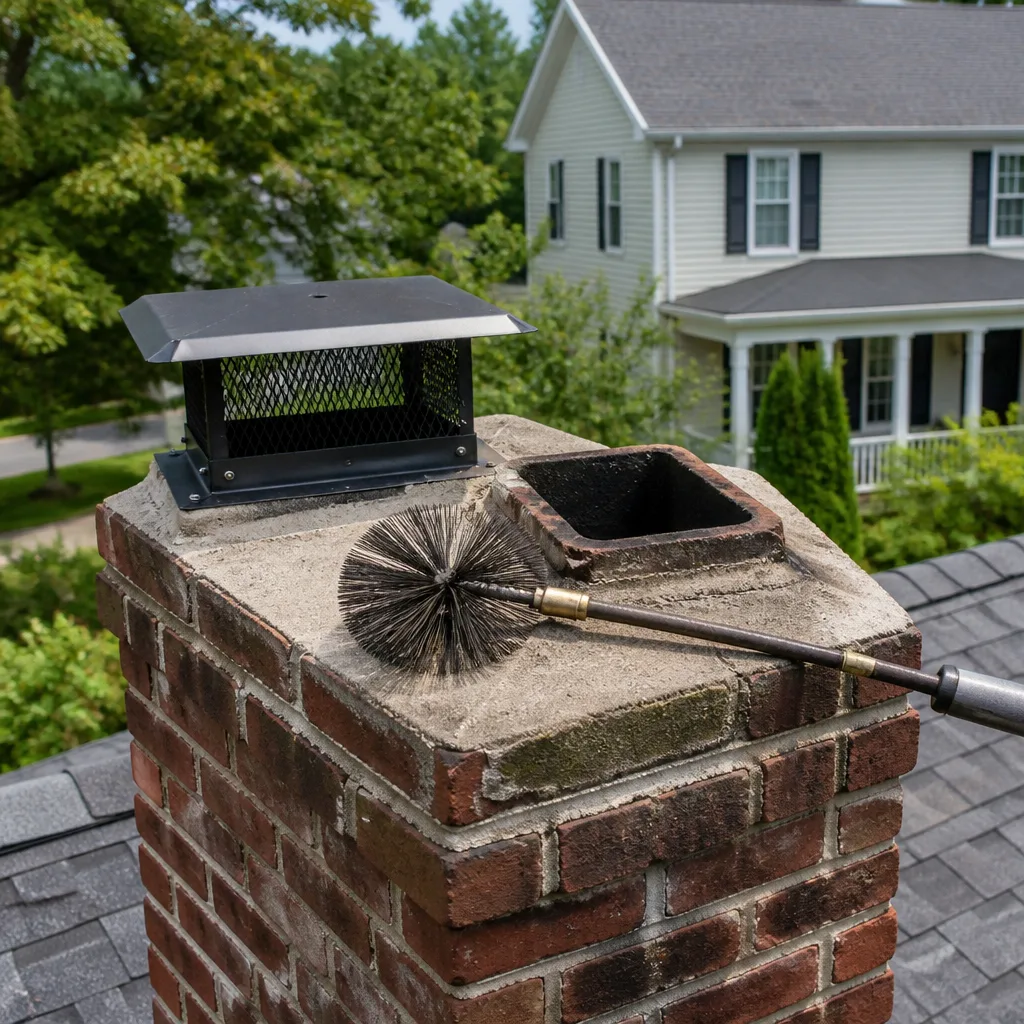 Sweep & inspection
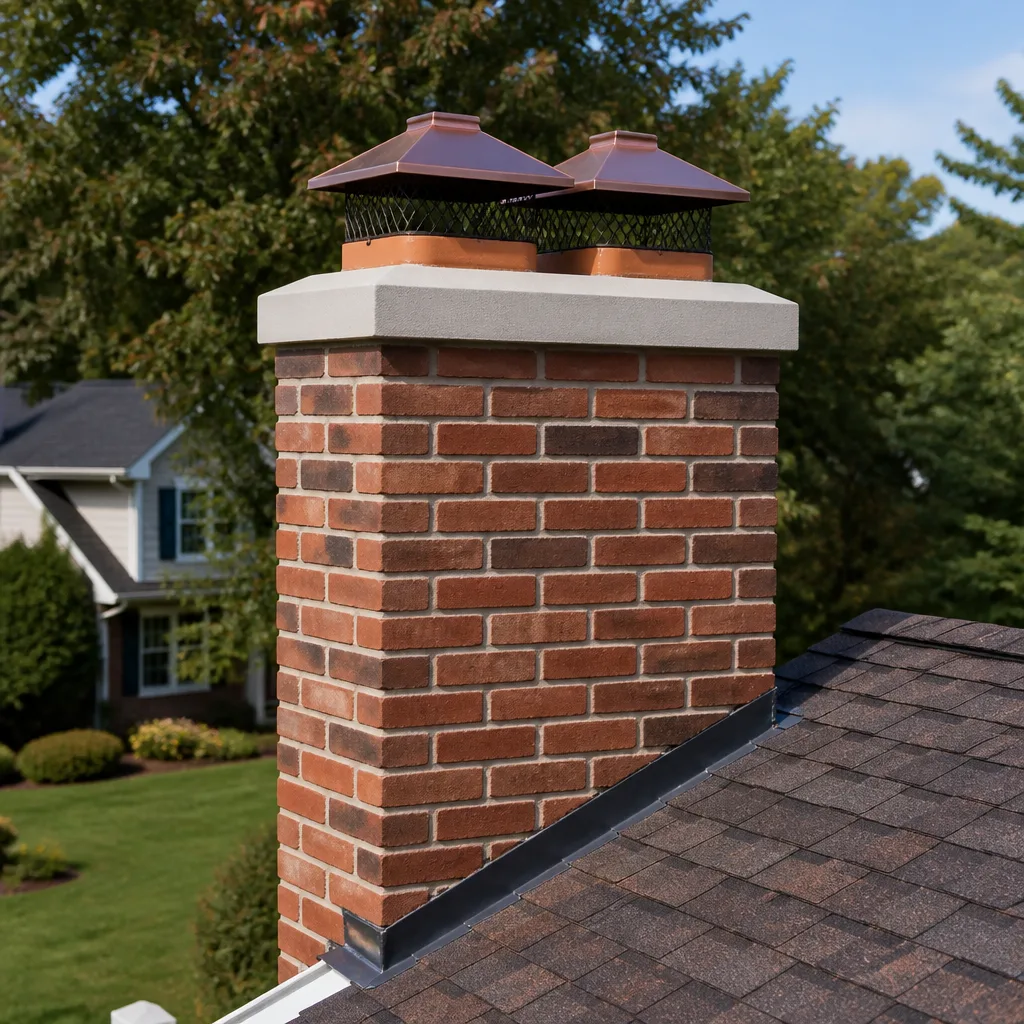 Caps & crowns
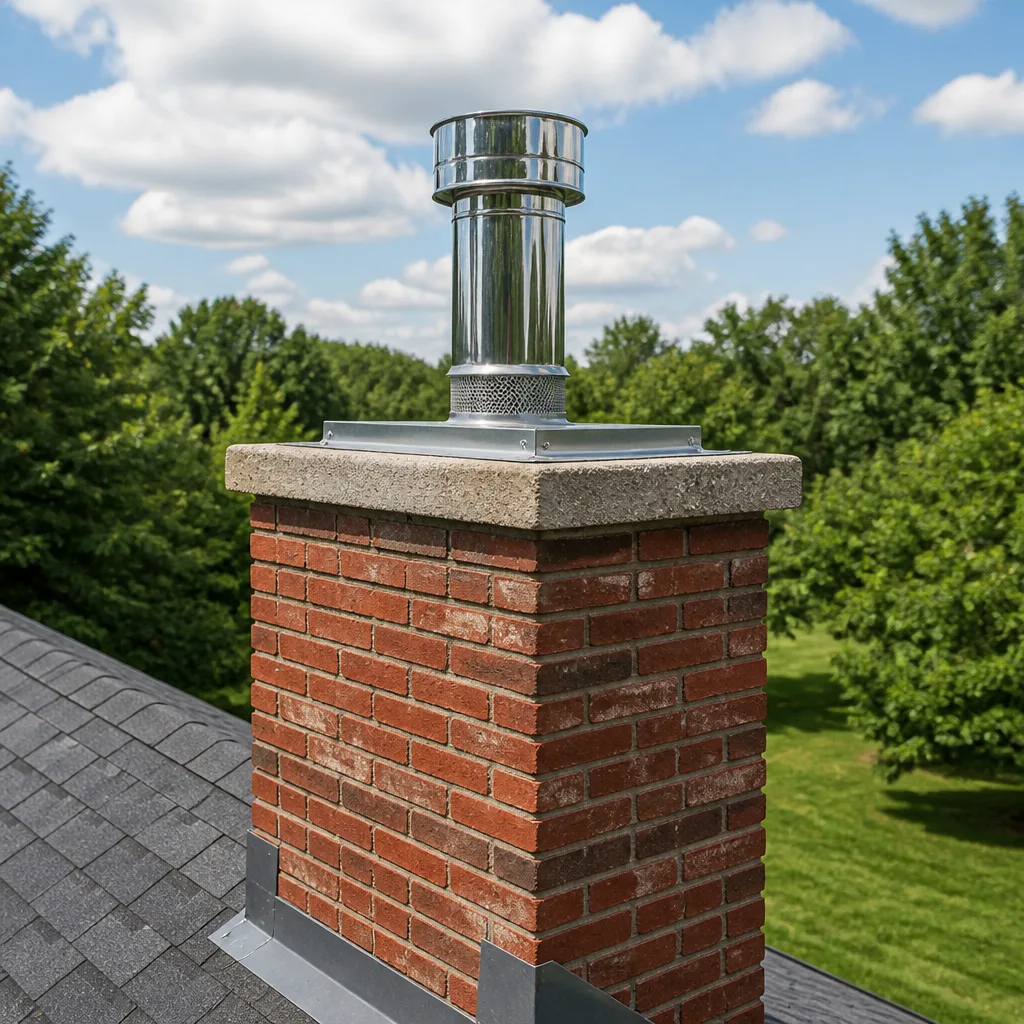 Flue relining
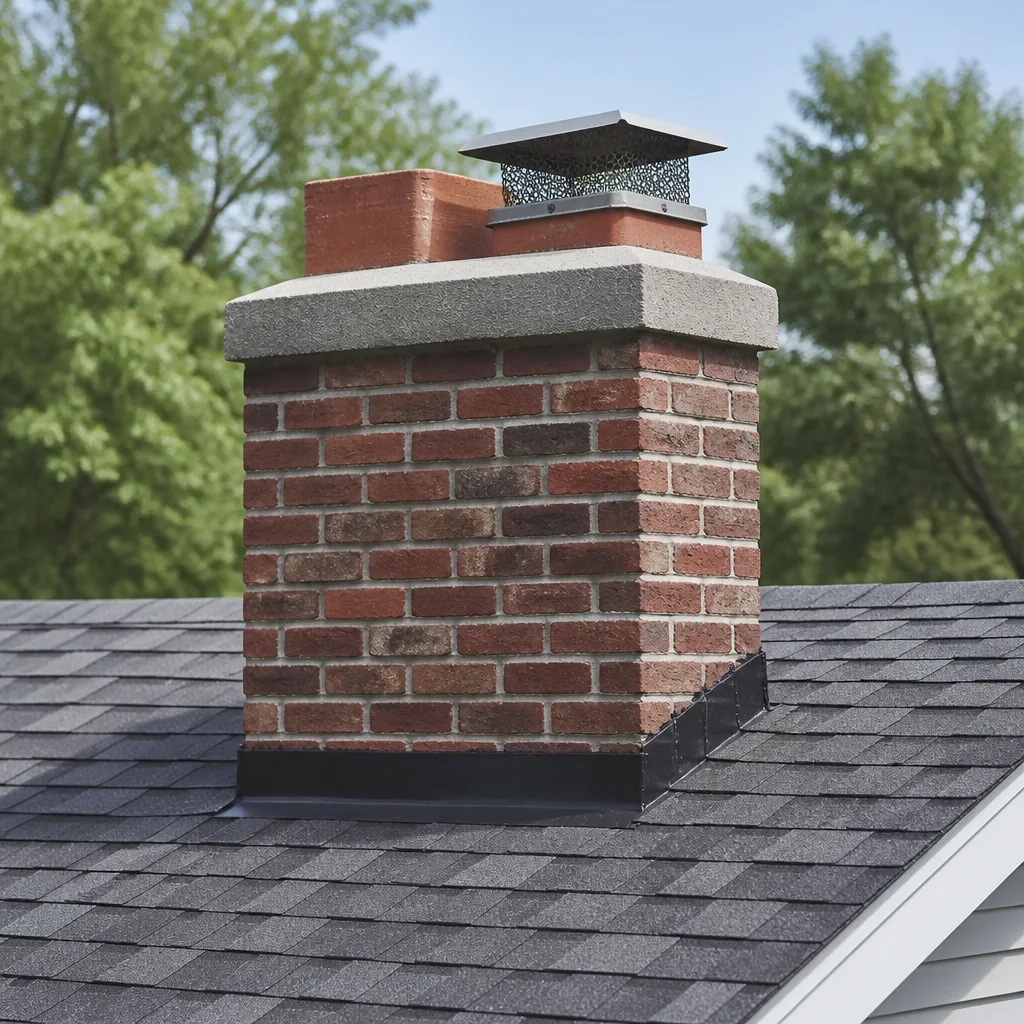 Masonry repair
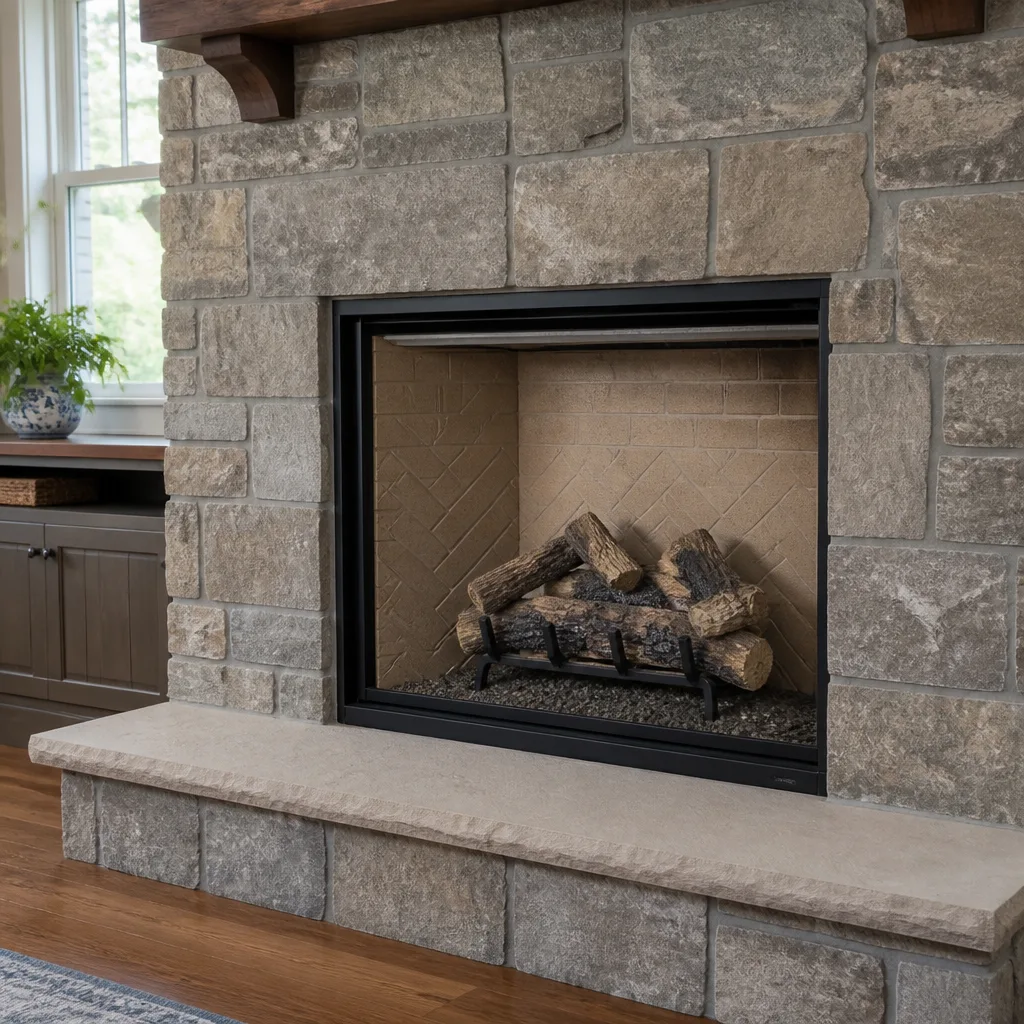 Gas fireplace service
Level 1 sweep and inspection to the NFPA 211 annual standard - flue, crown, cap, and flashing checked and photographed
Chimney sweep logs do not sweep chimneys. They loosen some creosote - which then falls where a brush and vacuum still have to collect it.
Chimney Sweep Maintenance Checklist for Alpharetta Homeowners
Over half of Alpharetta’s housing stock went up between 1990 and 2010, and the factory-built fireplaces installed during that building boom have a maximum service life that most owners have never been told about. Those prefab units aren’t built like traditional masonry chimneys, and treating them as if they were is how homeowners end up with cracked panels, voided warranties, and repair bills that could have been avoided. This guide is organized around the two chimney types actually found in Alpharetta neighborhoods, so every task on the checklist applies to the specific fireplace in your home, not some generic fireplace in a brochure.
Quick Answer
A proper chimney maintenance checklist for Alpharetta homeowners depends on whether you have a masonry chimney or a factory-built prefab fireplace, but every home needs Chimney Sweep services and inspection at least once per year, plus a five-point ground-level visual check you can do yourself between visits. Most standard chimney sweeps in Alpharetta run between $189 and $329 depending on the unit type and condition, and scheduling before October means you’ll be ready for the first cold snap without waiting on a busy-season backlog.
Styles & brands we work with
Table of Contents
- Know Which Chimney Type You Have in Alpharetta
- The Five-Point Ground-Level Check You Can Do Today
- What an Annual Chimney Sweep Should Include
- Checklist Track 1: Masonry Chimney Maintenance
- Checklist Track 2: Factory-Built Fireplace Maintenance
- Maintenance Tasks That Can Void a Factory-Built Fireplace Warranty
- The Chimney Maintenance Log Template Every Alpharetta Home Should Keep
- Red Flags That Mean Stop Using the Fireplace Now vs. Items to Monitor
Know Which Chimney Type You Have in Alpharetta
This is the step most online checklists skip, and it’s the one that matters most. Alpharetta’s home-building timeline split neatly into two eras, and each era produced different chimney systems with different failure patterns. Homes built before roughly 1990 tend to have true masonry chimneys, brick or stone structures with a clay flue liner running up the middle. Homes built after 1990, especially in subdivisions like Windward, Park Bridge, and the neighborhoods clustered around Windward Parkway and McGinnis Ferry Road, overwhelmingly have factory-built fireplaces with metal flue pipe running through a framed chimney chase.
Why does this matter? Because the maintenance requirements are not interchangeable. A masonry chimney has a clay tile liner that can crack, spall, or accumulate creosote in the mortar joints. A factory-built unit has a thin metal flue, usually stainless steel, and any sweeping method or cleaning product designed for masonry can damage it permanently. In our experience, a significant portion of the prefab fireplace repairs we perform in Alpharetta started with someone using the wrong maintenance approach on the wrong unit type.
Here’s how to identify what you have:
- Look at the exterior. A masonry chimney is solid brick or stone from the ground up. A factory-built chimneys often has a wood-framed “chase” covered in siding, stucco, or thin brick veneer with a metal cap at the top.
- Open the firebox. If you see firebrick on three sides and a clay pipe above the damper, you likely have masonry. If you see metal panels on the sides and a round metal pipe above, you have a factory-built unit.
- Check the damper. Factory-built fireplaces usually have a simpler damper mechanism, often a flat metal plate with a handle. Masonry dampers tend to be heavier cast iron.
- Find the manual or data plate. Most factory-built fireplaces have a data plate inside the firebox or on the front face listing the manufacturer, model, and testing standard. That plate is your warranty reference point.
Once you know your unit type, you can use the correct track in this checklist. The Kindling Chimney Alpharetta home page also has photos of both systems common in this area if you want a visual reference.
The Five-Point Ground-Level Check You Can Do Today
You don’t need to climb on the roof to gather useful information about your chimney’s condition. In fact, we’d rather you didn’t climb on the roof at all. Roof work comes with real fall risk, especially on Alpharetta’s steeper pitches in neighborhoods like Crabapple and Milton-area subdivisions. Instead, here are five things you can safely inspect from the ground, driveway, or living room floor:
- Chimney cap presence and condition. Stand back and look at the top of your chimney. Do you see a cap? If not, rain, leaves, and animals have an open path into your flue. If you do see a cap, check for visible rust, missing mesh, or a cap that sits crooked. A missing or damaged cap is the single most common entry point for moisture damage in Alpharetta chimneys.
- Efflorescence on brick or stone. Walk around the base of the chimney and look for white, chalky stains on the masonry surface. That’s efflorescence, which signals water moving through the brick. It’s not a fire hazard by itself, but it means moisture is degrading the structure, and in a freeze-thaw climate like north Georgia’s winter, that degradation accelerates.
- Spalling brick or flaking masonry. Spalling means the brick face is popping off in flakes or chunks. You’ll see fresh, darker red patches where the outer layer has fallen away. Spalling brick on a chimney in Alpharetta is often caused by years of water absorption followed by freeze cycles. It needs masonry repair before water reaches the flue system.
- Rust streaks on the chase or firebox. For factory-built units, look at the sides of the chimney chase and at the metal panels inside the firebox. Rust streaks mean water is getting where it shouldn’t. On a prefab unit, internal rust is a serious concern because the metal components are thin and lose structural integrity quickly once corrosion starts.
- Visible creosote at the damper or firebox opening. Shine a flashlight up past the damper. If you see black, shiny, or flaky buildup that looks like tar or coffee grounds, that’s creosote. A quarter-inch of creosote is enough to warrant a professional cleaning, and if it looks glossy or wet, that’s the most flammable form. Stop using the fireplace and schedule a chimney sweep in Alpharetta before burning again.
These five checks take about ten minutes and don’t require a ladder. If any one of them reveals an issue, you have a specific, useful piece of information to share when you call for a professional evaluation.
What an Annual Chimney Sweep Should Include
The Chimney Safety Institute of America (CSIA) recommends a professional sweep and inspection at least once per year, regardless of how often you burn, as covered in The Complete Guide to Chimney Cleaning in Alpharetta. In Alpharetta, the practical rhythm works like this: schedule your sweep between late August and early October. That puts you ahead of the cool-weather rush, before fireplaces around Cherokee County and north Fulton start getting used nightly, and it gives you time to complete any necessary repairs before burning season begins.
Here is what a complete professional chimney sweep should cover, and what you should confirm the sweep includes before booking:
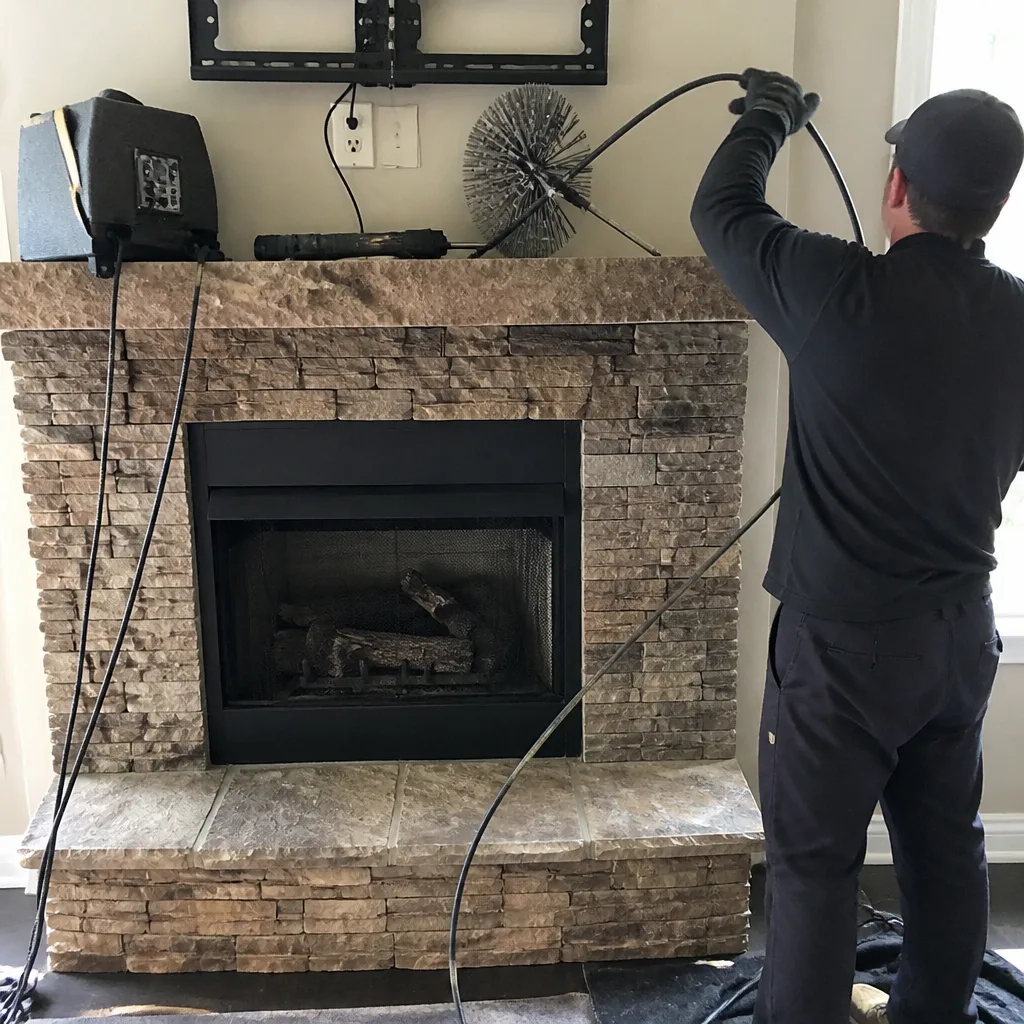
- Full flue cleaning from top to bottom. The sweep should remove creosote, soot, debris, and any animal nesting material from the entire flue length. This is not a “vacuum the firebox and call it done” service. The flue is the entire point.
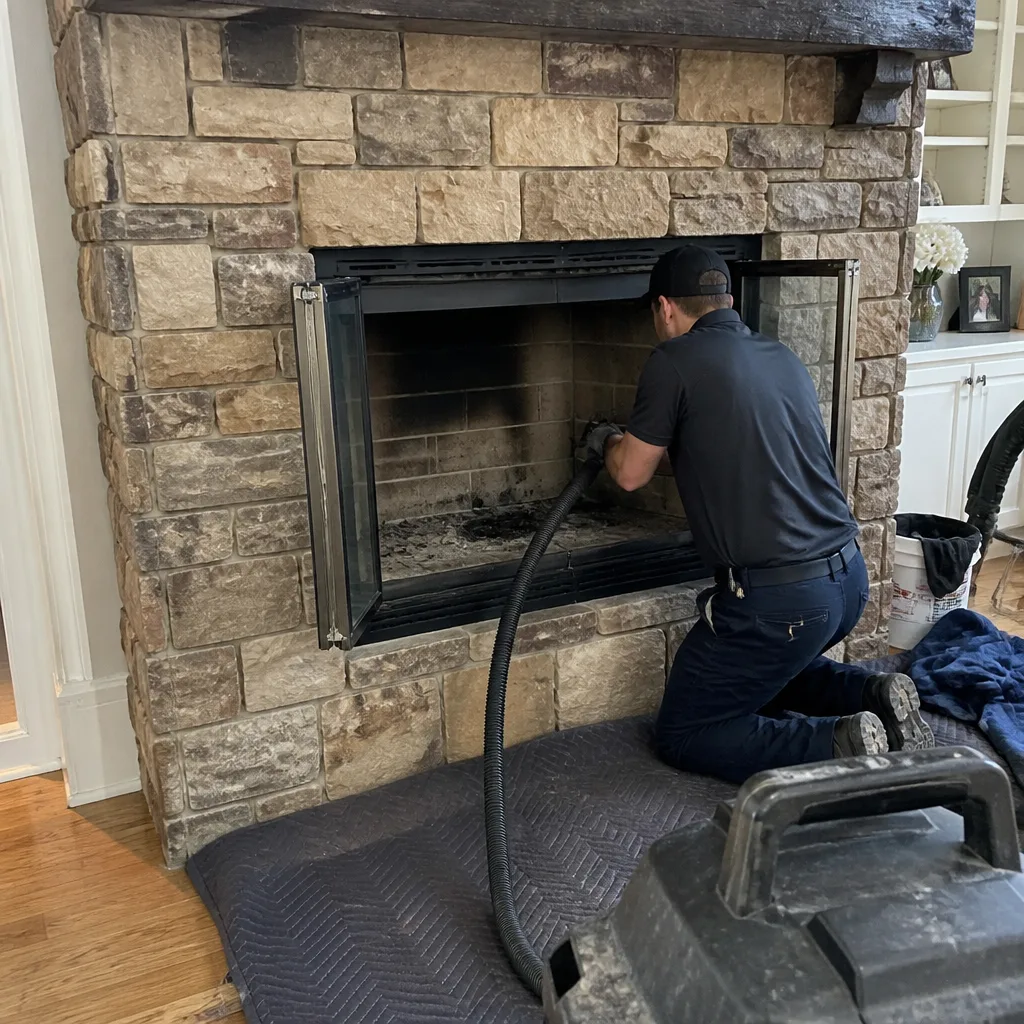
- Drop cloths and shoe covers before any equipment enters the home. A professional sweep in Alpharetta should protect your floors and air quality as a standard part of the visit, not as an upsell. We run drop cloths from the entry door to the fireplace on every job, and our technicians wear shoe covers the entire time they’re inside.
- Firebox cleaning and ash removal. The firebox should be fully vacated, including ash, so the inspector can see the condition of the floor and walls.
- Damper function verification. The damper should open, close, and seat properly. A damper that won’t close all the way is a year-round energy leak and a moisture entry point.
- Visual inspection of accessible flue components. For masonry chimneys, this means checking the clay liner for cracks, missing mortar, or creosote buildup in the joints. For factory-built units, this means checking the metal flue pipe for corrosion, separation, or damage.
- Water leak assessment. The sweep should check for water staining, rust, or moisture entry points, and identify whether the cap, flashing, crown, or chase top is the likely culprit.
- Photo documentation. If the service is done properly, you should receive photos of what was found. At Kindling, our technicians photograph the clean-up after their work is done every single time, so you can see the standard your home was left to.
If any contractor quotes you a price for this work without seeing the chimney first, be suspicious. A responsible price requires knowing the flue height, unit type, current condition, and access situation. Every visit we perform begins with a written price delivered before any work starts, so there are no surprises at the end of the service call.
Checklist Track 1: Masonry Chimney Maintenance
If your Alpharetta home has a true masonry chimney, this is the checklist to follow. Masonry chimneys are durable, but they’re also heavy structures exposed to weather, heat, and moisture cycling. The most common problems we see in older Alpharetta neighborhoods like North Point and the historic downtown area involve water damage, mortar deterioration, and clay liner failure.
Annual Masonry Chimney Checklist
- Schedule a professional sweep and Level 1 inspection. This is the baseline. The sweep clears creosote and the inspector checks the flue liner, mortar joints, crown, cap, flashing, and firebox. A chimney inspection in Alpharetta should take 45 to 90 minutes and produce a written report with photos.
- Check the chimney crown for cracks. The crown is the concrete slab at the very top of the chimney. It’s your chimney’s umbrella. Cracks wider than a dime allow water into the masonry, and crown replacement is a standard repair that costs far less than rebuilding a chimney that’s rotted from the inside.
- Verify the cap is secure. A proper masonry chimney cap has a solid top to shed rain and mesh sides to keep animals out. Squirrels, raccoons, and chimney swifts all try to nest in Alpharetta chimneys in spring. Once nesting material is in the flue, it becomes a fire fuel source.
- Inspect the flashing at the roofline. The flashing is the metal barrier where the chimney meets the roof. Failed flashing lets water run down the chimney into the attic and down the interior walls. This is one of the most common leak sources we find in homes around Alpharetta, and it’s often misdiagnosed as a roof problem.
- Monitor for spalling and efflorescence. Use the ground-level check from earlier. If you notice new spalling brick or spreading white stains, address it before the next freeze cycle. Masonry water damage compounds quickly in north Georgia, where winter temperatures regularly dip below freezing overnight.
- Watch for creosote type changes. If you’ve been burning seasoned hardwood and suddenly notice thick, shiny creosote, something changed. Maybe you’re burning green wood, maybe the fire is smoldering too much, or maybe the flue isn’t drafting properly. Note it and mention it during your next sweep.
What Masonry Chimney Repairs Cost in Alpharetta
Being specific about pricing helps homeowners plan. In Alpharetta, a standard creosote sweep on a masonry chimney runs $189 to $279. Cap replacement typically runs $250 to $450 installed. Crown repair runs $500 to $900. Flue liner repair or partial relining starts around $1,800 and can exceed $4,000 for a full reline of a two-story chimney. None of these are guesses, they’re the ranges we see routinely in this market, and every price we quote is delivered in writing before any work begins.
Checklist Track 2: Factory-Built Fireplace Maintenance
Factory-built fireplaces, also called prefab or zero-clearance fireplaces, are not simplified masonry chimneys. They’re engineered systems with specific maintenance requirements and real service-life limits. The metal firebox and flue components wear out. Most manufacturers rate these units for 10 to 20 years, depending on use and conditions. If your home in a newer Alpharetta development like Avalon or the subdivisions along Old Milton Parkway has a factory-built unit from the 1990s or early 2000s, it may be at or past its intended lifespan.
Annual Factory-Built Fireplace Checklist
- Schedule a sweep specifically trained for prefab units. Prefab flues require poly brushes, not the steel wire brushes used on clay tile liners. Steel brushes scratch stainless steel flue pipe, and damaged flue pipe on a factory-built unit often means a full replacement, not a patch. Ask before booking whether the company uses poly brushes on factory-built flues.
- Inspect the refractory panels. The panels that line the firebox on a prefab unit are made of a cement-like material called refractory. Cracks, gaps, or crumbling panels mean the firebox is unsafe to use. Panel replacement is possible on many units, but if the firebox shell behind the panels is rusted through, the entire fireplace needs replacement.
- Check the chimney chase top and cap. The chase is the framed enclosure around the metal flue. The chase top should be galvanized or stainless steel with a properly installed cap. We see many Alpharetta homes where builders installed a chase top with no cap, which is an open invitation for rain, birds, and squirrels.
- Verify gasket and glass condition (gas units). If you have a gas fireplace, check the gasket seal around the glass front. A worn gasket lets combustion gases leak into the living space. The glass itself should be free of cracks and the ceramic logs should be positioned per the manufacturer’s diagram, not arranged for aesthetics.
- Test the damper on wood-burning units. Prefab dampers are lighter and less tolerant of corrosion than masonry dampers. If the damper doesn’t seat fully, you lose heated air all winter and gain humidity all summer.
- Document the manufacturer and model. This is on the data plate. If you don’t have it recorded, write it down now. When a prefab unit needs parts, the manufacturer and model determine everything. Without it, replacement is often the only option.
Factory-built fireplace repair in Alpharetta is specialized work. The components are proprietary, the tolerances are tight, and mistakes are expensive. We use professional-grade fireplace products from brands like HeatShield and Olympia Chimney when repairs are possible, and we tell you plainly when a unit has reached the end of its service life and replacement is the responsible option. A fireplace repair in Alpharetta should always begin with identifying the exact unit and its condition, not with a generic quote.
Maintenance Tasks That Can Void a Factory-Built Fireplace Warranty
Most homeowners don’t realize that DIY maintenance on a factory-built fireplace can void the manufacturer’s warranty. The warranty language varies by brand, but nearly all of them include clauses about maintenance methods and approved components. Here are the specific actions that commonly void prefab warranties and that we see homeowners doing without realizing the risk:
- Using cleaning products or solvents on the firebox. Ordinary household cleaners, degreasers, and chemical creosote removers are not approved for most factory-built fireboxes. The chemicals can corrode the metal components and damage refractory panels. The manufacturer’s warranty is void if unapproved chemicals contact the firebox.
- Sweeping the flue with a steel wire brush. As noted earlier, stainless steel flue pipe gets scratched by steel brushes. Those scratches become corrosion points. The lack of damage documentation before and after is usually enough for the manufacturer to deny a warranty claim.
- Replacing components with generic or non-OEM parts. Dampers, refractory panels, log sets, and caps on factory-built units must be manufacturer-approved. A generic replacement part may fit but may not meet the fire-resistance or clearance specifications. If a fire occurs and non-OEM parts were installed, the manufacturer’s liability, and your homeowner’s insurance coverage, can both be in question.
- Drilling into the firebox or flue. Any modification to the factory-assembled structure, including drilling holes for mounting brackets, decorative elements, or sensors, voids the warranty. The unit is engineered as a sealed system. Modifications mean the manufacturer no longer stands behind it.
- Burning unapproved fuels. Factory-built fireplaces have specific fuel requirements. Burning softwood with heavy resin content, construction debris, or treated lumber can create temperatures the flue wasn’t designed to handle. It can also leave residue that accelerates corrosion. Use only seasoned hardwood recommended for your unit type.
- Neglecting annual maintenance entirely. Yes, doing nothing can void a warranty too. Many manufacturers include language requiring annual inspection by a qualified professional as a condition of coverage. If a defect is discovered after years of no documented maintenance, the claim may be denied even if the maintenance wasn’t the cause.
If you have the original manual for your factory-built fireplace, keep it. The maintenance section tells you exactly what the manufacturer requires and what they prohibit. If you don’t have the manual, most manufacturers have digital archives online, and a qualified chimney professional can help you locate the right one based on your data plate information.
The Chimney Maintenance Log Template Every Alpharetta Home Should Keep
A log of chimney service dates, findings, and repairs is genuinely valuable. It gives you a clear record if you ever need to make a warranty claim, it’s a selling point when the home is listed, and it helps you spot patterns. Here is the template we suggest for Alpharetta homeowners:
Chimney Maintenance Log Entry Format
- Date of service: [MM/DD/YYYY]
- Service provider and technician name: [Company, technician]
- Service type: [Sweep / Level 1 Inspection / Level 2 Inspection / Repair / Other]
- Chimney or fireplace type: [Masonry / Factory-built / Gas insert]
- Findings summary: [What was found, including creosote thickness, liner condition, moisture evidence, animal presence]
- Work performed: [Sweep only / Cap replacement / Crown repair / Panel replacement / Flue reline / Other]
- Materials used: [Brand names if applicable, e.g., HeatShield, Gelco, Olympia Chimney products]
- Photos received: [Yes / No, and what the photos showed]
- Next recommended service date: [MM/YYYY]
- Notes for next visit: [Any concerns to monitor, burning habits changed, etc.]
Keep this log in a plain binder or a notes app, either works. The value is in the consistency. A home with five years of documented chimney maintenance tells a buyer that the fireplace is sound and the home was cared for. A home with no records leaves the buyer guessing, and in an Alpharetta real estate market where homes move quickly, a clean chimney record can be one more reason a buyer says yes.
Red Flags That Mean Stop Using the Fireplace Now vs. Items to Monitor
Not every chimney issue is an emergency. But some are. Knowing which is which prevents both unnecessary alarm and dangerous complacency. Here is the honest line we draw for Alpharetta homeowners:
Red Flags: Stop Using the Fireplace Immediately
- You smell smoke in the house when the fireplace isn’t burning. This often means creosote buildup is heavy enough that the chimney is backdrafting or there’s a draft obstruction. Stop burning and call for a sweep.
- The firebox panels are cracked, gapped, or missing pieces. On a factory-built unit, compromised refractory panels expose the metal shell to direct flame. This is a fire hazard, not a cosmetic issue.
- You see rust streaks or water stains inside the firebox. Water inside the firebox means the system is failing. On a prefab unit, internal rust is a red-line condition.
- The damper won’t fully open or fully close. A stuck-open damper means cold air, moisture, and animals can enter. A stuck-closed damper means combustion gases can’t exit. Both need professional attention.
- You hear animal sounds in the chimney. Squirrels, raccoons, and chimney swifts in Alpharetta chimneys are common in spring. Don’t light a fire to smoke them out. Animals and their nesting material block the flue and become fuel.
- You see glossy, wet-looking creosote inside the firebox or flue. Third-degree creosote is a thick, tar-like fuel coating. It’s the most combustible form. Do not burn until a professional has removed it.
Watch Items: Monitor Until the Next Scheduled Sweep
- Minor efflorescence on exterior brick. If the white staining is light and not spreading quickly, note it and address it before winter. It won’t cause a fire, but it signals water that will eventually damage the structure.
- Small hairline cracks in the mortar joints. Hairline cracks are common in Alpharetta masonry chimneys due to natural settling. If they’re not widening and there’s no water penetration, they can wait for the next inspection.
- Light surface rust on the chimney cap. A cap with surface rust still has years of service left if the mesh is intact. Severe rust or missing mesh means replacement is due.
- Draft issues that only occur on windy days. If smoke puffs into the room only when the wind gusts from a certain direction, the issue may be a cap design or chimney height problem. Note which wind conditions cause it and share that with your sweep.
- Ash accumulation in the firebox. You can safely remove ash yourself with a metal ash bucket. Excessive ash depth blocks air circulation and makes fires less efficient, but it’s a routine maintenance item, not an emergency.
The line between these two categories is where professional judgment matters. When a Kindling technician visits an Alpharetta home, the goal is not to upsell you into work you don’t need. The goal is to give you clear information, backed by photos and the specific conditions we find, so you can make the right call with confidence. If it can wait, we tell you it can wait. If it can’t, we show you exactly why on the camera.
Common Mistakes to Avoid
- Treating a prefab fireplace like a masonry chimney. This is the single most common mistake we see in Alpharetta subdivisions. Different brushes, different inspection points, different repair methods. Using masonry methods on a prefab unit causes damage, not prevention.
- Skipping the cap replacement because “it’s just a cap.” The cap is your first line of defense against water and animals. A $400 cap replacement prevents a $3,000 flue repair. The math is that simple.
- Burning unseasoned wood. Fresh-cut wood contains up to 50% water by weight. That water cools the flue gases, which creates creosote. In Alpharetta’s humid climate, wood takes at least a year to season properly, not the six months many firewood sellers claim.
- Vacuuming out the firebox with a household vacuum. Household vacuums aren’t designed for ash particles, and some ashes can retain heat for days after a fire. Use a metal ash bucket and a fireplace-specific vacuum if you use one at all.
- Ignoring the damper in summer. An open damper all summer lets humid Georgia air into your chimney, which accelerates rust and masonry degradation. Close it when the fireplace is completely cold after the last fire of spring.
- Using the fireplace as a primary heat source without an inspection. Fireplaces are not efficient space heaters, and burning them continuously puts more stress on the system than occasional use. If you’re running your fireplace daily through Alpharetta’s winter, you need more frequent inspections, not less.
- Assuming a home inspection covers the chimney. A standard home inspection is visual and limited. It does not include a full flue inspection or creosote assessment. If you bought your Alpharetta home recently, schedule a professional chimney inspection even if the home inspector said the fireplace looked fine.
See the difference
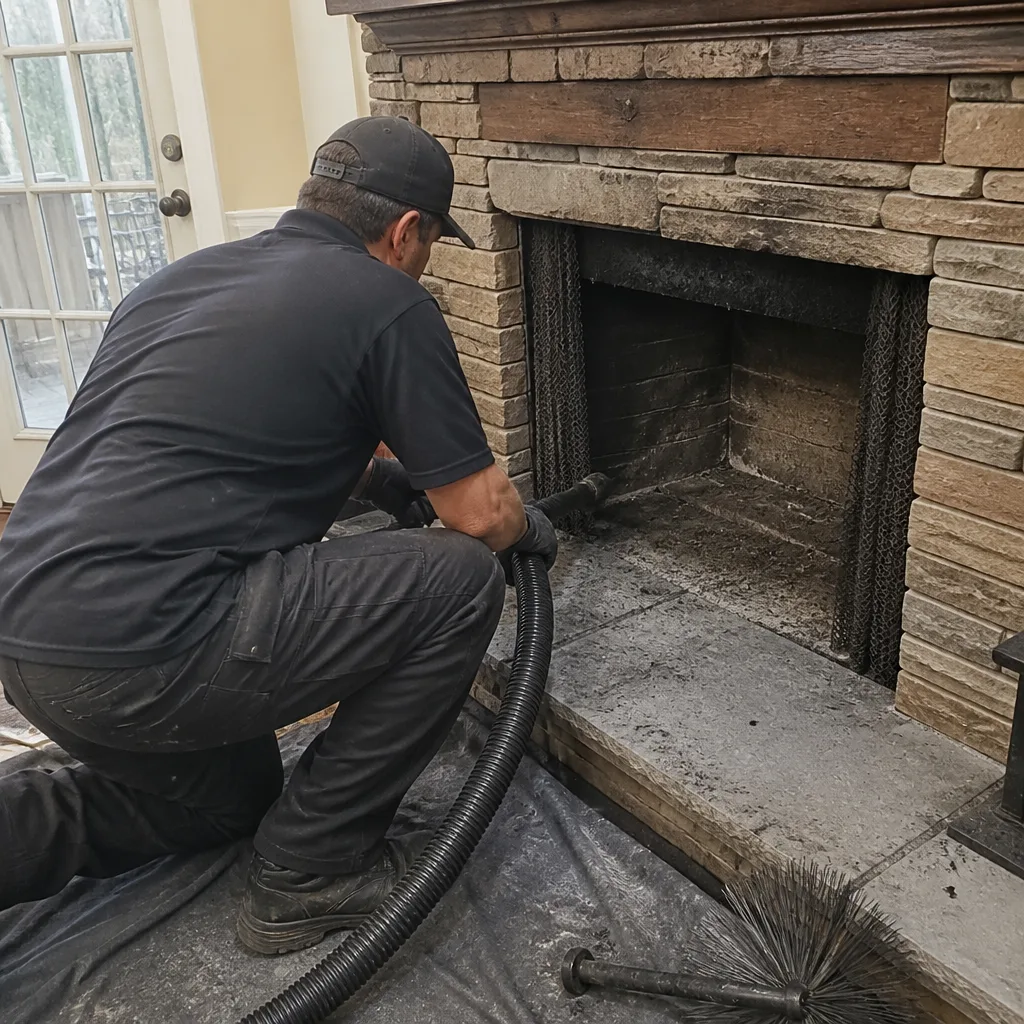 Before
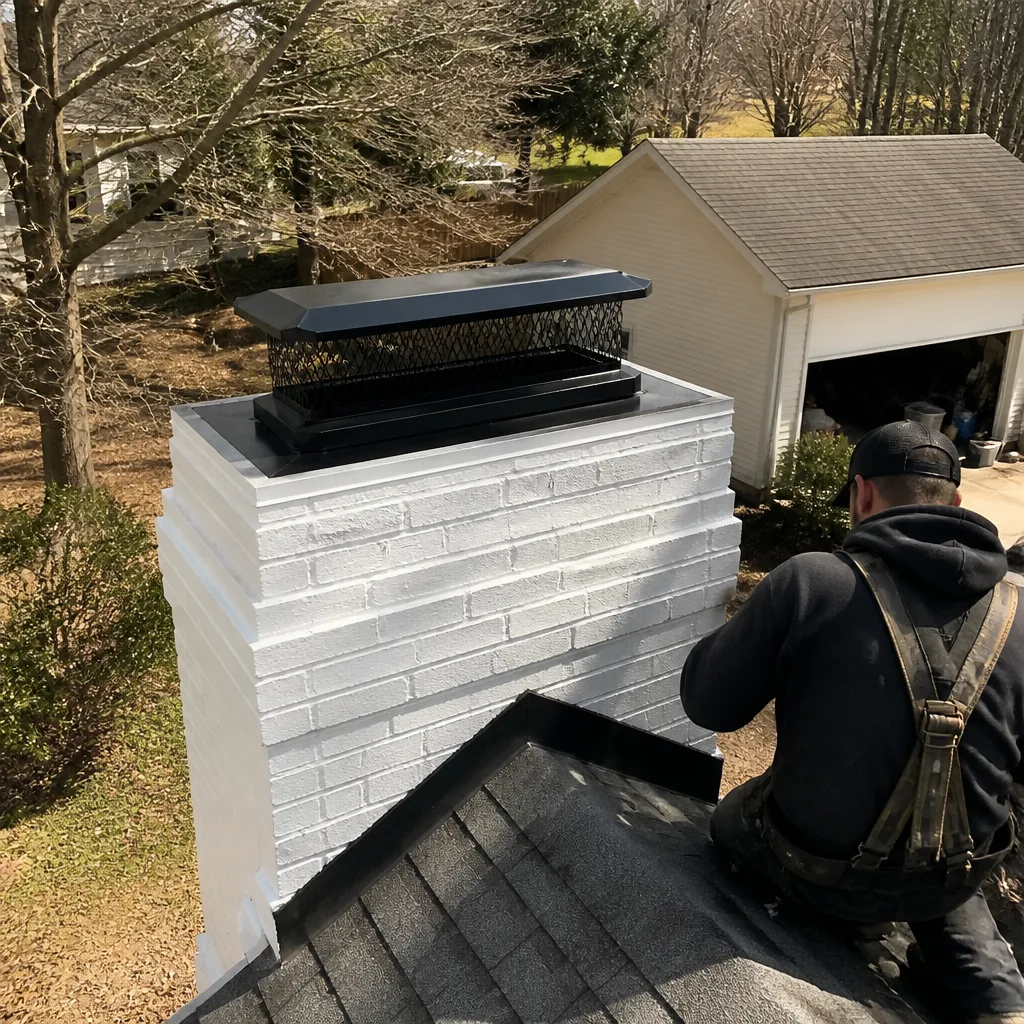 After
After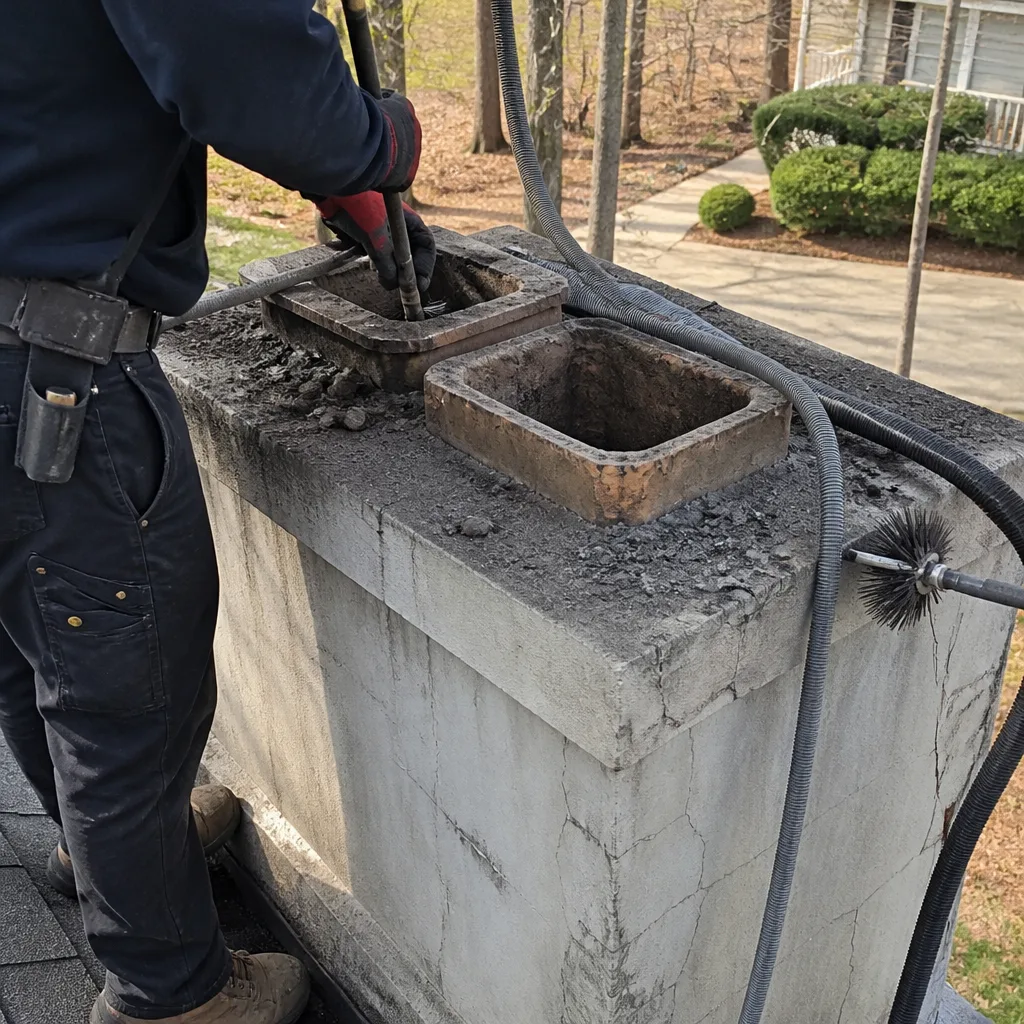 Before
 After
After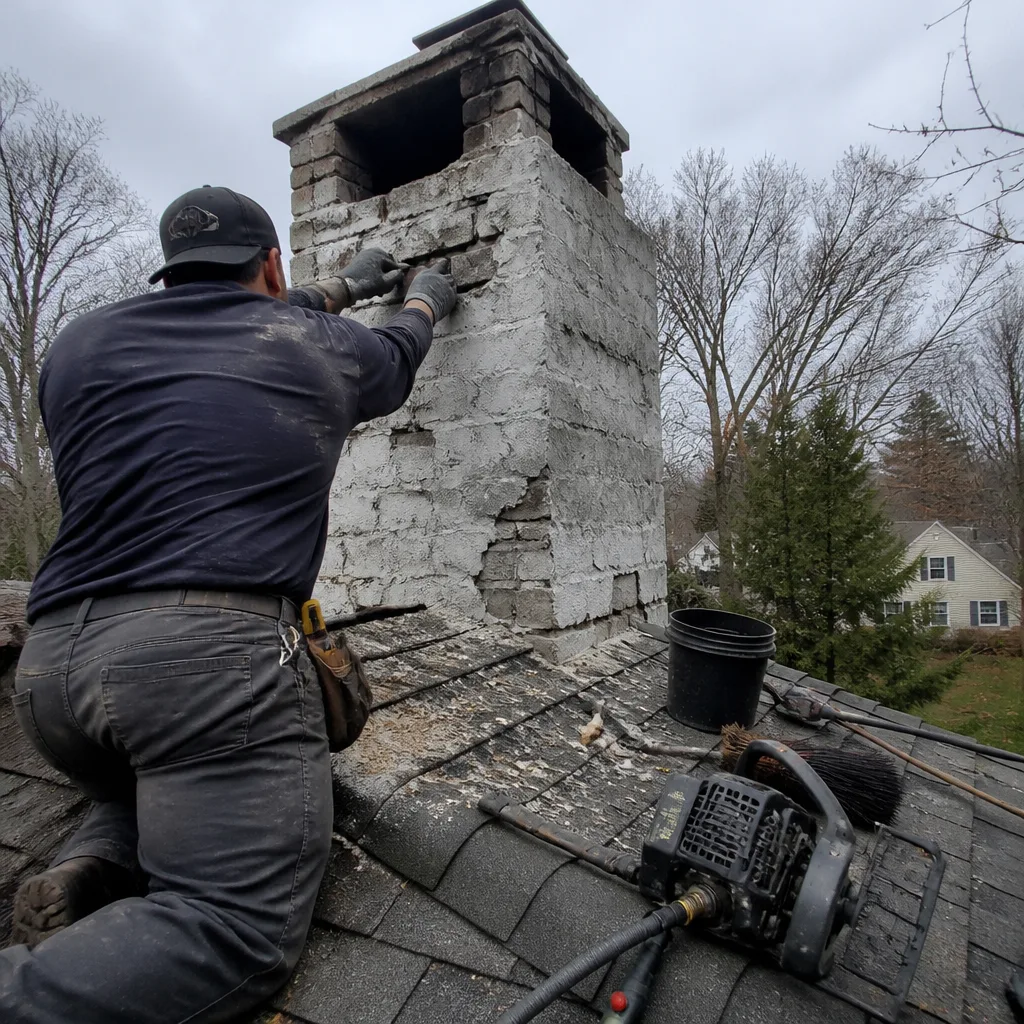 Before
 After
AfterWhen to Call a Professional
Call a professional when any red-flag condition appears, when you haven’t had a sweep in over a year, when you notice water staining around the fireplace or ceiling near the chimney, when you hear animals in the chimney, or when you’re buying or selling an Alpharetta home and need documentation of the chimney’s condition. You should also call if you’ve never confirmed your chimney type and want a clear answer on what maintenance your specific system needs. Kindling Chimney Alpharetta offers free estimates in Alpharetta, and every visit includes a written price before any work begins. Call (762) 225-2593 to schedule a sweep, inspection, or repair consultation. A live person answers, day or night.
Frequently Asked Questions
A standard chimney sweep in Alpharetta typically runs between $189 and $329, depending on whether you have a masonry chimney or a factory-built fireplace, the flue height, and the current creosote condition. Most standard sweeps are on the lower end of that range; heavier creosote buildup or animal removal adds cost. Call (762) 225-2593 for a written, no-pressure estimate specific to your chimney.
The CSIA recommendation is once per year, and that holds for Alpharetta homes whether you burn daily or just a few times each season. If you burn more than twice per week through the winter, consider a mid-season check, especially if you’re burning wood that hasn’t been fully seasoned.
Yes. Even occasional burns create creosote buildup, and in Alpharetta’s spring nesting season, the bigger risk to an unused chimney is animal intrusion. A chimney that sits idle for months can collect leaves, nesting material, and moisture. An annual sweep and inspection catches these issues before they become structural problems.
Creosote accumulates in layers, and each layer adds fuel that can ignite in a chimney fire. Skipping sweeps also means small problems like a cracked cap or loose flashing go unnoticed until they’ve caused water damage inside the flue or walls. By the time a problem becomes visible from the living room, the repair cost is typically far higher than years of routine sweeps would have been.
We don’t recommend it, for two reasons. First, rooftop access in Alpharetta carries real fall risk, and proper sweeping is done from the roof with specialized equipment. Second, DIY vs Professional Chimney Cleaning: The Alpharetta Homeowner’s Decision Guide explains how DIY cleaning products and methods often damage factory-built flues and void the manufacturer’s warranty. Some maintenance, like ash removal in a metal bucket, is safely DIY. Flue cleaning is professional work for good reason.
It depends entirely on the condition of the firebox shell and flue. Refractory panels can often be replaced, dampers can be serviced, and some flue damage can be relined. But if the firebox shell is rusted through or the flue pipe has separated, replacement is the safe and honest option. A professional inspection with photos gives you the evidence to make that call. We’ll show you exactly what the camera sees, and if it can wait, we’ll say so.
The Bottom Line
Alpharetta homes have two distinct chimney types, and the right maintenance checklist depends on which one you have. Masonry chimneys need attention on the crown, cap, flashing, and clay liner. Factory-built fireplaces need poly-brush sweeps, refractory panel checks, and manufacturer-approved components. Everyone needs an annual professional sweep, a five-point ground-level check between visits, and a simple log of what was done and when; see our more guides & resources for additional tips. The goal is not to turn chimney maintenance into a burden. It’s to protect your home and your family without drama, overcharging, or unnecessary work. If you want a clear picture of what your chimney actually needs, call Kindling Chimney Alpharetta at (762) 225-2593. A live person answers, and you’ll get a written price before anything starts.
Written by Danny Cortes, Owner at Kindling Chimney Alpharetta, serving Alpharetta since 2003.