
Last updated October 15, 2026
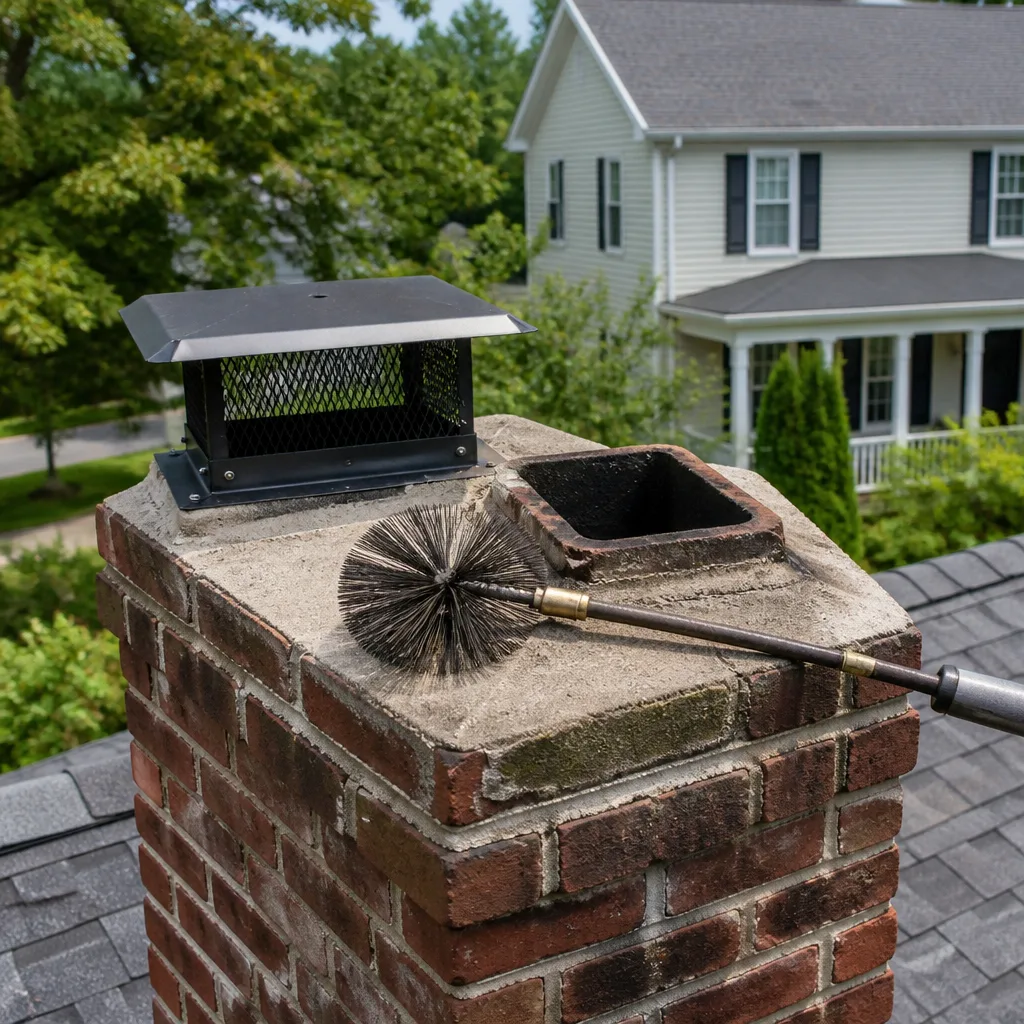 Sweep & inspection
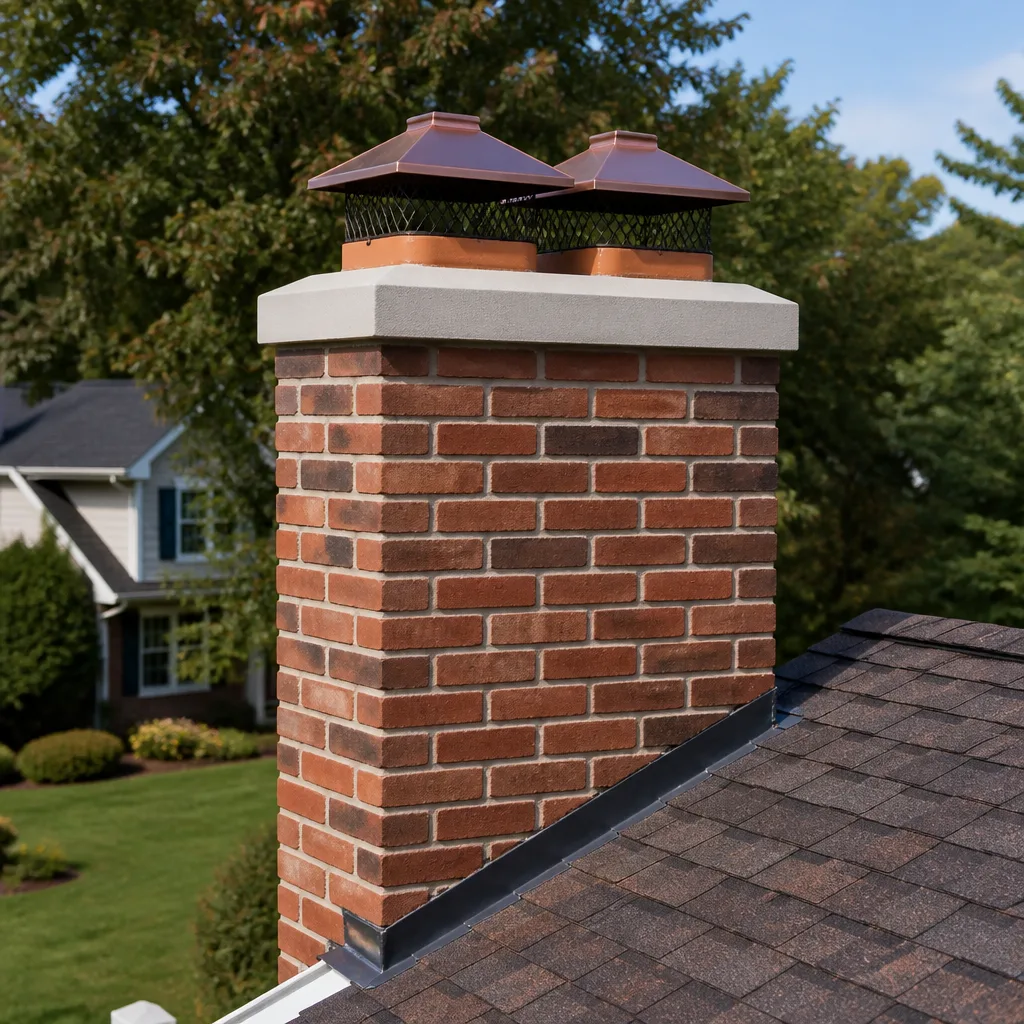 Caps & crowns
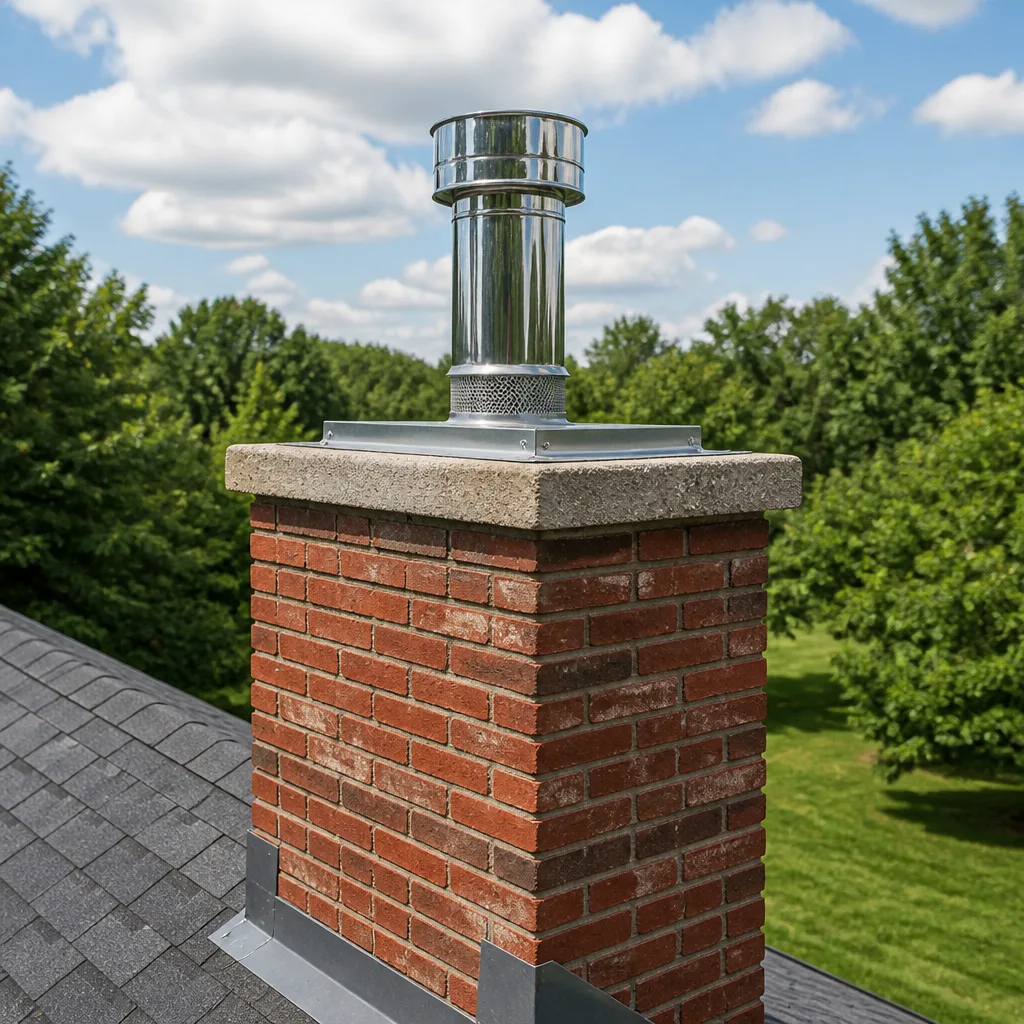 Flue relining
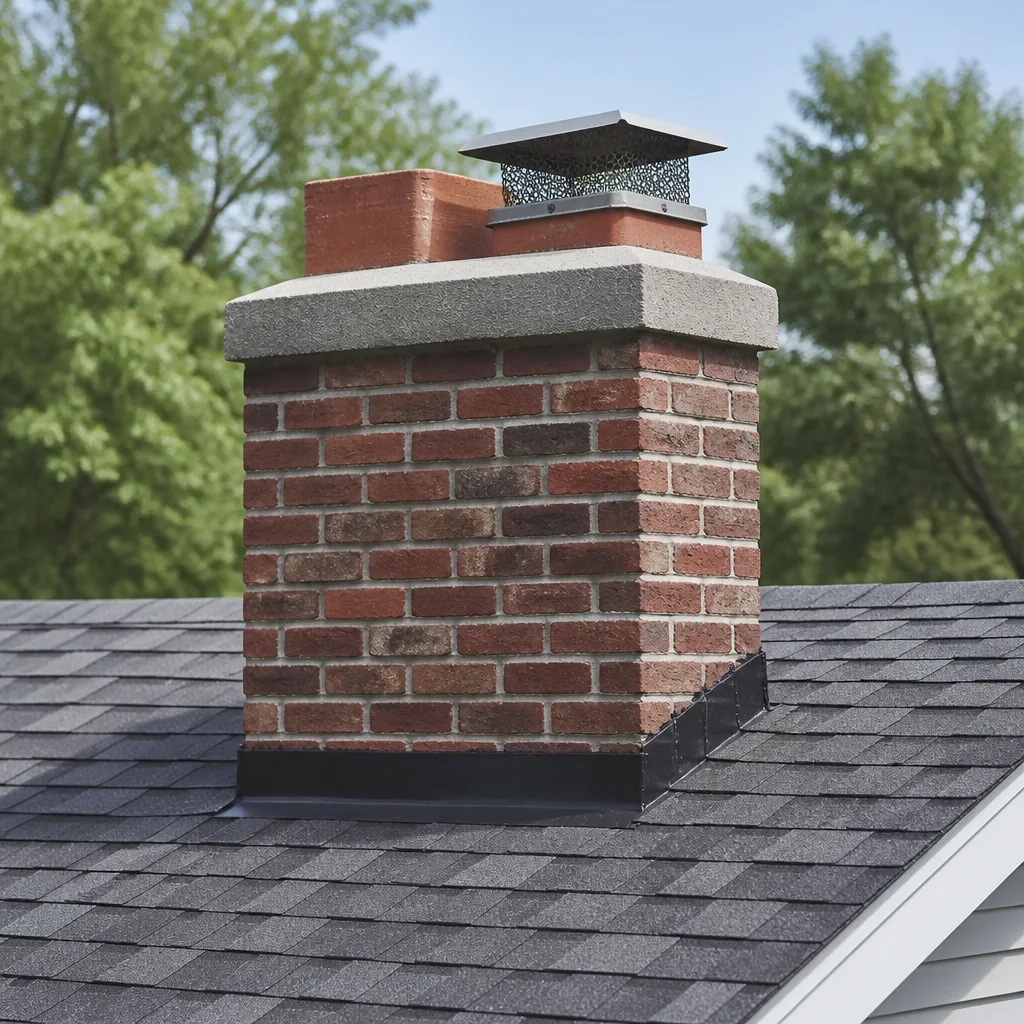 Masonry repair
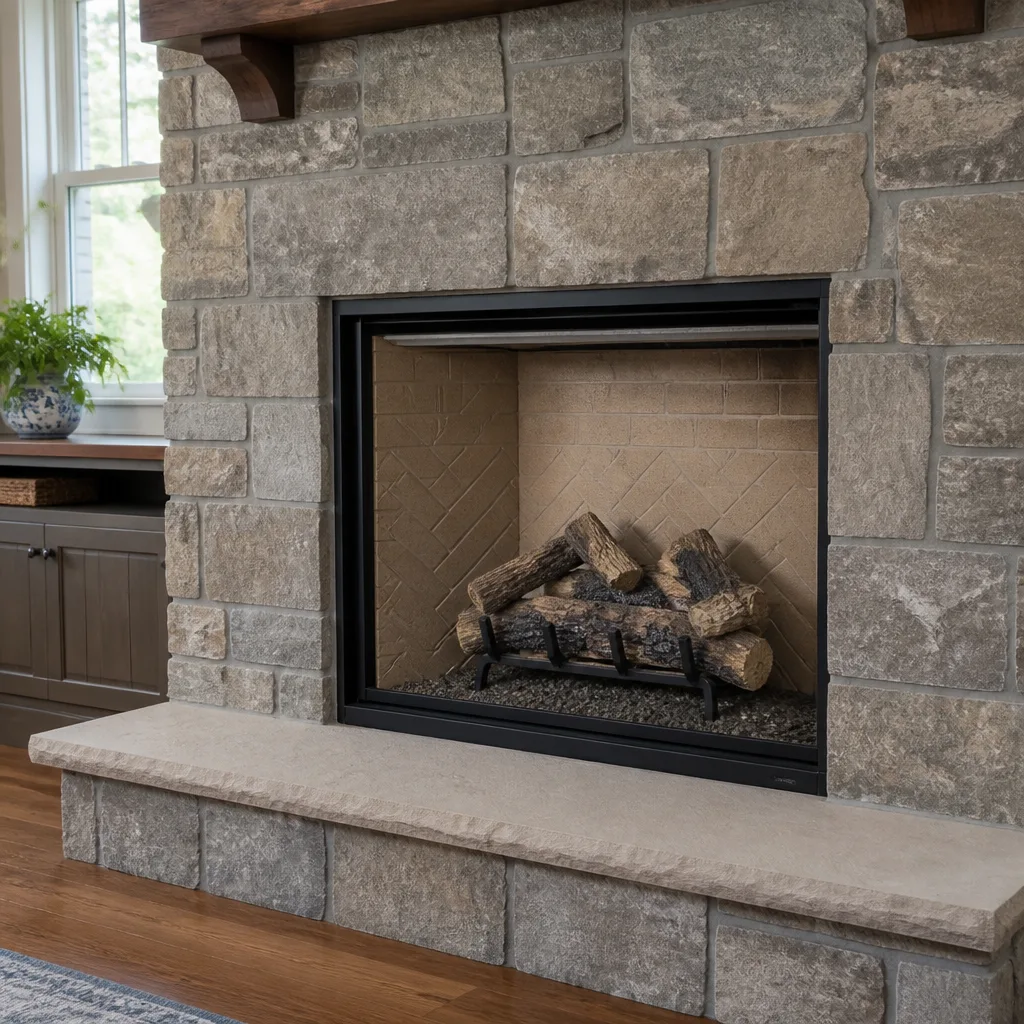 Gas fireplace service
Level 1 sweep and inspection to the NFPA 211 annual standard - flue, crown, cap, and flashing checked and photographed
Chimney sweep logs do not sweep chimneys. They loosen some creosote - which then falls where a brush and vacuum still have to collect it.
Chimney Cleaning Warning Signs: A Alpharetta Homeowner’s Reference Guide
Most Alpharetta homeowners assume a chimney problem will announce itself with smoke pouring into the living room. The reality is quieter and more dangerous. The most urgent warning sign we see in Alpharetta homes is often a smell, not a sight: a barbecue-like or campfire odor drifting from the firebox in July, when the fireplace hasn’t been lit in months. That odor means creosote is off-gassing into your home’s air, and it rates higher on our urgency scale than a minor backdraft during a winter fire. This guide gives you a tiered system for every warning sign your Alpharetta chimney can produce, what each sign actually means, and the exact point at which you should stop using the fireplace entirely. By the end, you’ll know what to check with a flashlight in two minutes, what to tell the technician when you call, and which signs you can safely monitor versus which ones demand action this week.
Styles & brands we work with
Quick Answer
Chimney cleaning warning signs fall into three tiers: signs you can schedule at your convenience (light dust, minor odor on windy days), signs that mean schedule within a week (visible creosote buildup, persistent off-season odors, animal activity), and signs that mean stop using the fireplace today (smoke backdrafting into the room, a crackling sound from inside the flue, black shiny creosote covering more than a quarter-inch of the flue wall, or any gas odor). Most Alpharetta chimneys used regularly need sweeping at least once per burning season, and the single most reliable warning sign is an off-season smell that has no other explanation. For a deeper look at what professional cleaning involves, see our Complete Guide to Chimney Cleaning in Alpharetta. When in doubt, a professional chimney inspection gives you a definitive answer with camera evidence of what’s actually inside the flue.
Table of Contents
- The Tiered Warning Sign System: Schedule Soon, Schedule This Week, Stop Today
- Off-Season Odors: The July Smell That Means More Than Winter Smoke
- Visual Signs You Can Check in Two Minutes with a Flashlight
- Gas Fireplace Warning Signs Specific to Alpharetta Homes
- Moisture and Humidity Warning Signs in Alpharetta’s Climate
- Sounds, Vibrations, and the Signs You Feel Before You See
- What to Tell the Technician: Why Precise Symptoms Change the Diagnosis
- Common Mistakes to Avoid
- When to Call a Professional
- Frequently Asked Questions
- The Bottom Line
The Tiered Warning Sign System: Schedule Soon, Schedule This Week, Stop Today
Not every chimney warning sign deserves the same level of alarm. Treating all of them as emergencies leads to either panic or, worse, complacency when a real hazard shows up. We’ve built our diagnostic approach around three tiers, and we walk Alpharetta homeowners through this exact framework on every call.
Tier 1: Schedule soon. These signs mean your chimney is due for routine service but there’s no immediate hazard. Thin, powdery soot on the damper handle when you open it. A faint woodsmoke smell that appears only when rain is falling or the wind blows from the east. Small amounts of flaky, brownish creosote dust on the firebox floor after burning a full cord of wood. These are maintenance signals, not danger signals. Schedule a sweep at your convenience, ideally before your next stretch of regular fires.
Tier 2: Schedule this week. These signs indicate active buildup or intrusion that will get worse quickly. A visible black, tar-like glaze on the firebox walls above the damper. The smell of smoke in the house on days when you haven’t burned anything. Scratching or chirping sounds coming from the flue, which in Alpharetta almost always means chimney swifts or squirrels given our tree density. Water stains on the ceiling near the chimney chase in the upstairs bedroom. These conditions worsen with every additional fire and every rainstorm. Book a chimney inspection within seven days.
Tier 3: Stop using the fireplace today. These are the signs that mean do not light another fire until a professional has looked. Smoke that backdrafts into the room more than once in a session, especially if it happens when you first light the fire and again when you open the damper fully. A roaring or crackling sound from inside the flue that sounds like a campfire, which can indicate a small creosote fire already burning. Shiny, hardened black creosote you can scrape with a fingernail and it comes up in thick flakes. Any smell of gas around a gas fireplace, even faint. If you hit a Tier 3 sign, call a professional and keep the damper closed until the inspection happens.
The tiered approach matters because most chimney companies won’t explain it. They want every call to be urgent. We’d rather you know exactly where you stand, because the family living around that fireplace deserves an honest answer, not a sales script. If you’re looking for a Chimney Sweep in Alpharetta who will tell you plainly which tier you’re in, that’s what we do on every visit.
Off-Season Odors: The July Smell That Means More Than Winter Smoke
Here’s the counterintuitive fact most alpharetta homeowners don’t know: a smoky smell in July, when the fireplace has been cold for months, is more diagnostically significant than smoke backdrafting during an active fire in January. Winter backdrafting is often caused by simple pressure issues, cold air in the flue, or a partially closed damper. July odors mean something is actively wrong inside the chimney, and the heat and humidity of a Georgia summer are amplifying it.
Alpharetta’s summer humidity levels regularly sit above 70%. That moisture interacts with creosote deposits in ways that dry winter air never does. Creosote is hygroscopic, meaning it absorbs water from the air. In humid conditions, creosote softens, expands slightly, and releases volatile organic compounds. Those compounds are what you smell. The more humidity, the stronger the odor. A chimney that smells faintly in December can smell like a campfire in a tent by late July, because the creosote has been soaking up Alpharetta humidity for months.
What to distinguish:
- Smoke smell during a burn: Usually airflow or draft issue. Fix the draft, possibly reseat the damper, often a simple fix.
- Smoke smell the morning after a burn: Normal for some fireplace designs. The chimney is still warm and pulling outside air down as it cools. Should dissipate within 24 hours.
- Smoke smell with no fire for two weeks or more: Active creosote off-gassing. This is a Tier 2 sign. Schedule a sweep.
- Barbecue or burnt-meat smell in high humidity with no fire for months: Heavy third-degree creosote present. This is approaching Tier 3 territory, especially if the smell is strongest near the firebox rather than at the top of the chimney.
- Musty or damp-earth smell: Moisture intrusion, possibly a cracked crown or failed flashing, not creosote. Different path to fix, same urgency.
Location of the smell matters too. If the odor is strongest in the room with the fireplace, it’s coming from inside the firebox or the first few feet of the flue. If it’s strongest in an upstairs bedroom, the odor is traveling inside the chimney chase or the odor is strong enough to rise through the house. Both are informative. When you call us at (762) 225-2593, tell us where you smell it most strongly. That one detail changes where we start looking.
Visual Signs You Can Check in Two Minutes with a Flashlight
You don’t need any special tools to assess your chimney’s basic health. A flashlight with a strong beam, a pair of safety glasses if you have them, and two minutes of your time will tell you more than any online checklist. If you prefer a structured approach, our Chimney Sweep Maintenance Checklist for Alpharetta Homeowners covers the same inspection points we use on service calls. Here’s a step-by-step inspection you can do before you decide whether to call.
- Open the damper and shine the light straight up. Look at the flue walls. What color are they? Light brown or tan is normal for a working chimney. Dark brown or black means creosote has hardened. If the walls look shiny or wet, that’s third-degree creosote, the most combustion-prone form. That’s a Tier 3 sign.
- Scrape a small spot with a fireplace tool or sturdy stick. If the creosote flakes off in dry sheets, it’s second-degree, schedule this week. If it feels like hardened tar and you can barely dent it, it’s third-degree. Stop using the fireplace.
- Look at the floor of the firebox. More than a thin dusting of creosote flakes is abnormal. A thick pile means buildup is actively falling from the flue walls above, which means the flue is overloaded. Schedule a sweep.
- Check the damper itself. Does it open and close smoothly? Is there rust on the mechanism? A damper that sticks or shows heavy surface rust is telling you moisture has been getting in. Water intrusion plus creosote equals a mess that’s compounding.
- Run your hand along the firebox walls, not the flue. The firebox is the box-shaped area behind the grate. Look for cracked or missing firebrick. Standard in older Alpharetta homes, and a crack wider than a nickel means hot gases can reach the framing behind the brick. That’s more than a cleaning issue, that’s a repair issue.
- Shine the light at the smoke shelf. The smoke shelf is the ledge just above the firebox, below the damper. If you see a pile of black material sitting on that shelf, that’s dropped creosote and it’s deep enough to restrict airflow. Schedule this week.
This two-minute check isn’t a substitute for a professional Chimney Inspection in Alpharetta with a camera, but it will tell you which of the three tiers you’re in. If your flashlight check finds black shiny walls, don’t burn another fire. Call us and we’ll put a camera up the flue to see exactly how deep the buildup goes.
Gas Fireplace Warning Signs Specific to Alpharetta Homes
Alpharetta has a high concentration of gas fireplaces, both direct-vent inserts and gas log sets in existing masonry fireplaces. Gas fireplaces produce different warning signs than wood-burning, and many of them get dismissed because the homeowner assumes a gas appliance doesn’t need the same level of attention. That assumption is wrong. Gas fireplaces need annual servicing too, and the warning signs are often more subtle.
Discoloration on the glass door of a direct-vent insert. A properly functioning direct-vent gas fireplace burns with clear exhaust. If the interior of the glass develops a white, cloudy film, that’s fine, normal mineral deposit from the ceramic glass manufacturing process. What’s not normal is a dark, sooty film on the inside of the glass. Soot means the burner is not getting proper air, the vent is partially blocked, or the gas pressure is incorrect. All three are fixable with service. All three should be addressed before another burn.
Pilot flame color and behavior. A healthy pilot flame is blue with a small yellow tip. A pilot that burns almost entirely yellow or orange, or one that flutters when no draft is present, indicates incomplete combustion. That means carbon monoxide production is higher than it should be. This is a Tier 3 sign for gas fireplaces. Stop using the fireplace and have it serviced.
Soot on the surround above the fireplace opening. Gas log sets in masonry fireplaces vent up the existing chimney. If you see black soot accumulating on the mantel, the surround, or the wall above the fireplace, the gas logs are not venting properly. The crown, the flue, or the damper setup has a restriction. Schedule this week.
Unusual smells from a gas fireplace. There are exactly three normal gas fireplace smells: a hot-metal smell during the first fire of the season, a dust-burning-off smell during that same first fire, and a faint gas smell lasting one or two seconds at the moment of ignition. Anything else is abnormal. A persistent rotten-egg smell means a gas leak from a fitting or the supply line. A smell like burning plastic means debris or pet hair accumulated on the burner. A smell like car exhaust means the vent is partially blocked and exhaust is entering the room. The first is a household emergency. The other two mean stop using the fireplace and call for service.
Gas fireplaces in Alpharetta see a specific failure pattern from our experience: homes built in the 1990s and early 2000s with original gas log sets that have never been serviced. The burner ports clog with dust and pet hair, the logs shift slightly, and the flame becomes lazy and sooty. Most of these are straightforward service calls, not replacements, but only if they’re caught before the soot cycle has coated the entire firebox. If you have a gas log set that hasn’t been looked at in two years or more, it’s time for a service visit.
Moisture and Humidity Warning Signs in Alpharetta’s Climate
Alpharetta’s climate is hard on chimneys in a specific way: hot, humid summers followed by wet, mild winters with occasional hard freezes. The soil around Alpharetta is largely red clay, which expands when wet and contracts when dry, putting slow pressure on foundations and chimneys. What that means for your chimney is moisture intrusion is not a question of if, but when and how severely. Reading the moisture warning signs early is the difference between a crown repair and a full rebuild.
Ceiling stains near the chimney chase. In two-story Alpharetta homes, the chimney runs through the upstairs floor before exiting the roof. A water stain on the upstairs ceiling within three feet of the chimney’s path almost always means water is coming in at the roof penetration, either the flashing or the crown, and running down inside the chase. By the time you see the stain, the water has been leaking for a while.
Efflorescence on exterior brick. Efflorescence is the white, powdery deposit that appears on the outside of a brick chimney. It’s caused by water moving through the brick and depositing mineral salts on the surface. Efflorescence is not dangerous by itself, but it’s proof that water is moving through your chimney structure. If you see it, find the water entry point. The most common in Alpharetta is a cracked crown, and repairing a crown with a proper brand like Olympia Chimney’s crown sealer is a fraction of the cost of rebuilding a water-damaged chimney.
Damp firebox after rain. If you can see or feel dampness in the firebox after a heavy rainfall, the water is coming from above, not the sides. Check the damper area for drips. A chimney cap with missing or damaged screening is a common culprit. The cap keeps rain out of the flue. Without a functioning cap, rain falls directly inside, and in Alpharetta summer downpours, that’s a lot of water.
Rust on the damper assembly. The damper is cast iron or steel, and rust means it’s been getting wet repeatedly. A damper that’s rusted to the point of sticking in the closed or open position changes your fireplace’s draft behavior and, more importantly, means moisture has been reaching the interior for months or years.
Moisture that combines with creosote creates an acidic compound that attacks mortar joints from the inside. That’s why we recommend waterproofing and sealing work using products like Famco and Copperfield flashing and caps where moisture has been confirmed. The materials matter because the problem compounds. A cheap cap with poor fit will leak within two years in Alpharetta weather. A properly fitted Famco cap with the right sealant will outlast the deck it sits over.
Sounds, Vibrations, and the Signs You Feel Before You See
Chimney problems don’t only show up as smells and sights. Some show up as sounds. Others show up as a vibration you feel. These are easy to miss because most people don’t associate them with the chimney at all. They assume the sound is something else. Here’s how to separate chimney sounds from house sounds.
Scratching in the flue in spring or early summer. Alpharetta is dense with hardwood trees, and chimney swifts are a protected migratory bird that nests almost exclusively inside chimneys from April through August, outside of the burning season. Scratching sounds in the flue during these months, typically in the morning and evening, usually mean swifts or squirrels. You can’t disturb chimney swifts by law, but you shouldn’t have to live with them either. A properly installed chimney cap with correct screening, brands like Copperfield make screen configurations sized to keep swifts out while maintaining airflow, prevents them from nesting in the first place. Once they’re gone, we can install the cap so they don’t return next spring.
A crackling sound from inside the flue during a fire. We said it earlier, but it bears repeating because it’s the most commonly missed Tier 3 sign: a fire that sounds like a campfire, with audible crackling and popping from inside the chimney rather than the firebox, is not normal. That’s the sound of creosote igniting in small bursts. It may not look like a chimney fire from outside. There may be no dramatic roaring. But it is burning, and it’s burning inside your flue. Put the fire out, close the damper if you can do so safely, and call a professional before using it again.
A vibration felt in the floor near the fireplace. This one is subtle. If you stand near the fireplace while a fire is burning and feel a faint rumbling in the floor or the hearth, that can indicate a structural issue with the firebox floor or gaps that have formed between the firebrick and the framing. It can also simply be the natural expansion of the firebox as it heats. The way to tell the difference: a rumble that starts after 30 minutes of burning and stops when the fire dies is heat expansion, normal. A vibration that happens immediately when you light the fire and persists is worth investigating.
Whistling or moaning from the chimney when the wind blows. If you hear a whistle coming from the fireplace on windy days, air is moving through the flue in a way it shouldn’t. Sometimes it’s a damper issue, sometimes it’s a missing or loose cap, sometimes the flue tile has a crack that’s creating a venturi effect. All of them mean the flue is compromised to some degree. Schedule an inspection.
These sound-based signs are exactly the kind of thing that gets lost when a homeowner calls a Chimney Sweep in Alpharetta and just says “something seems off.” Describing the sound precisely, when it happens, how long it’s been happening, and what you were doing at the time, changes what we look for. It converts a general inspection into a targeted diagnostic.
What to Tell the Technician: Why Precise Symptoms Change the Diagnosis
We’ve been doing chimney work long enough to know that the first 60 seconds of a phone call reveal more about the problem than half the tools on our truck. The words you use to describe the symptom matter. Here’s how to translate your observations into diagnostic language, so the technician arrives prepared and the inspection is targeted rather than general.
Instead of “there’s a smell,” say what the smell is and when you notice it. “It smells like a campfire even when I haven’t used the fireplace” points us toward creosote off-gassing. “It smells like a wet basement” points us toward moisture. “It smells like something is burning right after I light the gas logs” points us toward dust and debris on the burner. Each smell is a different diagnostic path.
Instead of “there’s stuff in the fireplace,” describe the color and texture. “There’s black shiny stuff on the walls” tells us third-degree creosote. “There’s brown flaky stuff on the floor” tells us second-degree creosote shedding. “There’s white powder on the outside brick” tells us efflorescence. Color and texture are information. “Stuff” is not.
Instead of “it makes a noise,” describe the sound and its timing. “It crackles like a fire inside the chimney when I burn” is a different urgency than “I hear scratching in the morning in April.” One is creosote ignition. The other is wildlife. Both matter, both need action, but the urgency and the response are different.
Tell us what you already know about the house. “Built in 1998, original fireplace, we’ve never had the chimney looked at” tells us to inspect everything top to bottom, including the crown, the flashing, the damper, and the liner. “We had it swept two years ago and it was fine” tells us to look for what changed since then. The house’s history with the chimney is as relevant as the current symptom.
If you’ve been burning unseasoned wood, say so. Unseasoned wood is one of the single biggest creosote producers. We serve Alpharetta homes where the owners cut wood in the fall and burn it the same winter. That wood is still full of moisture, which cools the flue gases and condenses creosote on the walls. Telling us “we burn whatever we can get from the yard” explains why the flue has heavy buildup after only one season. It also tells us we should walk you through proper firewood storage for our climate.
The more precise you are, the better prepared our team is. Danny Cortes built this company on the belief that every homeowner deserves an honest, specific answer about what their chimney needs. That starts with you telling us what you’re seeing, hearing, and smelling. We’ll do the rest.
Common Mistakes to Avoid
- Assuming a gas fireplace doesn’t need service. Gas fireplaces burn cleaner than wood, but they still produce deposits on burners, logs, and ventilation pathways. The Alpharetta gas fireplaces we see with the worst internal condition are the ones that have run for five years with zero service.
- Burning unseasoned wood because it’s what’s available. In Alpharetta’s humid climate, firewood takes longer to season than it does in drier regions. Wood cut in October and burned in December is still green. Green wood produces more moisture in the flue gases, more condensation, and more creosote. Season your firewood for at least six months under cover, or buy kiln-dried wood.
- Ignoring a smell because “it’s just the chimney.” The smell is not just the chimney. The smell is information. A chimney that smells in August is telling you creosote is off-gassing into the air your kids and pets are breathing. The smell doesn’t harm the chimney. But the creosote behind it can harm the home.
- Poking at creosote buildup to try to clean it yourself. Creosote is not like sweeping a floor. Hardened third-degree creosote requires physical removal with professional rotary brushes or chemical treatment, and doing it wrong either drives the creosote deeper or leaves enough behind that the fire hazard remains. This is one area where DIY genuinely doesn’t work.
- Closing the damper after a fire before the fire is fully out. We see this in Alpharetta homes where the homeowner tries to retain heat by closing the damper early. Closing the damper while embers are still smoldering traps carbon monoxide in the firebox, where it can seep into the home. Close the damper only after the fire is completely cold, not just visually out.
- Not checking for animal activity because “we have a cap.” Chimney caps fail. The mesh rusts through in Alpharetta’s wet climate, the fasteners work loose in our freeze-thaw cycles, and once there’s a hole, an animal will find it. A cap from ten years ago is not a cap that’s still working today.
- Waiting until October to schedule a chimney sweep. Every chimney company in Alpharetta is booked solid in October and November. The best time to schedule a sweep is spring, after the burning season ends, or late summer, before the rush begins. You’ll get the appointment you want and the technician will have more time to be thorough.
When to Call a Professional
Call a professional when you see any Tier 2 or Tier 3 sign, and don’t wait on Tier 3 signs under any circumstances. Smoke backdrafting into the room, black shiny creosote on the flue walls, any gas odor from a gas fireplace, or the sound of crackling from inside the flue during a burn are all conditions that mean the fireplace should not be used until a professional has inspected it. For everything else, call when you’re uncertain. A chimney inspection with camera evidence is always cheaper than the repair you’ll need if a mild problem is left alone. Kindling Chimney Alpharetta offers free estimates in Alpharetta. Call (762) 225-2593 and a live person will answer, no voicemail, any time of day.
Frequently Asked Questions
The National Fire Protection Association standard is sweeping when creosote reaches one-eighth inch of buildup, and for most Alpharetta homes that burn regularly, that point arrives after one season of use. If you burn unseasoned wood, use the fireplace more than three nights a week, or have a masonry fireplace built before 1990, you may need a sweep every year without exception. A camera inspection tells you definitively whether the flue needs cleaning or whether you can safely go another season. Call (762) 225-2593 for a free estimate.
Creosote by itself does not mean you need a new liner. Creosote is a cleaning issue. A liner replacement is only recommended when the liner is cracked, deteriorating, or missing sections, and that’s confirmed by camera footage you can see yourself. In our experience in Alpharetta, many homes with old clay tile liners have hairline cracks that don’t require immediate replacement, while others have deterioration severe enough that the liner can’t safely contain the heat and gases from your fires. The honest answer comes from the camera, not from a salesperson. We’ll show you the footage before any repair is recommended.
Summer chimney smells are caused by creosote absorbing humidity and releasing odor compounds. Alpharetta’s summers are humid enough that creosote softens and off-gasses into the home, even with the damper closed. The smell is strongest on humid days and after rain. The odor itself isn’t dangerous, but the creosote behind it is, and the fix is a professional sweep. What you don’t want to do is ignore the smell until burning season. The creosote won’t disappear over the summer. It’ll just wait for you to light a fire and then become harder to remove once the heat has baked it onto the flue walls.
Skipping one cleaning when the flue is in good shape means the creosote layer gets thicker and harder with every fire. That reduces your draft, so the fire burns less efficiently and produces more smoke. Eventually the creosote layer reaches a thickness where a hot fire, a downdraft, or a stray ember can ignite it. A creosote fire burns inside the flue where you can’t reach it, and even if it burns itself out, it damages the flue liner and the surrounding masonry. The repair after that is measured in thousands, not hundreds. The sweep before that is measured in hundreds. Skipping the sweep doesn’t avoid the expense. It postpones it and multiplies it. For more guides & resources on keeping your Alpharetta chimney safe year-round, visit our blog.
Most standard chimney sweeps in the Alpharetta area run between $200 and $400 for a wood-burning fireplace, depending on the amount of creosote, the accessibility of the roof, and whether the flue has been maintained or neglected. Gas fireplace service typically runs lower, and if a Fireplace Repair in Alpharetta is needed, Kindling Chimney Alpharetta writes you a price before any work starts so the number is never a surprise. Written pricing before work begins is included on every job, no exception. Call (762) 225-2593 and we’ll give you a straight answer.
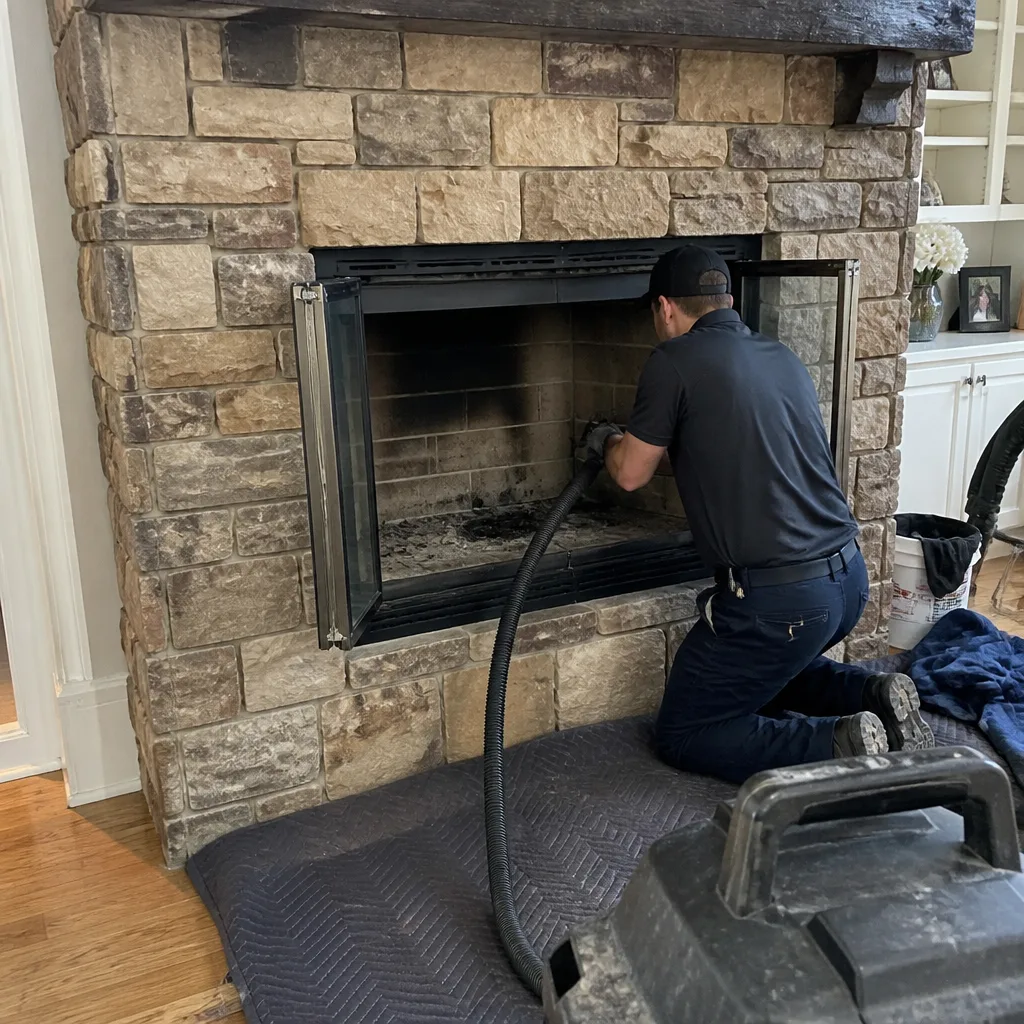
A professional chimney sweep should not leave a mess. At Kindling Chimney Alpharetta, our technicians follow the Cedarwell Care Promise on every visit: shoe covers and drop cloths go down before work starts, nothing in your home is moved without asking you first, pet-safe products are used where there is a choice, and we photograph the clean-up before we leave. The crew is background-checked and in uniform, and they treat the house as if it belongs to their own family. Quiet tools are used when your kids are asleep, and the work area is returned to the condition we found it in.
The Bottom Line
A chimney is a system, not a structure. The warning signs it produces, smell, sight, sound, and moisture, are information about how that system is performing. The job of a Alpharetta homeowner is to read the information early and act accordingly: schedule soon, schedule this week, or stop using the fireplace today. The off-season smoky smell in July is not a nuisance. It’s your chimney telling you creosote has built up and needs to come out before it hardens into something harder and more dangerous to remove. If you’re seeing any of the signs in this guide and you’re not sure which tier you’re in, call (762) 225-2593. A live person answers, the estimate is free, and you’ll get a written price before any work begins. That’s the Kindling Chimney Alpharetta home standard, and it’s how every job should be done.
Written by Danny Cortes, Owner at Kindling Chimney Alpharetta, serving Alpharetta since 2003.
See the difference
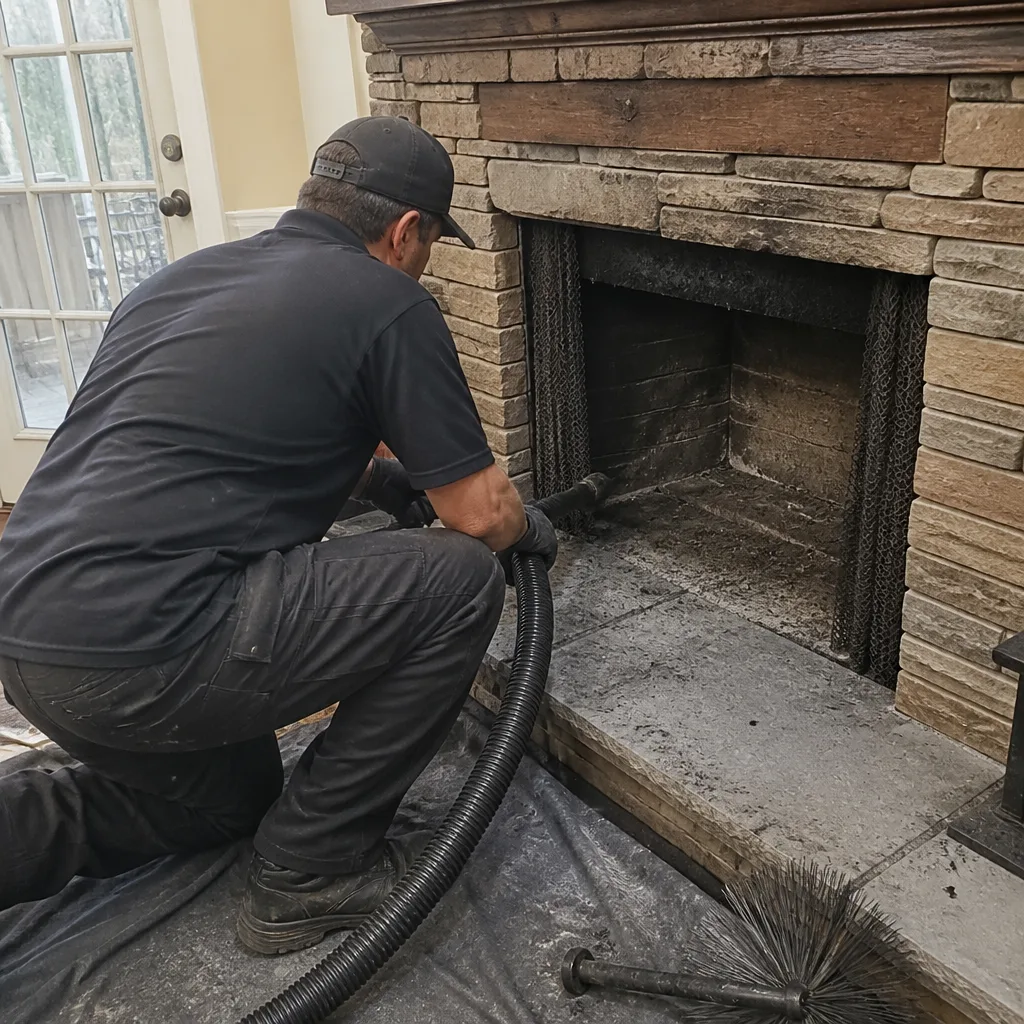 Before
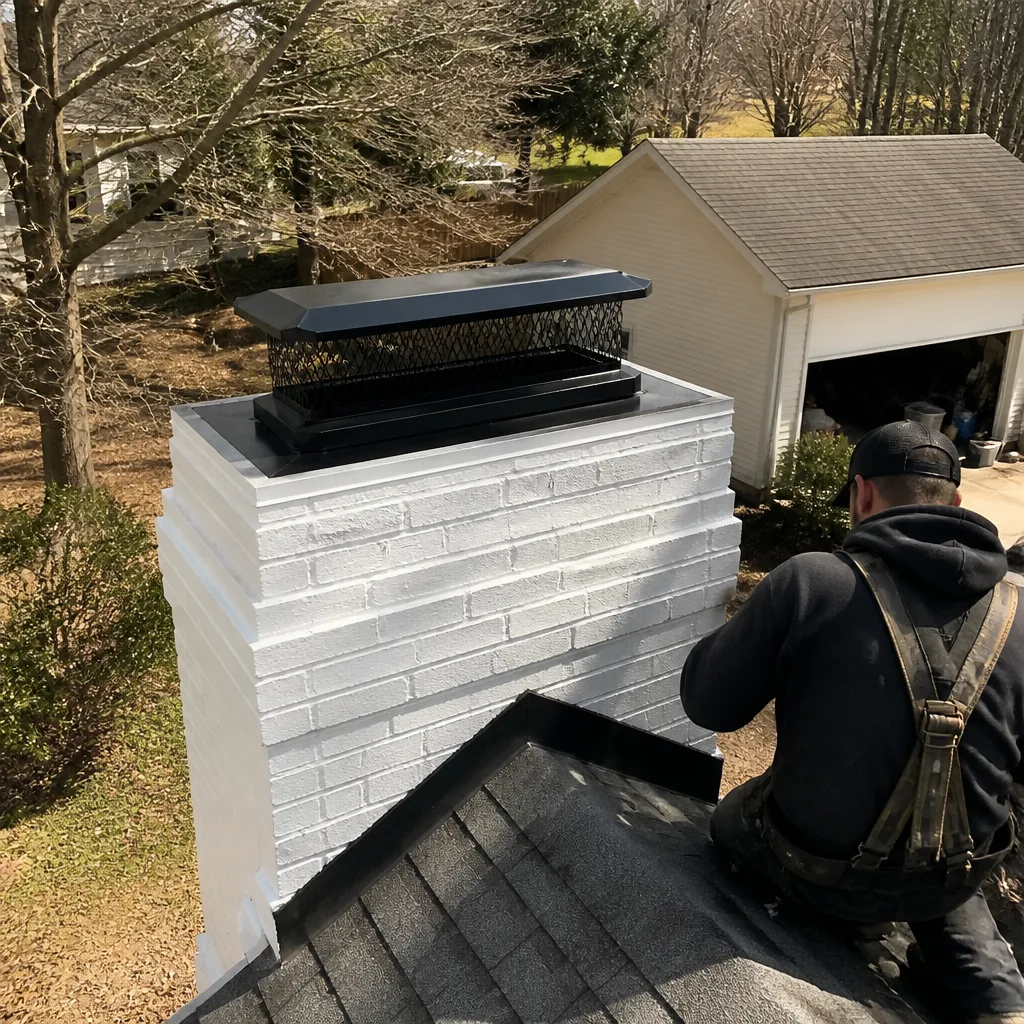 After
After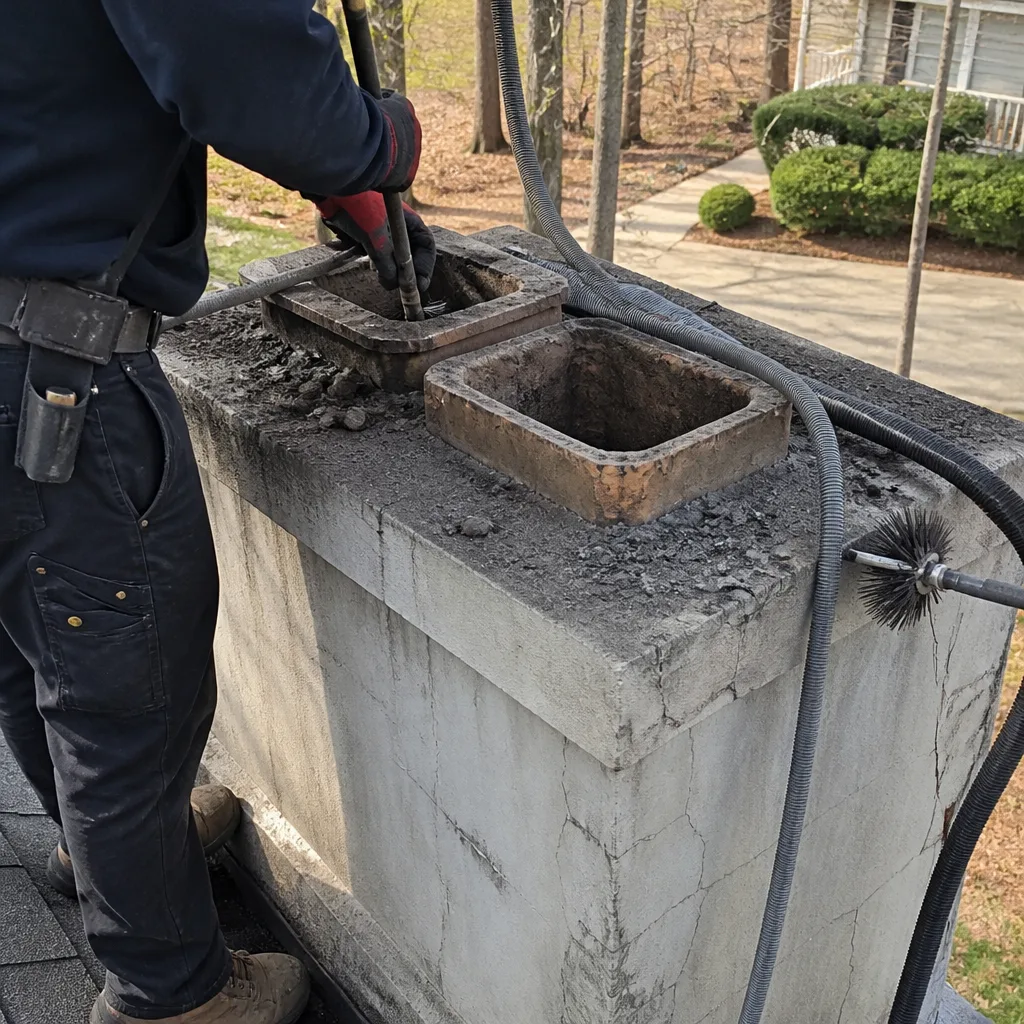 Before
 After
After Before
 After
After