
Last updated October 15, 2026
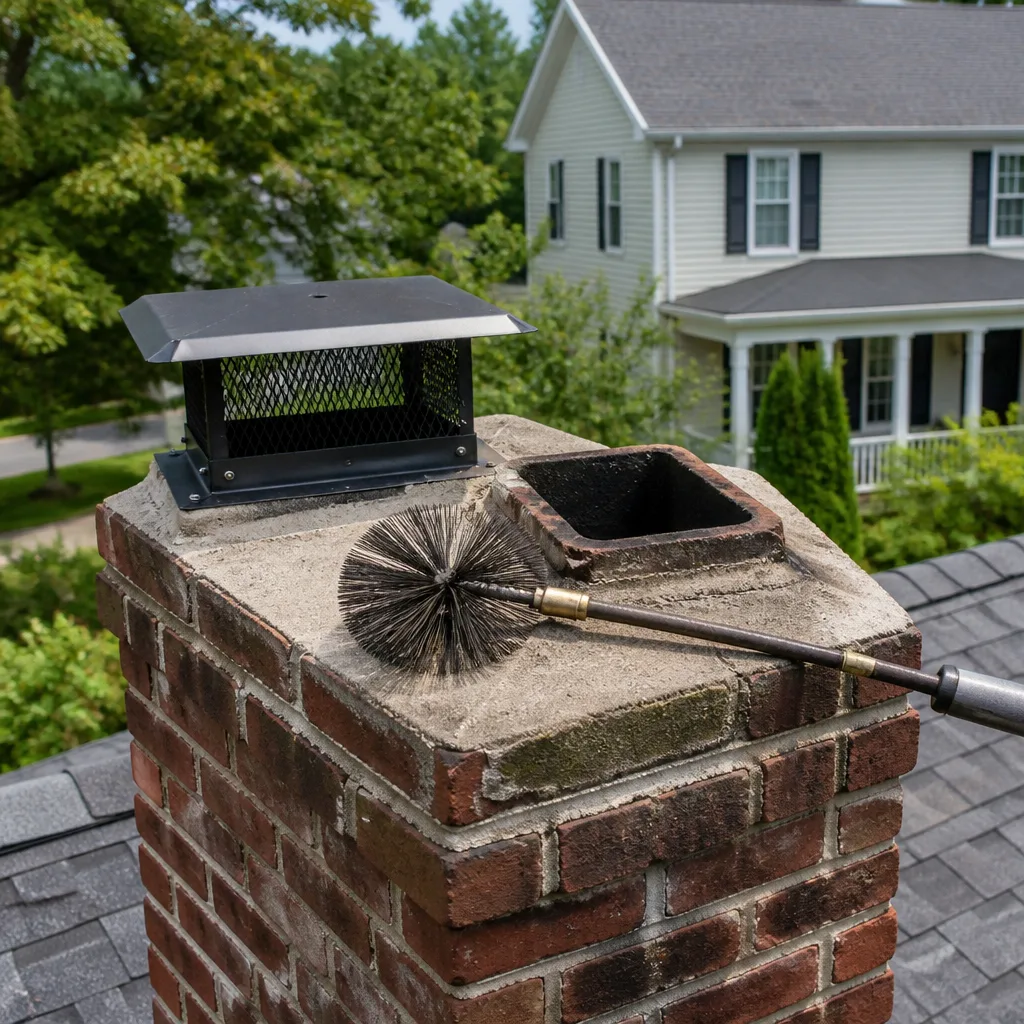 Sweep & inspection
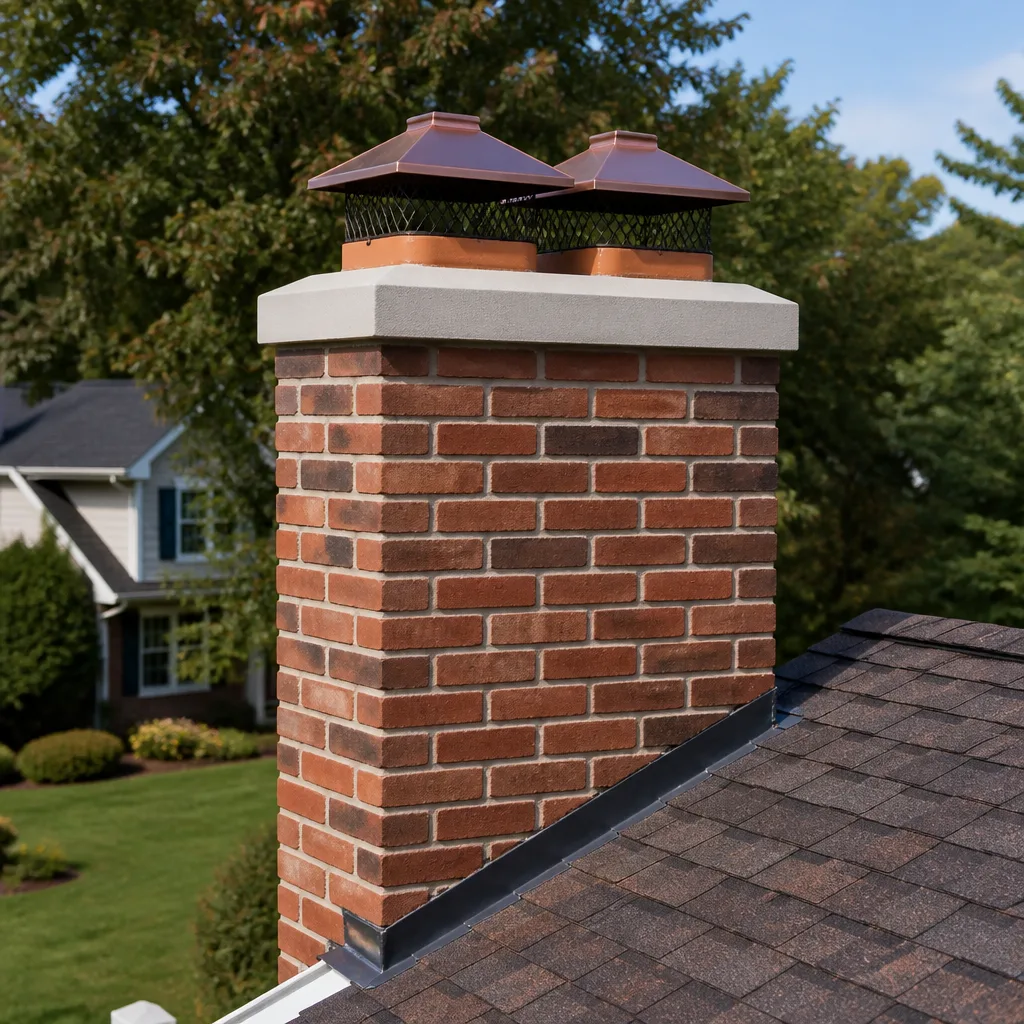 Caps & crowns
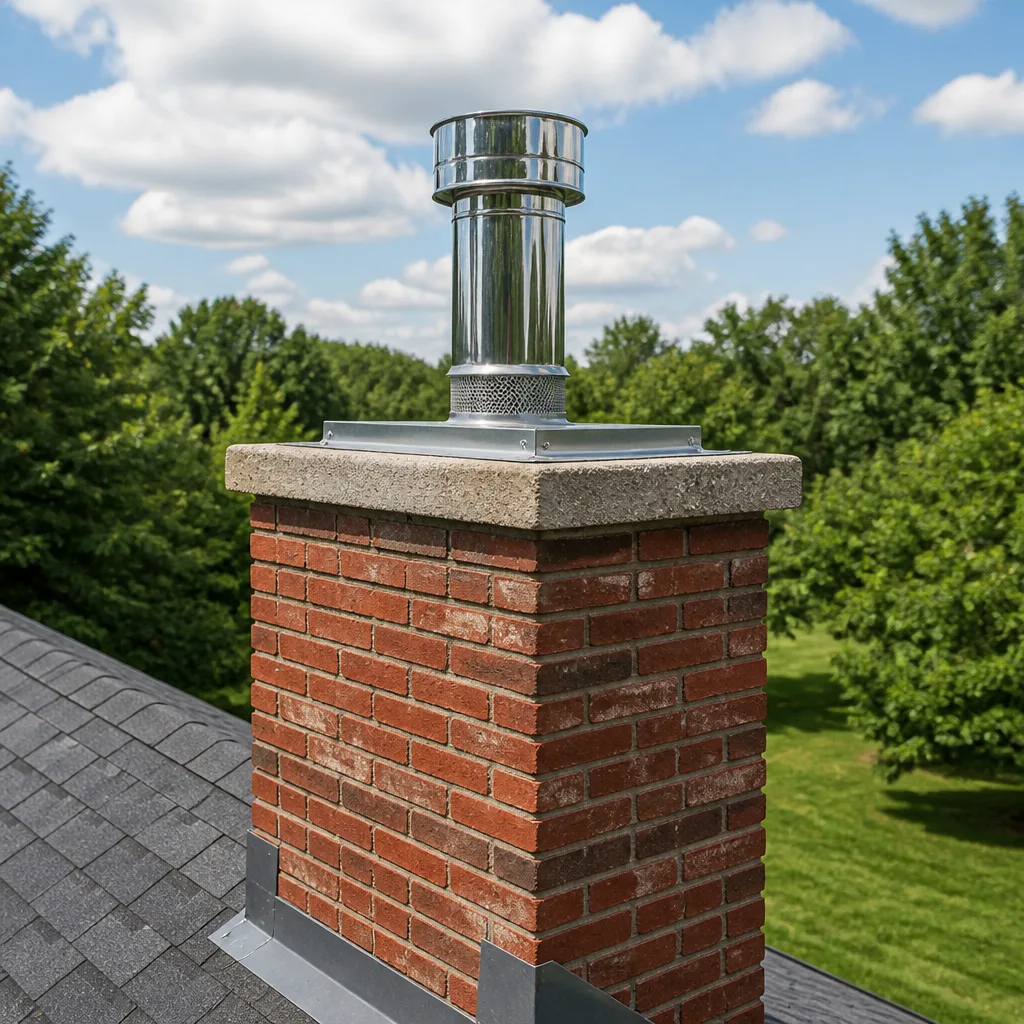 Flue relining
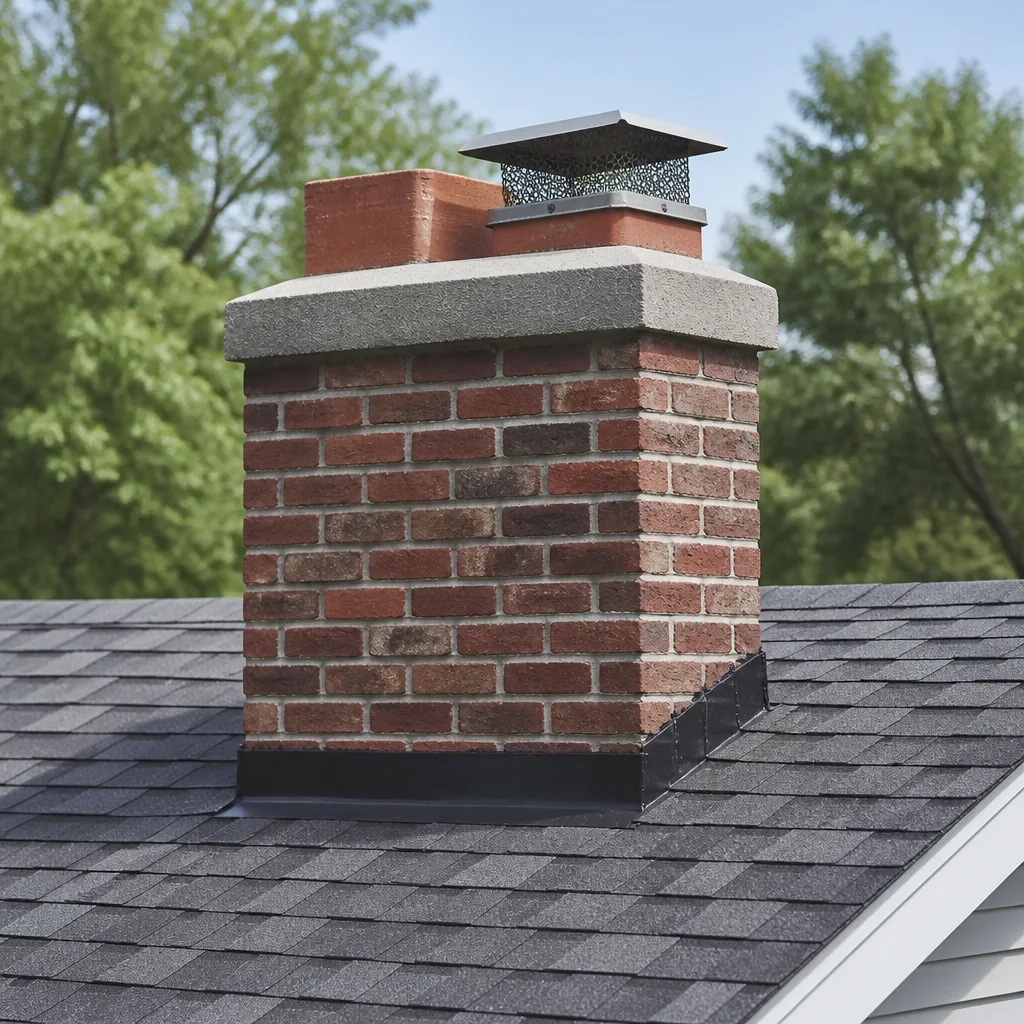 Masonry repair
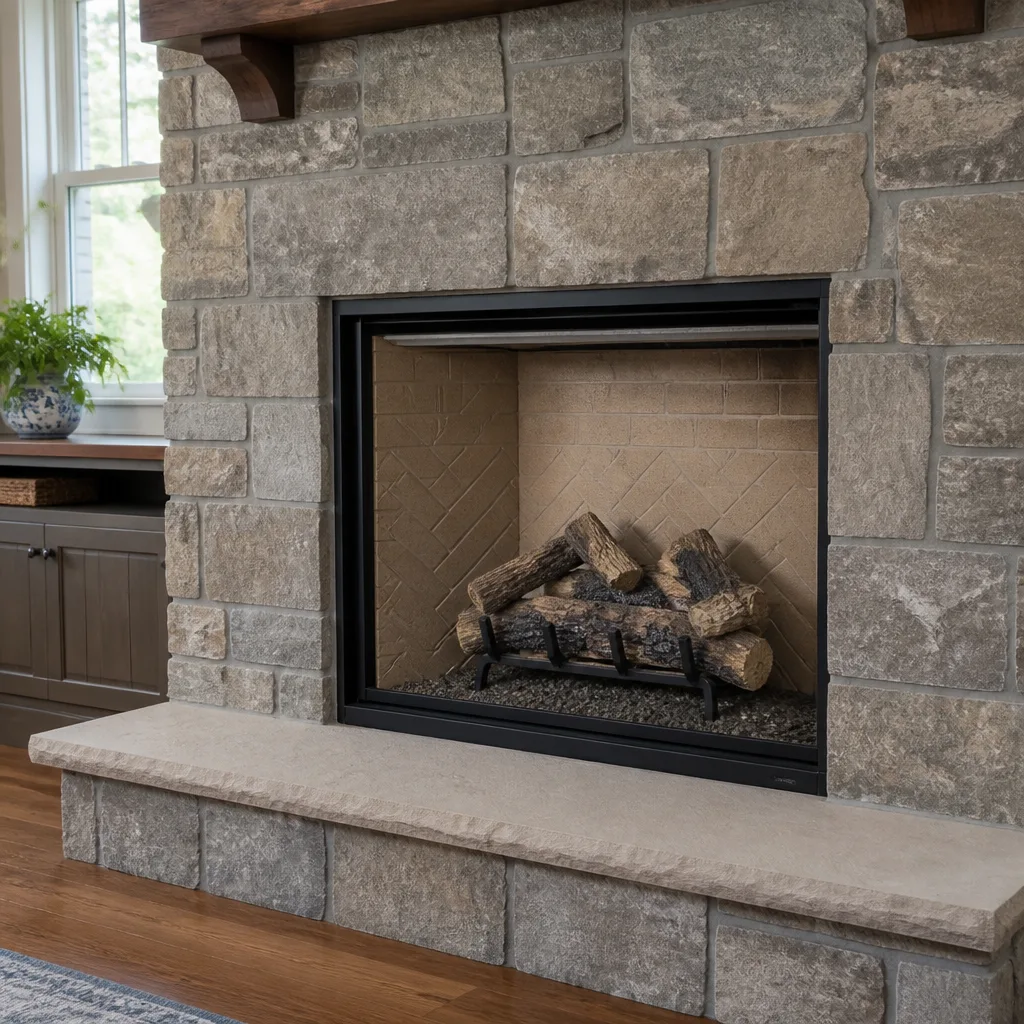 Gas fireplace service
Level 1 sweep and inspection to the NFPA 211 annual standard - flue, crown, cap, and flashing checked and photographed
Chimney sweep logs do not sweep chimneys. They loosen some creosote - which then falls where a brush and vacuum still have to collect it.
Chimney Cleaning Permits, Codes & Inspections in GA: What You Need to Know
Alpharetta sits in Fulton County, where unpermitted chimney liner work is one of the top flagged items on real-estate disclosure inspections. Sellers routinely pay far more to retroactively permit the work than the original permit would have cost, and that surprise lands months after the purchase agreement is signed. This guide walks through exactly what Georgia code requires, what it doesn’t, and how to document your chimney work so resale never becomes a problem. We’ll cover permit exemptions, NFPA 211 inspection standards, the Fulton County adoption of the IRC, and the specific questions Alpharetta homeowners should ask before any contractor touches their chimney.
Quick Answer
Routine chimney sweeping and most Level 1 inspections do not require a building permit anywhere in Georgia, including Alpharetta. However, structural repairs commonly triggered by an inspection, such as stainless steel liner replacement, firebox rebuilds, or crown reconstruction, do require a permit under the International Residential Code as adopted and amended by Fulton County. The practical rule in Alpharetta: cleaning is exempt, repairs are not, and unpermitted repair work creates a real-estate disclosure problem that no home warranty will cover.
Styles & brands we work with
Table of Contents
- Which Chimney Services Are Exempt from Georgia Building Permits
- Which Chimney Repairs Require a Permit in Fulton County
- How NFPA 211 Functions as the Practical Inspection Standard
- What Triggers a Level 2 Inspection and What It Means for Permits
- The Real-Estate Disclosure Risk of Unpermitted Chimney Work in Alpharetta
- What to Document Even for Permit-Exempt Chimney Cleaning
- Questions to Ask Your Chimney Contractor Before Work Begins
- Common Mistakes to Avoid
Which Chimney Services Are Exempt from Georgia Building Permits
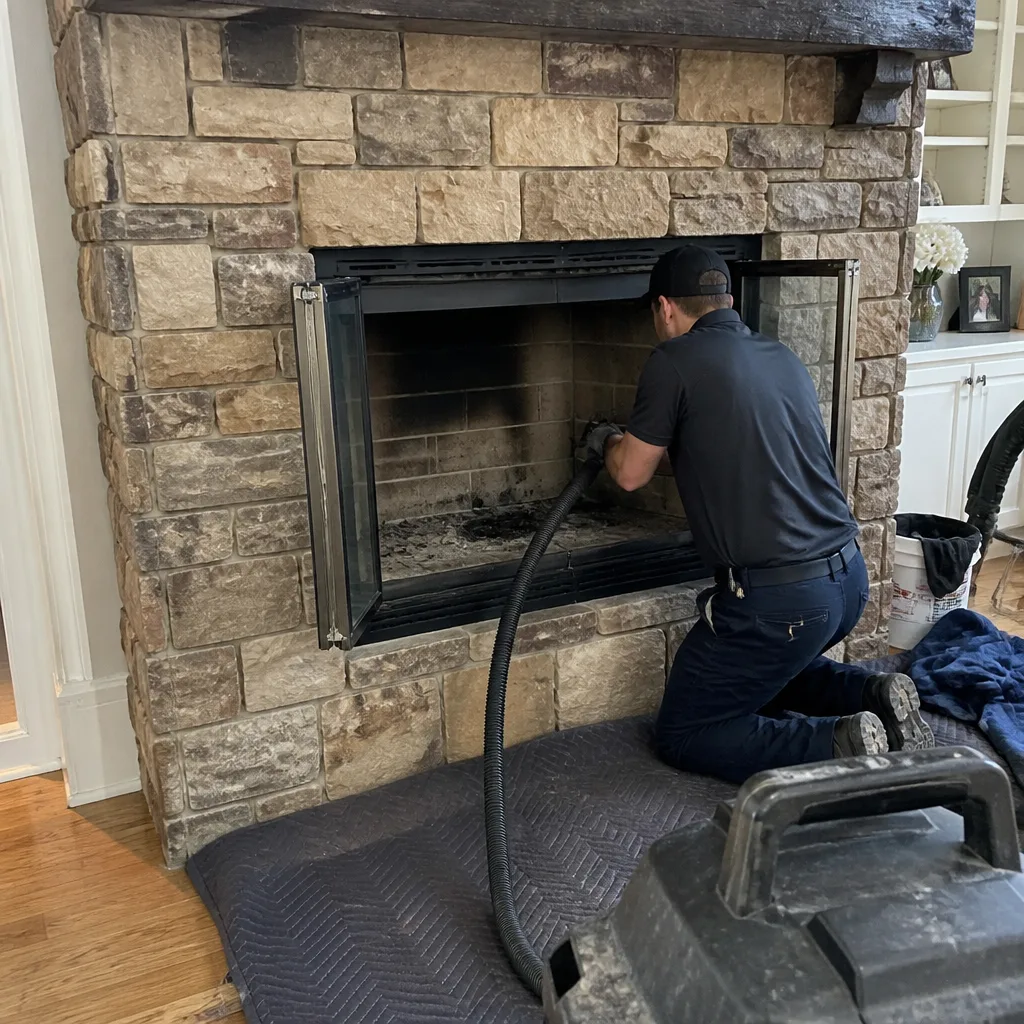
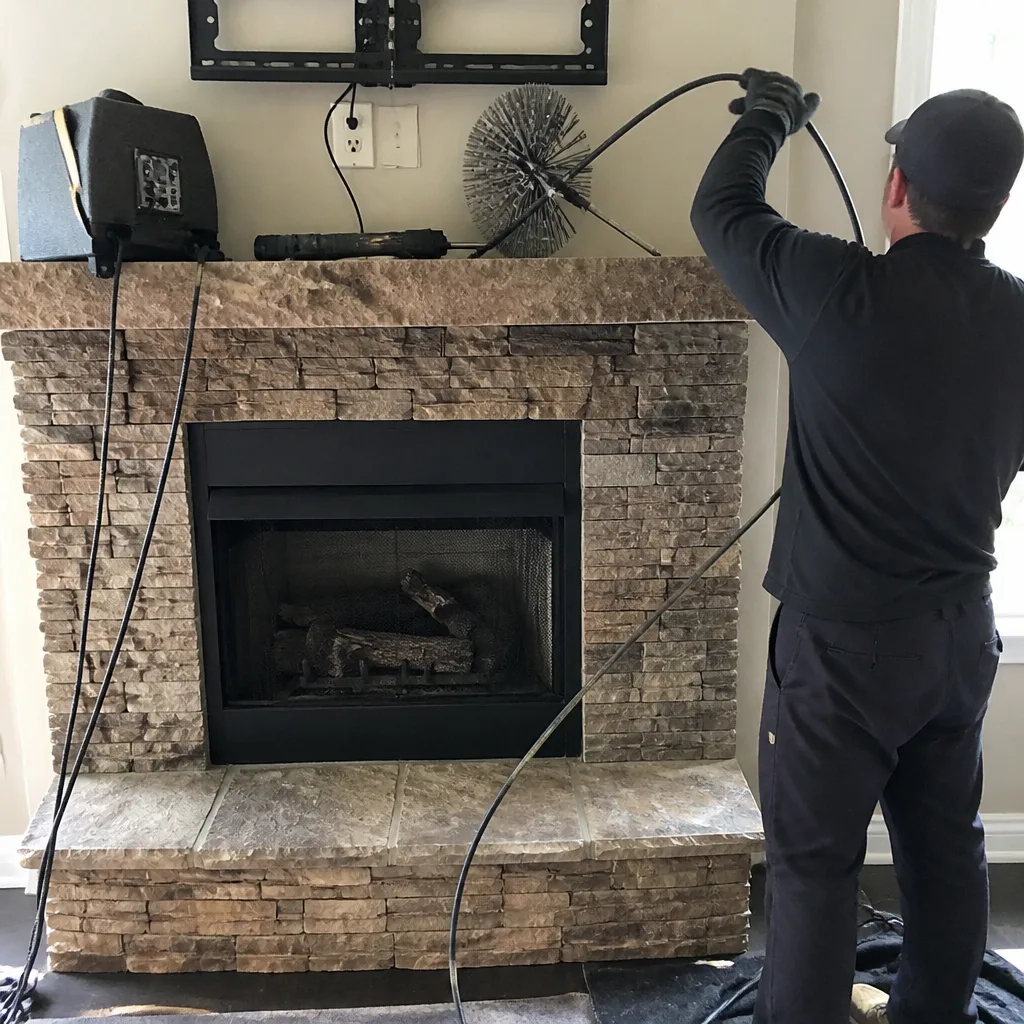
Chimney sweeping in Georgia is classified as routine maintenance, not construction. The Georgia State Minimum Standard Building Code draws a clear line between maintenance activities that restore a component to its original condition and alterations that change its structure, materials, or performance. Sweeping falls firmly on the maintenance side. A standard chimney sweep removes creosote and soot from the flue using brushes, rods, and a HEPA-filtered vacuum. Nothing is altered, nothing is replaced, and the chimney leaves the appointment structurally identical to how it arrived. No permit is required anywhere in Georgia for this work, and Alpharetta follows that statewide rule without local amendment.
Level 1 chimney inspections are equally permit-exempt, because an inspection changes nothing. The inspector examines the accessible portions of the chimney interior and exterior, checks the flue for obstructions and creosote buildup, verifies basic clearance to combustibles, and documents findings. Since the inspection itself performs no construction, no permit gate applies. We perform these inspections regularly in Alpharetta neighborhoods including Windward, Crabapple, and downtown Alpharetta, and none of them require a trip to the Fulton County permit office.
The exemption extends to minor maintenance items that don’t alter the chimney system. Replacing a damper plate, applying a chimney crown sealant as preventive maintenance, or swapping out a worn rain cap can often be completed without a permit, provided the work restores rather than rebuilds. The line is not always obvious to a homeowner, which is why the next section matters. When a contractor tells you something is exempt, you should understand why it is exempt, not just take the assertion at face value. For a detailed look at what a proper sweep includes, see our Chimney Sweep in Alpharetta page.
Which Chimney Repairs Require a Permit in Fulton County
Fulton County adopts the International Residential Code as its base residential construction standard. Under IRC Chapter 10, any work that involves the replacement, reconstruction, or structural alteration of a chimney or venting system is classified as a repair requiring a permit. In practical terms, this catches the two most common fixes we quote in Alpharetta: stainless steel flue liner replacement and firebox masonry rebuilds.
Here is a direct breakdown of common chimney repairs and their permit status under Fulton County’s adopted IRC:
- Stainless steel liner replacement (DuraFlex, Olympia Chimney, or equivalent): Permit required. The liner is a critical venting component, and its replacement must be inspected for proper sizing, material certification, and termination height.
- Firebox rebuild or partial masonry reconstruction: Permit required. Firebox work involves refractory materials, clearances, and structural loading that Fulton County inspectors verify against code.
- Chimney crown removal and re-pour: Permit required when the crown is fully demolished and re-formed, because the work alters the chimney’s water-shedding structure.
- Flue tile replacement (clay tile sections): Permit required. Removing and reinstalling flue tiles changes the venting system.
- Smoke chamber parging with a product like HeatShield cerfractory: Permit generally not required when applied as a surface restoration over an intact chamber. If the chamber requires structural rebuild, a permit is required.
- Chimney cap or damper replacement: Permit not required in most cases. These are accessory replacements that do not alter the flue structure.
- Tuckpointing of exterior brick joints: Permit not required when limited to repointing. If the repair removes more than 50% of the chimney’s surface area in a single elevation, Fulton County may classify it as reconstruction, which triggers a permit.
The distinction often surprises Alpharetta homeowners. A technician can spend an afternoon sweeping a chimney with no paperwork, but the moment the same chimney needs a new liner, the permitting requirement attaches. That’s not a quirk of Fulton County being strict. It’s the IRC working as designed: sweeping is maintenance, relining is reconstruction of a fire-safety component. The county wants an inspector to put eyes on that liner installation before the fireplace is used again. For more on how repairs fit into a full service picture, see our Fireplace Repair in Alpharetta page.
How NFPA 211 Functions as the Practical Inspection Standard
When Georgia building codes are silent or vague about a chimney condition, the practical standard that fills the gap is NFPA 211, the Standard for Chimneys, Fireplaces, Vents, and Solid Fuel-Burning Appliances. NFPA 211 is not a state law and not a local ordinance by itself, but Georgia courts and insurance adjusters regularly treat it as the benchmark for what a competent chimney professional should have caught and documented during an inspection.
Two NFPA 211 concepts matter most for Alpharetta homeowners. First, the standard establishes three inspection levels.
- Level 1: The baseline inspection performed during routine service when the appliance and venting system have not changed. It covers readily accessible areas and confirms the chimney is free of obstructions and combustible deposits.
- Level 2: Required when the property is being sold or transferred, when the appliance or flue has changed, or after an operating malfunction, external fire, or seismic event. This inspection includes attic, crawlspace, and exterior access areas, plus a video scan of the flue interior.
- Level 3: Required when a Level 1 or Level 2 inspection suggests a concealed hazard that cannot be evaluated without opening up the chimney structure. Level 3 work almost always involves demolition and therefore a permit.
Second, NFPA 211 sets the clearance-to-combustibles requirements and the creosote deposition thresholds that define when a chimney is too dirty to operate safely. A chimney with more than 1/8 inch of creosote accumulation should not be used until cleaned, and a chimney with glazed or third-degree creosote requires specialty removal techniques. These thresholds are why a sweep in Alpharetta is not a cosmetic service. It is the intervention that brings the chimney back within the operating envelope that NFPA 211 describes. Our Chimney Inspection in Alpharetta page explains the levels in more detail, but the key point here is that NFPA 211 gives the inspector a concrete, defensible standard even when the local permit office has no enforcement interest in routine cleaning.
What Triggers a Level 2 Inspection and What It Means for Permits
A Level 2 inspection becomes mandatory in four specific situations under NFPA 211, and each one changes the permit conversation. The most common trigger in Alpharetta is a real-estate transaction. When a home goes under contract, the buyer’s home inspector often flags the chimney for further evaluation, and the standard response is a Level 2 inspection with a video scan of the flue. That scan is where liner deterioration, hidden cracks, and missing mortar joints get documented. If the scan reveals a compromised liner, the repair that follows is permit-required work.
The other Level 2 triggers are equally direct:
- Change in fuel type or appliance efficiency: Switching from a wood-burning open fireplace to a gas insert changes the venting requirements, which means a Level 2 before the conversion and a permit for the venting work that follows.
- Operating malfunction or chimney fire: After any event where the chimney did not perform as designed, a Level 2 inspection is the minimum due diligence. If that inspection finds damage, the subsequent repair is permit-required.
- External event affecting the chimney structure: Hail, high wind, or a tree strike that visibly shifts or damages the chimney exterior triggers a Level 2 before the fireplace is used again.
Here is the timeline we’ve seen play out repeatedly in Alpharetta. A homeowner lists a home. The buyer’s inspection requests a chimney evaluation. We complete a Level 2 video scan and find a cracked clay flue liner. The repair quote calls for a stainless liner. At this point, the seller faces a choice: permit the liner work and pass the inspection cleanly, or install the liner without a permit and hope the buyer’s next disclosure review doesn’t catch it. The second option is a trap, and that trap is the subject of the next section.
The Real-Estate Disclosure Risk of Unpermitted Chimney Work in Alpharetta
Georgia’s Seller’s Property Disclosure Statement asks the seller to identify any work performed on the property that required a permit and to state whether that permit was obtained. It is a check-the-box form, and the box for chimney liner replacement does not distinguish between structural and cosmetic. If unpermitted liner work is discovered during the buyer’s due diligence, the seller has two problems: the work itself may be uninsurable, and the disclosure form now contains an answer that the seller either knowingly falsified or should have known was incomplete.
The cost asymmetry is stark. In Fulton County, a mechanical permit for a chimney liner replacement typically runs a few hundred dollars, depending on the scope and inspection fees. The retroactive cost of unpermitted work discovered at resale routinely includes the permit fee, a penalty, a third-party engineer’s review, and sometimes the removal and reinstallation of the liner if the inspector cannot verify the original installation method. Sellers in Alpharetta regularly pay three to five times the original permit cost to resolve the issue under contract deadline pressure. And that’s the best case. The worst case is a buyer who walks away altogether.
Unpermitted firebox work carries the same exposure, with one additional layer. Because a firebox rebuild involves masonry, mortar, and refractory materials, a buyer’s home inspector who spots fresh mortar joints without a corresponding permit record will flag it immediately. The buyer’s lender may then condition financing on permit resolution before closing. At that stage, the homeowner is negotiating from a position of urgency, and the cost of resolution is set by whatever contractor is available on short notice. This is the practical reason we tell Alpharetta homeowners to permit repair work the first time. The permit is an asset on the disclosure form, not an inconvenience.
This guide is written from the perspective of a company that works in Alpharetta every day, and the Kindling Chimney Alpharetta home page reflects that local focus. The disclosure risk described here is real, observable, and entirely avoidable with a permit pulled before the work starts.
What to Document Even for Permit-Exempt Chimney Cleaning
Permit-exempt work still generates documentation that protects resale value. A routine chimney sweep in Alpharetta should end with a written service report that includes several specific items, and a homeowner who keeps those reports builds a maintenance history that answers every question a buyer’s inspector will ask. Our Chimney Sweep Maintenance Checklist for Alpharetta Homeowners covers what that report should contain.
Here are the documentation steps we recommend for every permit-exempt sweep and Level 1 inspection:
- Request a written service report at every sweep. The report should state the date, the technician’s name, the condition of the flue at arrival, the volume and type of creosote removed, and the condition of the flue at departure. A verbal summary is not a record.
- Keep before-and-after photos of the firebox and flue. A photo record shows the chimney was serviced, not just claimed to be serviced, and it gives a future buyer’s inspector visual evidence of the chimney’s condition over time.
- Retain Level 1 inspection checklists. NFPA 211 Level 1 inspections produce a checklist of the components examined and their condition. Those checklists are the paper trail that proves routine care was performed.
- Document any minor repairs with receipts and product names. If a crown sealant or a new damper plate was installed, keep the receipt. Product names like HeatShield, Gelco, and Famco on an invoice tell a buyer’s inspector that professional-grade materials were used, not off-brand shortcuts.
- Store the records with your home documents. The disclosure form asks about maintenance and repairs. Having the file in hand turns a stressful disclosure question into a one-line answer.
This documentation habit costs nothing and takes minutes per year. The alternative, a chimney with no service history, forces a buyer’s inspector to assume the worst and recommend a Level 2 video scan as a condition of closing. The scan will either clear the chimney or find something, and if it finds something, the seller is back in the unpermitted-repair conversation from the previous section.
Questions to Ask Your Chimney Contractor Before Work Begins
The single most important question to ask any chimney contractor in Alpharetta is this: will this work require a permit, and if not, why not? The answer tells you a great deal about the contractor. A knowledgeable professional will explain the distinction between maintenance and repair, reference the IRC as adopted locally, and put the answer in writing. A contractor who waves the question away with “we never pull permits” or “you don’t need to worry about that” is signaling something about the company’s comfort with risk that you will inherit at resale.
Here is a numbered list of the seven questions we recommend Alpharetta homeowners ask before any chimney work begins, permit-exempt or not:
- Does this specific repair require a permit under Fulton County’s adopted IRC, or is it classified as maintenance? The contractor should be able to explain the basis for the answer, not just assert it.
- If a permit is required, who pulls it? The contractor pulling the permit means the contractor is responsible for the inspection scheduling and for standing behind the work as the permit applicant. If the homeowner is asked to pull the permit, that is a red flag.
- What materials will be used, and are they listed for the application? For liner work, listen for brand names like DuraFlex or Olympia Chimney. For smoke chamber restoration, HeatShield cerfractory is a recognized product. Generic “stainless liner” without a brand or listing is not an acceptable answer.
- Will I receive a written service report or permit inspection record after the work is complete? The answer should be a simple yes. If the work is permit-required, the closed permit from Fulton County is the document you keep. If the work is permit-exempt, the written service report serves the same function.
- What clearance and termination height requirements apply to my specific installation? This is a code-based question that a competent contractor answers without hesitation. The IRC and NFPA 211 set specific numbers, and those numbers matter to your fire safety and your insurance.
- Does your company carry liability insurance for chimney work, and will you provide proof? An insured contractor protects the homeowner from financial exposure if something goes wrong. This is not a permit question, but it is the same trust transaction.
- What does the written price cover, and when will I see it? A written price before work begins is the simplest protection against surprise billing. At Kindling Chimney Alpharetta, we deliver a written price before any work starts, every time, with no on-the-spot pressure.
Those seven questions take under ten minutes to ask, and they filter out the contractors who will become a disclosure problem later. A company that answers all seven comfortably is a company that understands the permitting landscape in Alpharetta and is willing to stand behind its work in writing.
Common Mistakes to Avoid
- Assuming all chimney work is permit-exempt because the contractor says so. The contractor’s incentive is to finish the job quickly. The homeowner’s incentive is to avoid a resale crisis. Those incentives diverge, and the homeowner should verify the permit status independently rather than accept an oral assurance.
- Skipping the Level 2 inspection during a home sale to save a few hundred dollars. The inspection cost is trivial compared to the retrofit cost of unpermitted work discovered later. In Alpharetta’s competitive real-estate market, a clean Level 2 report is a selling asset, not an expense.
- Throwing away chimney service records. Every sweep report and inspection checklist is a piece of the paper trail a future buyer’s lender may request. Once the records are gone, the seller has no way to demonstrate the chimney was maintained.
- Choosing a liner material based on price alone. A cheap liner that fails in five years creates a second permit-required repair and a second disclosure entry. Professional-grade liners from brands like Famco or Olympia Chimney cost more up front and protect the home’s resale value downstream.
- Pulling the permit in the homeowner’s name while the contractor does the work. This arrangement makes the homeowner the responsible party for the inspection and the permit record. If the work fails, the enforcement path runs through the homeowner, not the contractor.
- Waiting until the week before closing to address a chimney issue. Permit resolution in Fulton County takes time, and the week before closing is a terrible time to discover you need a liner permit pulled, inspected, and closed. Address chimney findings as soon as the inspection report arrives.
- Treating creosote buildup as a minor housekeeping issue rather than a code-relevant condition. NFPA 211 sets clear thresholds for when a chimney is too dirty to use. Exceeding those thresholds is a documented fire-safety condition, not a preference. A clean chimney is the simplest compliance action a homeowner can take.
See the difference
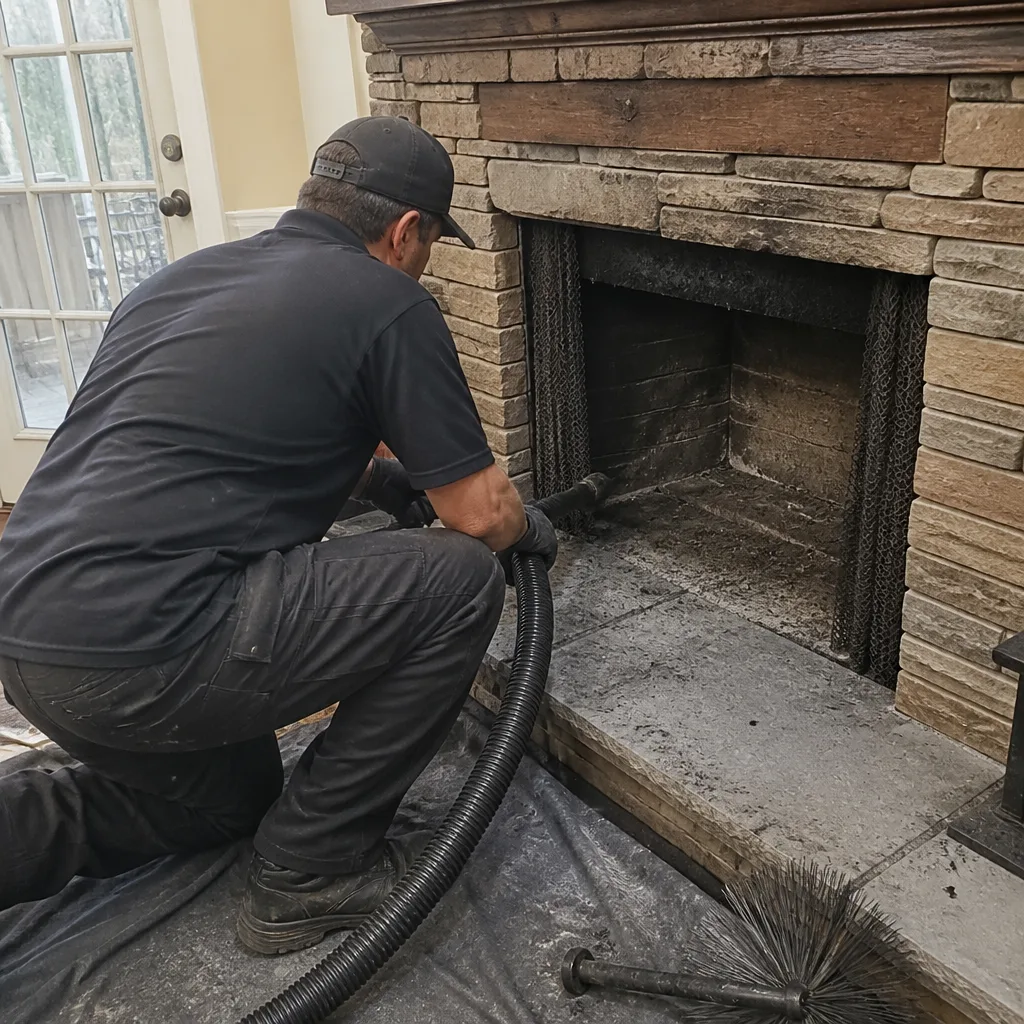 Before
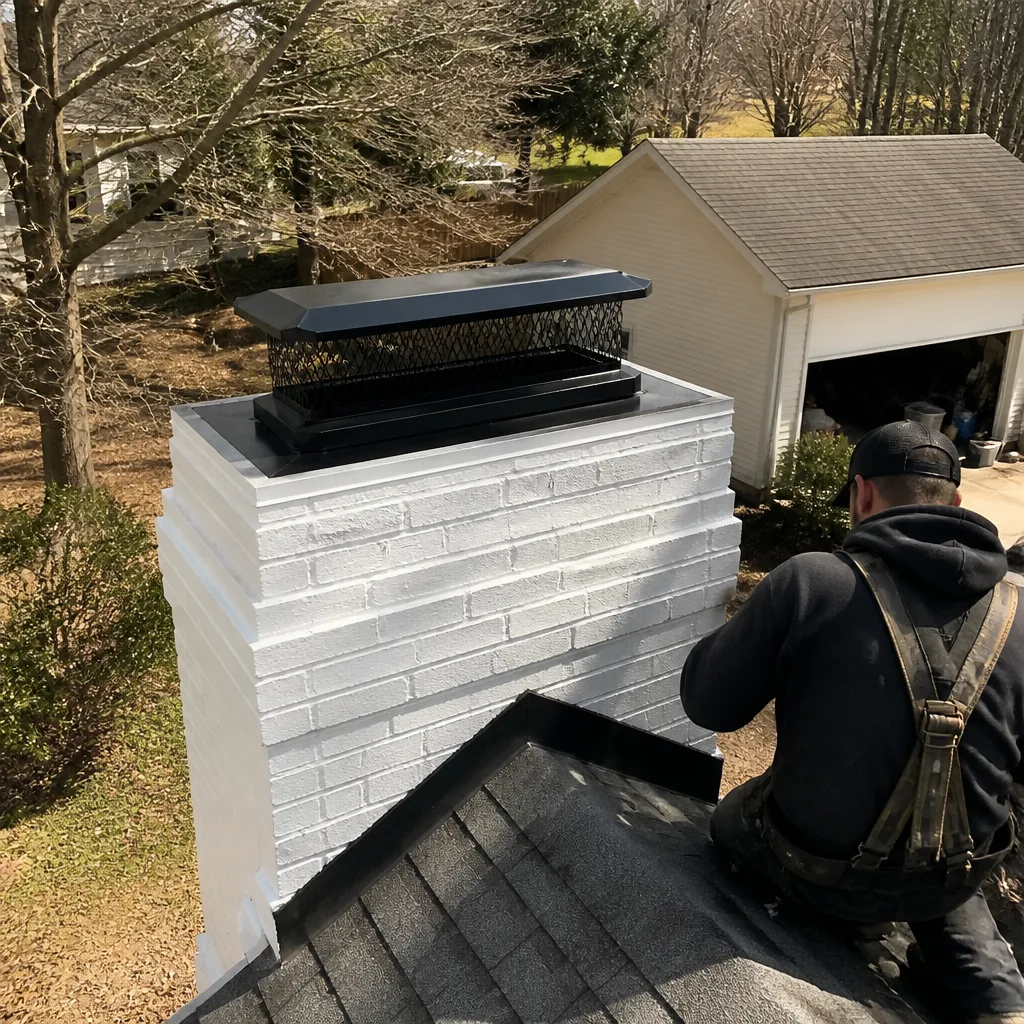 After
After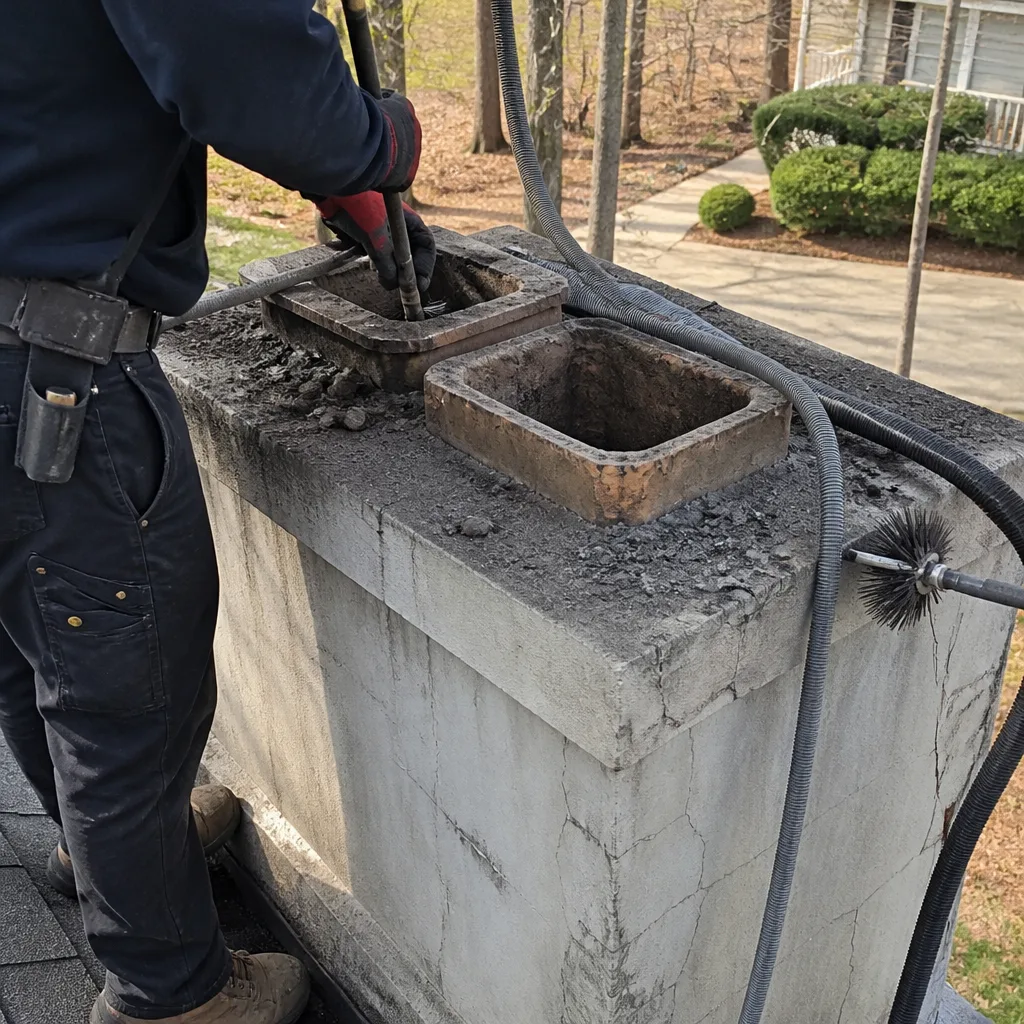 Before
 After
After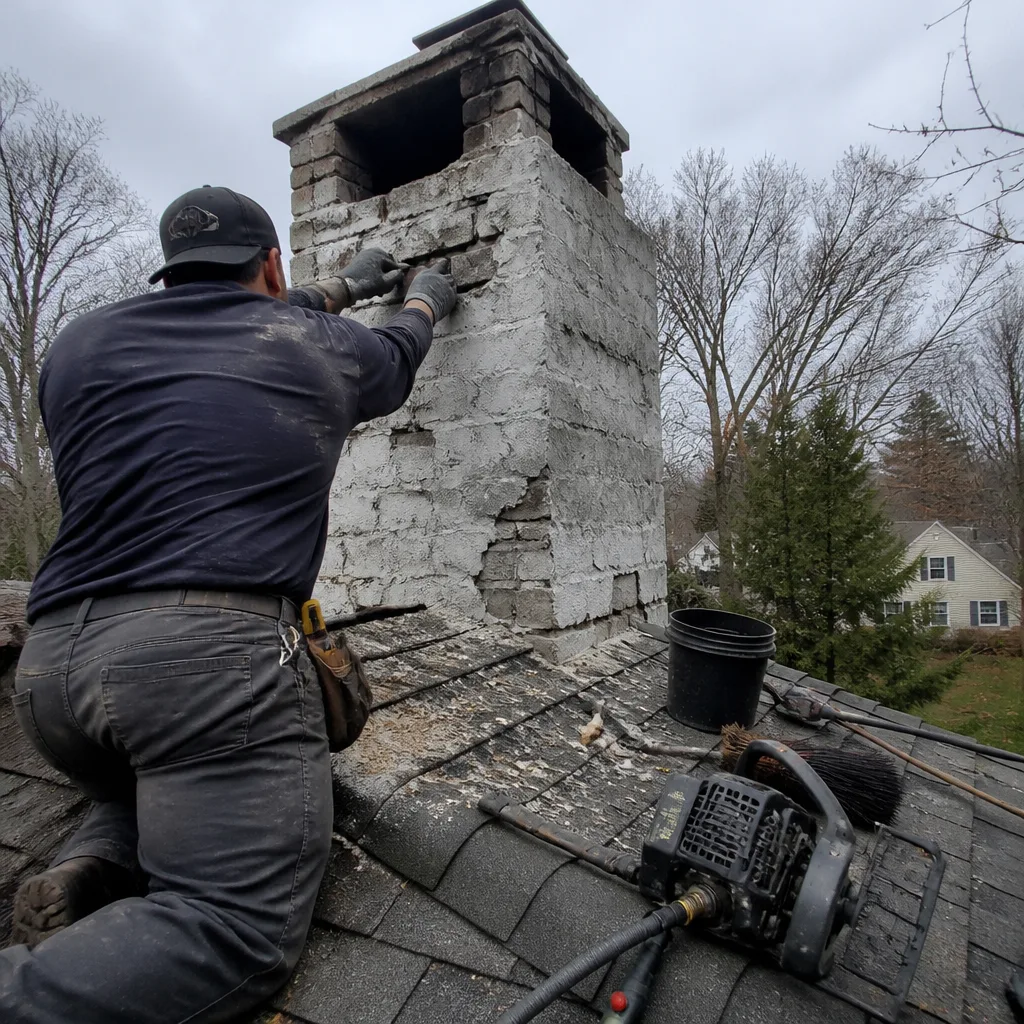 Before
 After
AfterWhen to Call a Professional
Call a professional when the question is no longer about whether the chimney is dirty, but whether the chimney is safe. That includes any situation where you see visible creosote dripping into the firebox, smell smoke in the home after the fire is out, notice white staining on the exterior brick, or find pieces of flue tile at the bottom of the fireplace. These are conditions that require an inspection before the next burn, and the inspection may lead to permit-required repair work. Watch for Chimney Cleaning Warning Signs: A Alpharetta Homeowner’s Reference Guide to spot problems early. A professional who works in Alpharetta regularly will know which conditions trigger a Level 2 scan and which repairs need a Fulton County permit, and will document both properly. Kindling Chimney Alpharetta offers free estimates in Alpharetta, call (762) 225-2593.
Frequently Asked Questions
No, a routine chimney sweep in Alpharetta is classified as maintenance, not construction, and no building permit is required anywhere in Georgia. The sweep removes creosote and soot without altering the chimney structure, materials, or performance. Call (762) 225-2593 for a written price before any sweep work begins.
Yes, replacing a chimney liner is permit-required work under the International Residential Code as adopted by Fulton County, because the liner is a critical venting component and its replacement must be inspected for proper sizing, material certification, and termination height. Install the liner without a permit and you inherit a disclosure problem at resale. Get a free estimate at (762) 225-2593.
A Level 2 inspection is a more comprehensive evaluation that includes a video scan of the flue interior plus attic, crawlspace, and exterior access points, and it is required under NFPA 211 when a property is sold, when the appliance or flue changes, or after a chimney fire or external event. In Alpharetta, a Level 2 inspection is the standard response to a buyer’s home inspection flag on the chimney. Call (762) 225-2593 to schedule one.
The National Fire Protection Association recommends a sweep when creosote accumulation reaches 1/8 inch or more, and for most regularly used wood-burning fireplaces in Alpharetta that means an annual service visit. A yearly sweep keeps the chimney inside the operating envelope NFPA 211 describes and builds the maintenance record that protects resale value. Call (762) 225-2593 to book a sweep before the burning season.
If an uninspected chimney has a fire or carbon monoxide incident, the homeowner’s insurance claim may be complicated by the absence of maintenance records, because the insurer will look for evidence that the chimney was serviced to the NFPA 211 standard. A documented inspection history is the simplest way to demonstrate that the homeowner acted reasonably. Call (762) 225-2593 to schedule an inspection in Alpharetta.
Yes, a proper chimney inspection includes evaluation of the flue’s draft, the condition of the liner, and the clearance to combustibles, all of which bear directly on whether carbon monoxide can escape into the living space. A blocked or cracked liner is the primary carbon monoxide risk in a wood-burning chimney, and a video scan is the standard method for confirming liner integrity. Call (762) 225-2593 for a Level 2 inspection in Alpharetta.
The Bottom Line
Chimney cleaning in Georgia is permit-exempt, but the repairs that a good inspection often uncovers are not, and Alpharetta homeowners who skip the permit step expose themselves to a resale problem that no warranty can fix. The distinction is simple: maintenance gets a service report, repairs get a permit, and both get documented. NFPA 211 provides the practical inspection standard that fills the gaps in local code, and a Level 2 inspection at the right moment protects both the family living in the home and the equity tied up in it. Ask your contractor the seven questions, keep every record, and permit the work the first time.
Written by Danny Cortes, Owner at Kindling Chimney Alpharetta, serving Alpharetta since 2003.